I love a five-ingredient sheet pan dinner for one reason: it should cook while you clean up almost nothing. But the veggie question can derail even the best intentions. You grab a bag of frozen broccoli, and suddenly your pan looks like a steamy puddle. Or you buy fresh green beans and realize you needed to trim a whole forest of ends.
So let’s settle it in a way that actually helps at 6:12 p.m. on a Tuesday: how frozen broccoli, green beans, and carrots stack up against fresh in minimalist sheet pan meals, and what tiny adjustments turn either option into crispy, caramelized success.
Quick note on “five ingredients”: Throughout this article, I treat oil, salt, and pepper as pantry basics. If you count them, adjust the math accordingly.
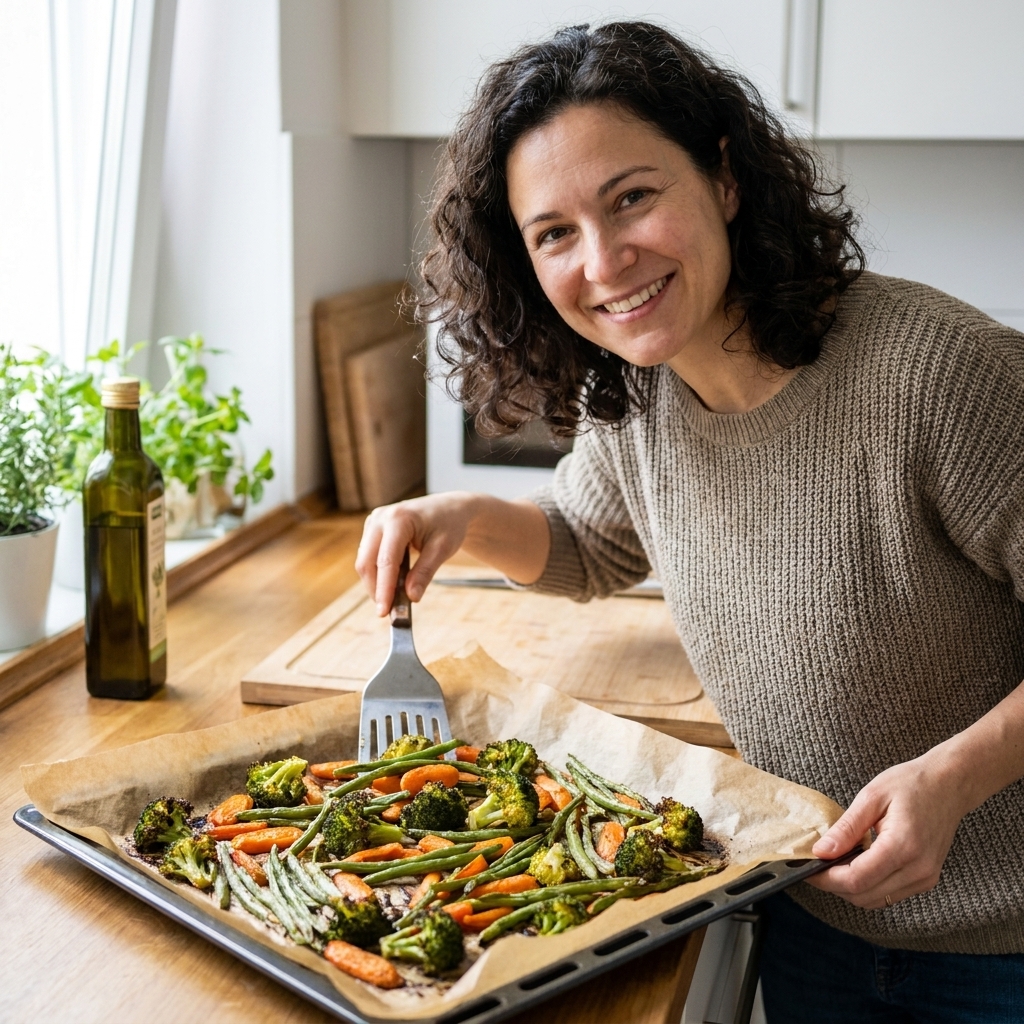
The quick verdict
- Broccoli: Fresh wins for crisp edges. Frozen can work, but it typically needs higher heat and more space, and you should expect softer centers.
- Green beans: Fresh wins for blistered skins and snap. Frozen often goes limp unless you dry it well and roast hot and fast.
- Carrots: Frozen and fresh are closer than you’d think. Fresh gives the best caramelization, but frozen sliced carrots are a great weeknight shortcut with a timing tweak.
If your goal is browned, roasty flavor with only five ingredients, fresh is generally easier. If your goal is dinner happens no matter what, frozen is absolutely on the team. You just have to manage moisture.
What changes with frozen veggies
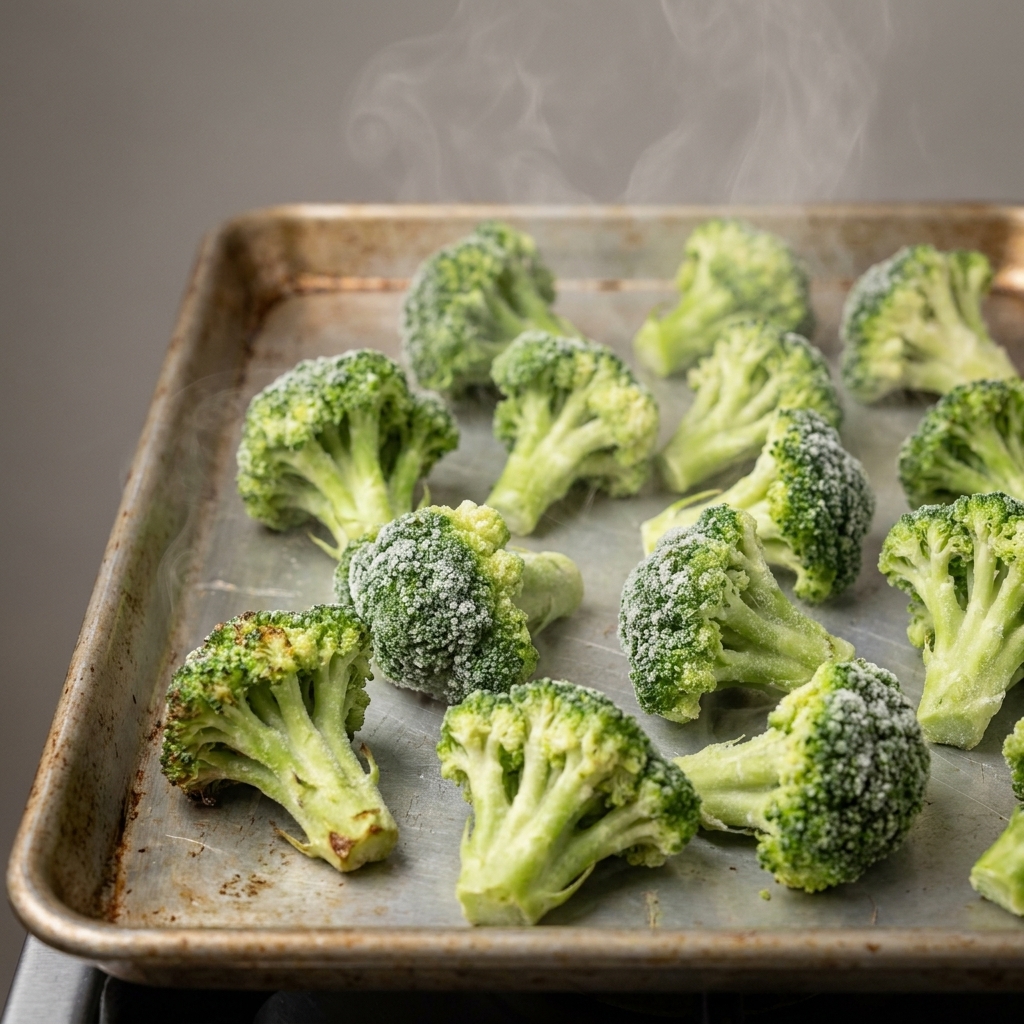
Frozen vegetables are basically wearing a tiny coat of ice. When that ice hits a hot pan, it melts, then turns into steam. Steam is the enemy of browning because it keeps the surface wet. That is why frozen veg do best when you avoid crowding and give them strong heat from below.
One important reality check: timing and browning vary by brand, cut size, how frosty the vegetables are, and your oven (especially convection). Use the times here as a starting point, then follow the color.
Three knobs you can turn
- Heat: Frozen often roasts best around 450°F. If you are using convection, start closer to 425°F to avoid scorched tips.
- Space: Crowding traps steam. Frozen needs more breathing room than fresh.
- Moisture management: Dry the veg, or preheat the pan, or both. You do not have to do everything, but you do have to do something.
One more thing that matters for five-ingredient cooking: frozen vegetables are often more uniformly cut than fresh. That can make timing easier, especially when you are roasting vegetables and protein together.
Also worth knowing: “Steam-in-bag” vegetables and frozen veggies that are already sauced cook differently. They are designed to steam. If your bag looks glossy, icy in big clumps, or has sauce, expect softer results. Roast them anyway if you want, but keep your browning expectations realistic.
Broccoli
Broccoli is the easiest place to see the difference between fresh and frozen because it’s all about texture. We want crisped edges, tender stems, and those toasty little browned bits that catch sauce like a dream.
Fresh broccoli
- Best result: Deeply browned edges, tender-crisp stems.
- Common fail: Undercooked stems when florets are too big.
Maya move: Cut florets smaller than you think. If the stems are thick, split them lengthwise. Toss with oil and salt, then roast at 425°F to 450°F until you see real browning, typically 14 to 20 minutes depending on size and your pan.
Frozen broccoli
- Best result: Nicely seasoned, lightly browned in spots, softer texture overall.
- Common fail: Broccoli “boils” in its own water and turns pale and mushy.
What works:
- Usually, do not thaw. Thawing releases water before you even start. If your broccoli is in one solid ice brick, run the bag under cool water for a few seconds just to break pieces apart, then dry the surface and roast.
- Roast hot: Aim for 450°F, or 425°F convection.
- Optional method: Start with a lighter coating of oil and salt, roast 8 to 10 minutes to drive off moisture, then add a little more oil or your sauce for the final stretch. If you prefer, you can oil normally from the start. The real rule is: do not drown it, and do not crowd it.
- Spread wide: One even layer with space. If the pan looks “full,” use two pans.
Timing: Frozen broccoli often needs about 18 to 25 minutes at 450°F to get noticeable browning, but this depends heavily on floret size and frost. If the tips are getting too dark before the stems feel tender, drop the heat to 425°F and keep going.
Green beans
Green beans are my sheet pan secret weapon when I want the pan to look abundant without adding extra ingredients. But they are picky about water.
Fresh green beans
- Best result: Blistered skins, sweet-savory flavor, still snappy.
- Common fail: Wrinkly beans from low heat, or uneven cooking when beans vary in size.
Maya move: Buy trimmed if you can. Roast at 425°F to 450°F with oil and salt. They brown fast, usually 12 to 16 minutes. I love finishing with lemon or parmesan, but yes, that makes it a six-ingredient situation. Live a little.
Frozen green beans
- Best result: Tender beans with some browned spots.
- Common fail: Limp beans that taste fine but look sad.
What works:
- Dry them well. Dump frozen beans onto a clean towel, pat thoroughly, then toss with oil and salt. This matters more than almost anything else.
- Go hot and fast: 450°F, or 425°F convection, and check early.
- Parchment is optional: A bare metal pan can blister better, but watch for sticking if you add sugary sauces.
Bottom line: If green beans are the star vegetable in your five-ingredient meal, fresh is worth it. If they are a supporting player next to chicken sausage or salmon, frozen can be totally acceptable with the towel-dry step.
Carrots
Carrots are the most forgiving of the three. They also often take the longest to cook when cut thick, which is why they are the classic “start first” vegetable in sheet pan life.
Fresh carrots
- Best result: Real caramelization and concentrated sweetness.
- Common fail: Hard centers because pieces are too thick.
Maya move: Slice on a diagonal into 1/4-inch planks or sticks. If you’re roasting with quick-cooking protein (shrimp, salmon, thin chicken cutlets), start carrots first for 10 to 15 minutes, then add the protein and any faster veg.
Frozen carrots
- Best result: Tender carrots with decent flavor, less browning.
- Common fail: Water release and pale color, especially with crinkle-cut or thick coins.
What works:
- Choose the right cut: Thin sliced frozen carrots roast better than chunky cuts.
- Roast hot: 450°F, or 425°F convection.
- Expect “tender first, brown later.” Frozen carrots can soften before they brown. That’s normal.
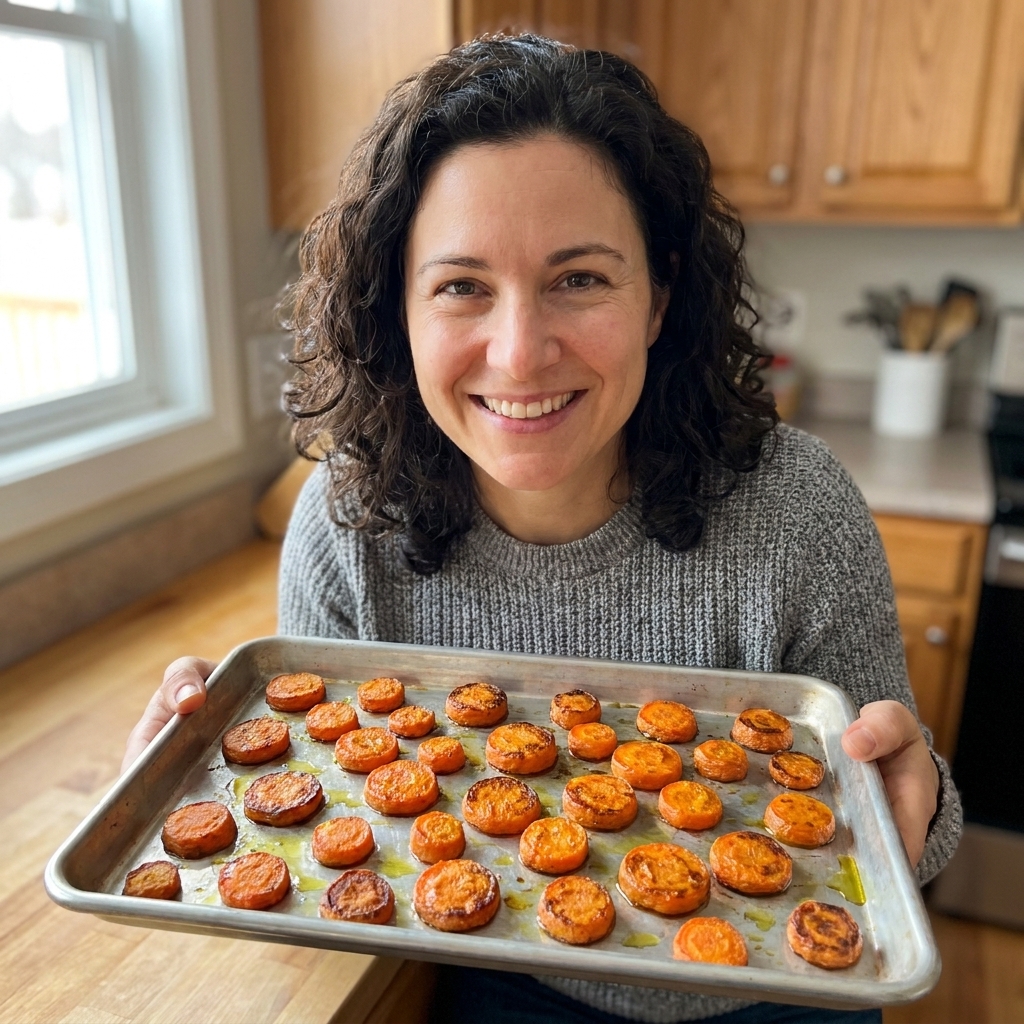
Timing: Frozen sliced carrots often take about 18 to 25 minutes at 450°F, but thinner cuts can finish sooner. If you want more browning, give them a head start, then add your protein later.
The sheet pan test
When you only have five ingredients, you do not have fifteen opportunities to fix the flavor. Texture matters more. Here’s how fresh and frozen behave in the situations most of us actually cook.
1) Browning
- Fresh: Browns more easily, especially broccoli and green beans.
- Frozen: Browns less, and later. You’ll usually get the best color at higher heat with a wide, single layer.
2) Timing with proteins
Fresh vegetables, especially green beans and smaller broccoli florets, can roast on the same schedule as many proteins. Frozen vegetables often need either more time or a head start.
- Works well with frozen: Chicken thighs, sausages, pork chops, anything that cooks 20 to 30 minutes.
- Trickier with frozen: Salmon, shrimp, thin chicken cutlets that cook quickly.
3) Sauces and glazes
Sweet sauces (teriyaki, honey mustard, barbecue) can burn at high heat. With frozen vegetables you often need higher heat to dry them out, which creates a little sauce conflict.
Fix: Roast vegetables and protein with oil, salt, and pepper first. Brush or drizzle sauce during the last 5 to 8 minutes. You still get caramelization without turning your pan into a smoke alarm audition.
Frozen veggies that roast
If you want one repeatable routine, this is it. It is the closest thing I have to a frozen-veg cheat code.
- Heat the oven. Set it to 450°F (or 425°F convection). Put the empty sheet pan in the oven while it preheats.
- Toss frozen vegetables with: 1 to 2 teaspoons oil per pound, salt, and your main seasoning (garlic powder, Italian seasoning, Cajun blend, whatever your five ingredients allow).
- Carefully spread on the hot pan. Listen for the sizzle. That is a good sign.
- Roast 10 minutes, then flip. This first stretch is about drying the surface.
- Add protein and/or sauce later if needed. Let the protein dictate the schedule.
Is this extra? A little. Is it still easier than chopping and washing a cutting board? Absolutely.
Pan note: A rimmed, light-colored aluminum sheet pan tends to brown more evenly and is less likely to scorch. Dark pans and very thin pans can run hotter, which is great for browning until it is not. If your frozen broccoli keeps burning at the tips, your pan might be part of the story.
So which should you choose?
Choose fresh when…
- You want crispy, browned vegetables as the main event.
- You are cooking something quick like salmon or shrimp and need veggies that roast fast.
- You are keeping seasoning super simple and relying on roasting to create flavor.
Choose frozen when…
- You want a reliable backup that is always ready.
- You are pairing veggies with longer-roasting proteins like chicken thighs or sausages.
- You value zero prep more than maximum browning.
My honest weeknight answer: I keep both. Fresh for when I have the bandwidth, frozen for when I have approximately seven minutes of willpower left.
Mini meal formulas
Each of these assumes oil, salt, and pepper are pantry basics. If you count those as ingredients, adjust accordingly.
Broccoli + sausage + mustard
- Broccoli (fresh or frozen)
- Chicken or pork sausage
- Dijon mustard
- Lemon
- Parmesan
Tip: If using frozen broccoli, roast broccoli 10 minutes first, then add sliced sausage.
Green beans + salmon + garlic
- Green beans (fresh is best here)
- Salmon fillets
- Garlic (or garlic powder)
- Lemon
- Breadcrumbs or panko
Tip: Add salmon during the last 10 to 12 minutes so it does not overcook.
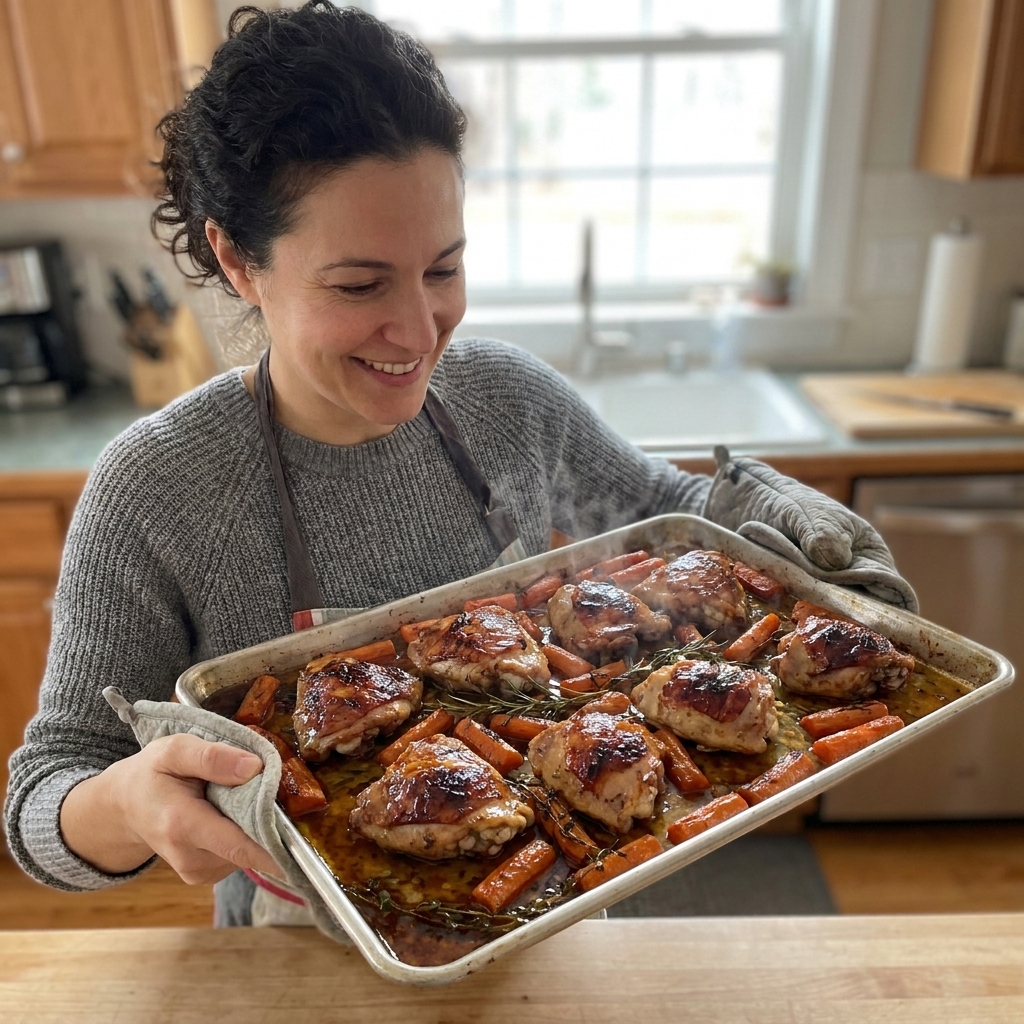
Carrots + chicken thighs + maple soy
- Carrots (fresh or frozen sliced)
- Chicken thighs
- Soy sauce
- Maple syrup or honey
- Garlic
Tip: Start carrots first if they are thick cut. Add the maple-soy mixture near the end to prevent burning.
FAQ
Should I thaw frozen vegetables before roasting?
Usually no. Thawing releases water and makes it harder to brown. Roast from frozen, use high heat, and give the vegetables space.
Why do my frozen veggies turn out watery?
The ice melts, then steams. Fix it by roasting hot, avoiding crowding, and patting dry vegetables like green beans if they seem especially frosty.
Can I mix fresh and frozen vegetables on the same pan?
You can, but treat frozen as the “slow, wet” ingredient. Give frozen vegetables a head start, or keep them on one side of the pan with extra space so they can release moisture without steaming the fresh vegetables.
Do I need parchment paper?
Parchment helps with cleanup and sticking. If you want maximum browning, a bare metal pan can help, especially for green beans. Just keep an eye on sauces so they do not scorch.
Should I adjust temperature for convection?
Yes. If your oven runs convection, start about 25°F lower than the recipe temperature and watch for faster browning, especially on frozen broccoli tips.