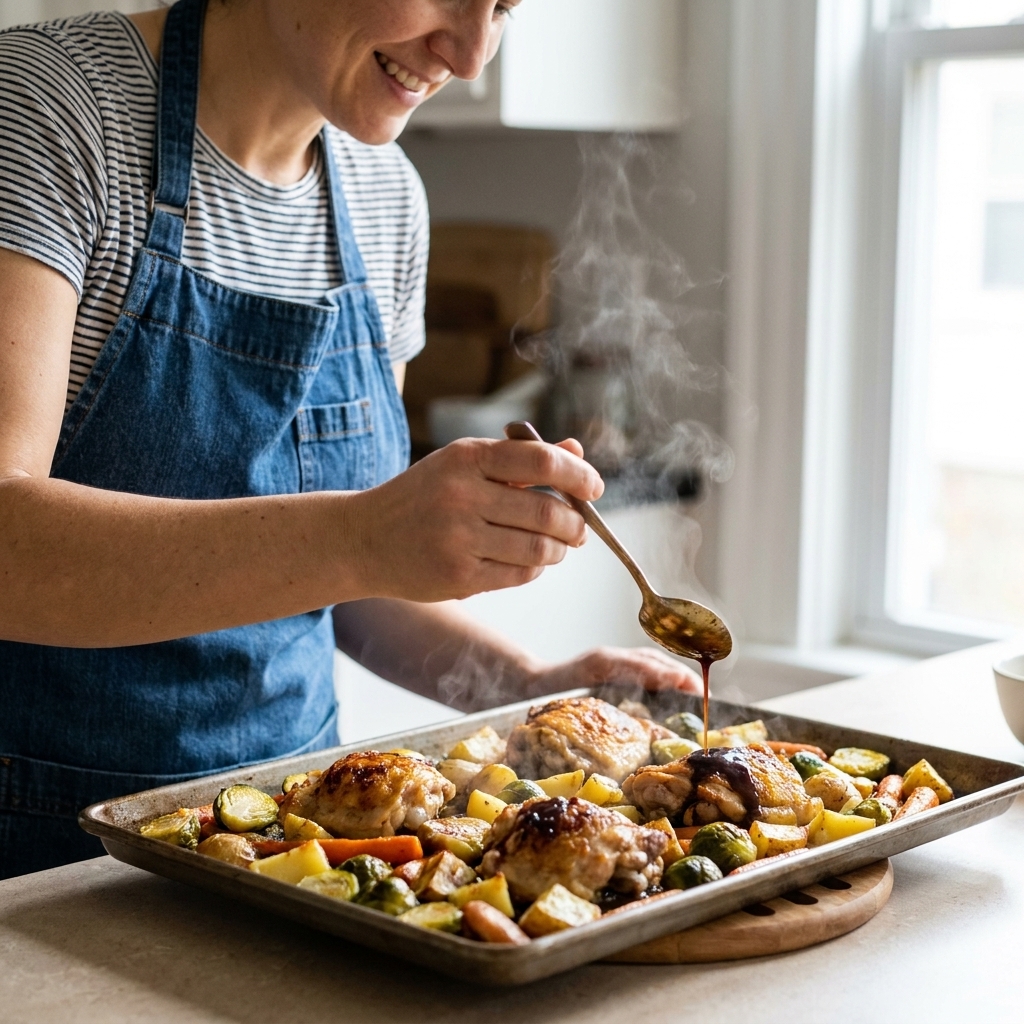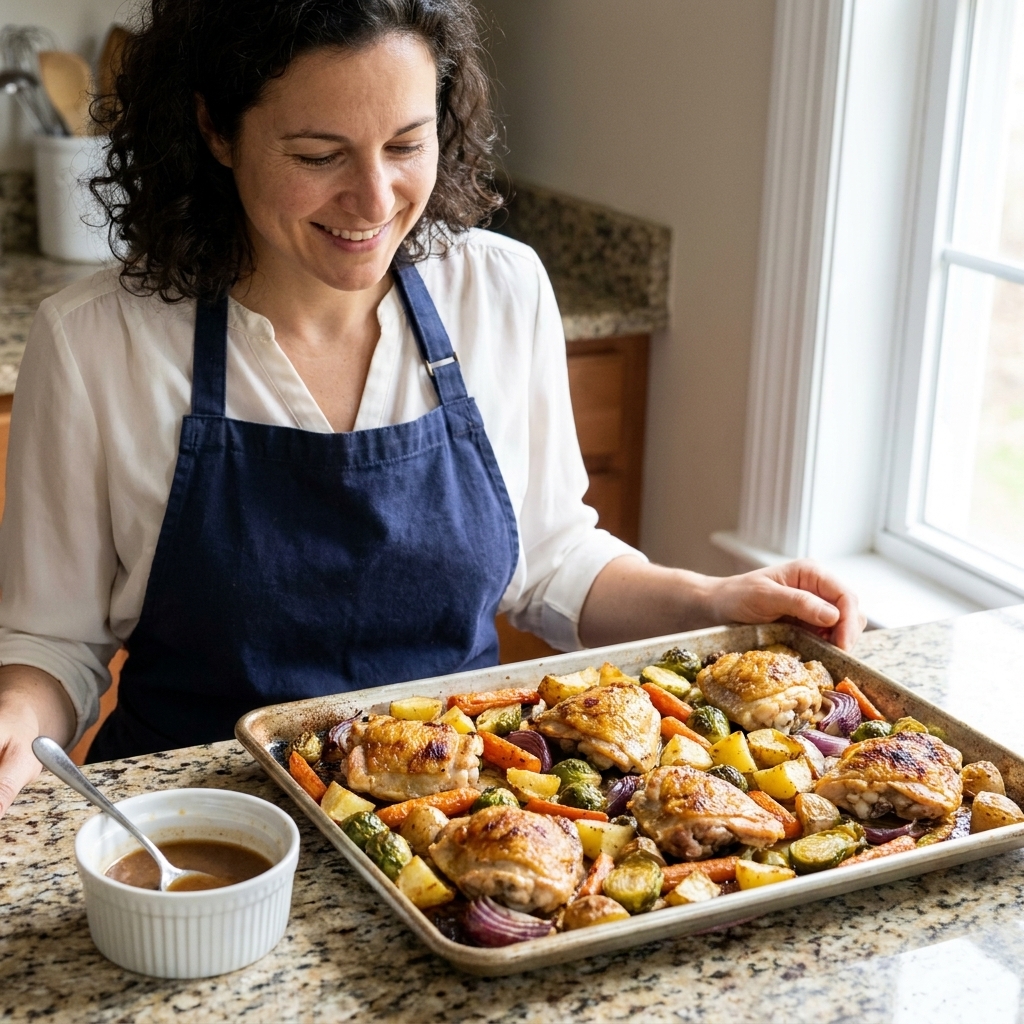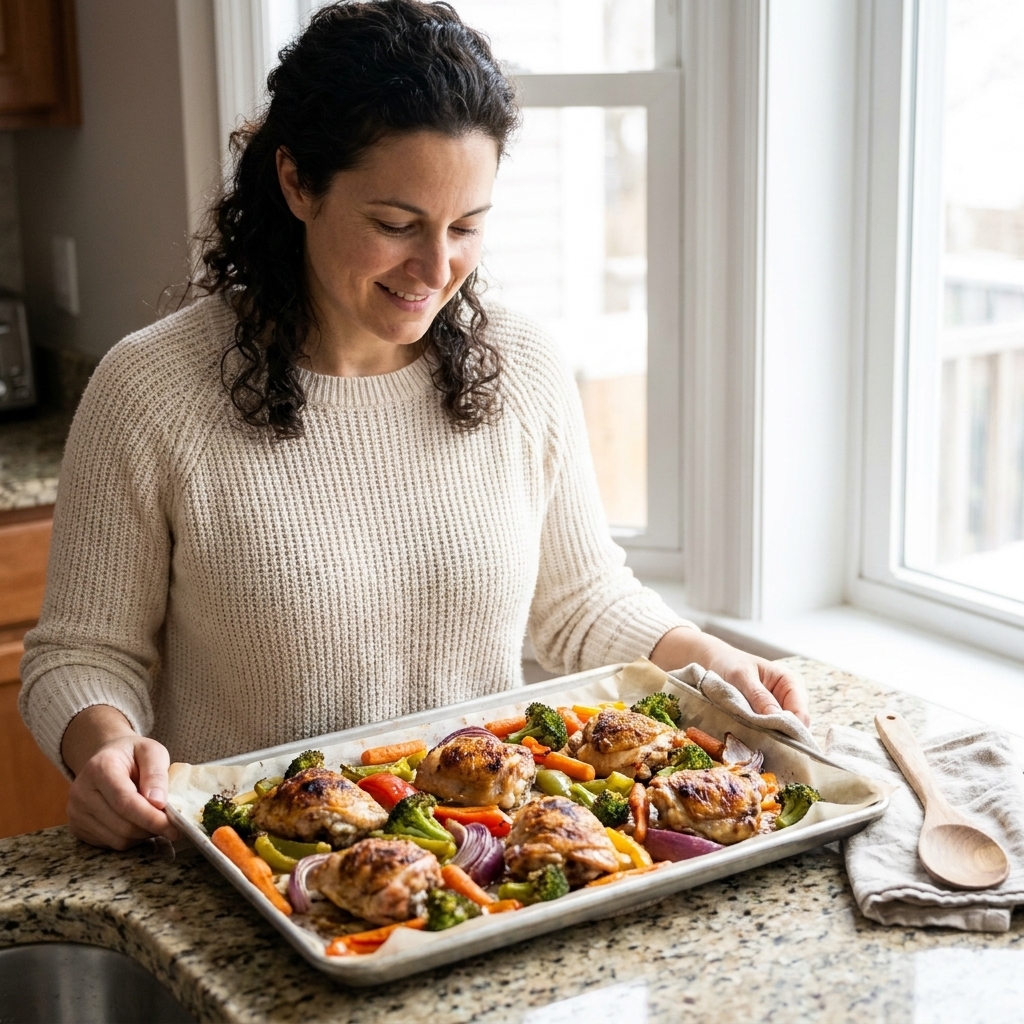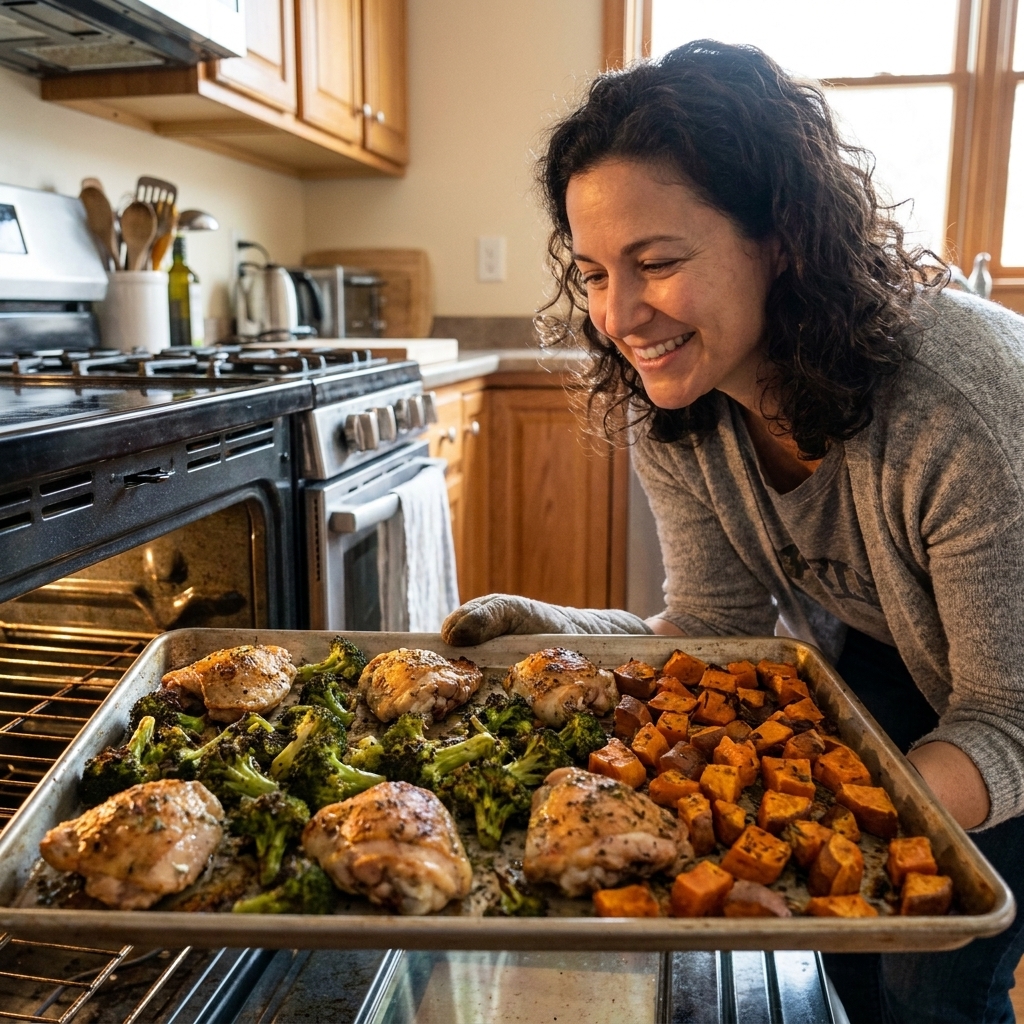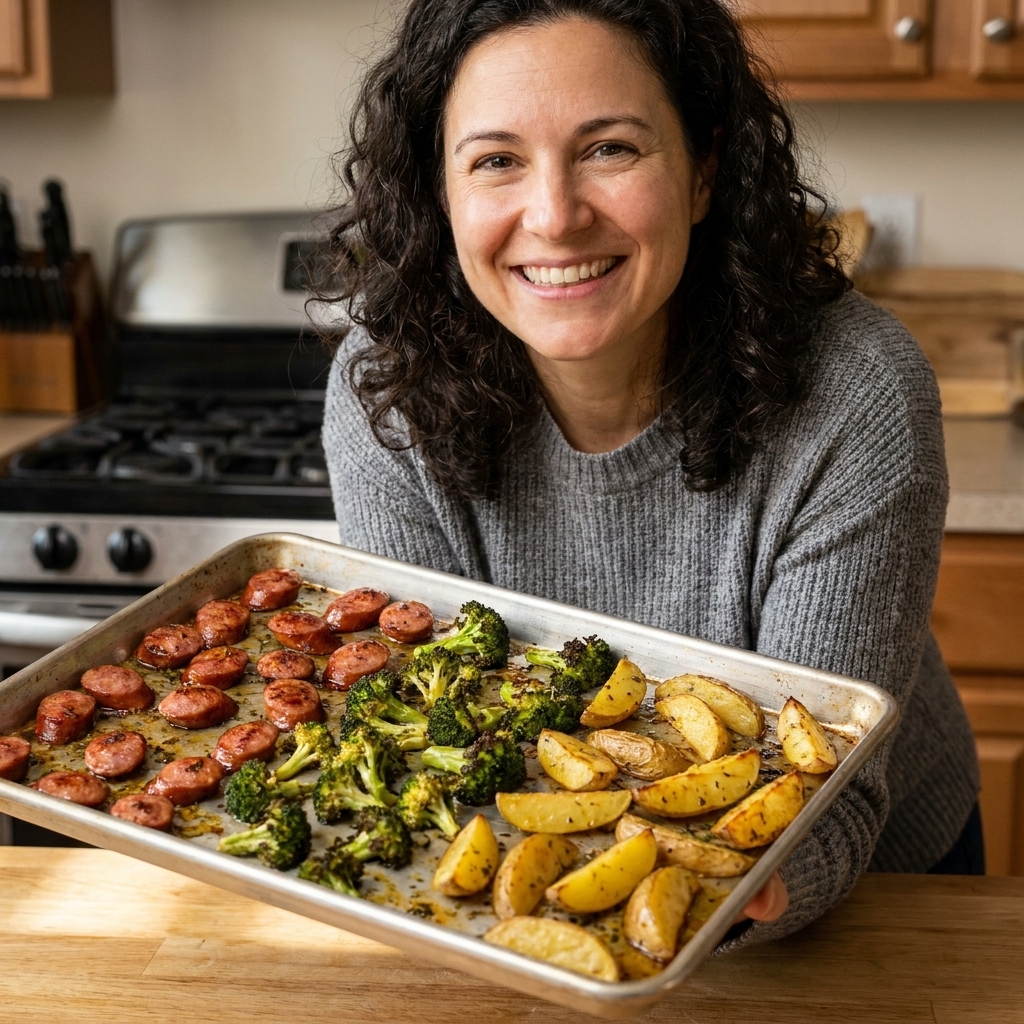
Sheet pan dinners are my love language. One pan, hot oven, everyone fed. The only problem is that roasted chicken and vegetables can start tasting a little… same-y if you are always reaching for the same tired shaker of Italian seasoning.
The fix is not a complicated recipe. It is a small rotation of spice blends (for deep, roasty flavor) plus finishing sauces (for brightness and wow). Think of spice blends as your bass line and finishing sauces as your high notes. You need both to make the meal sing.
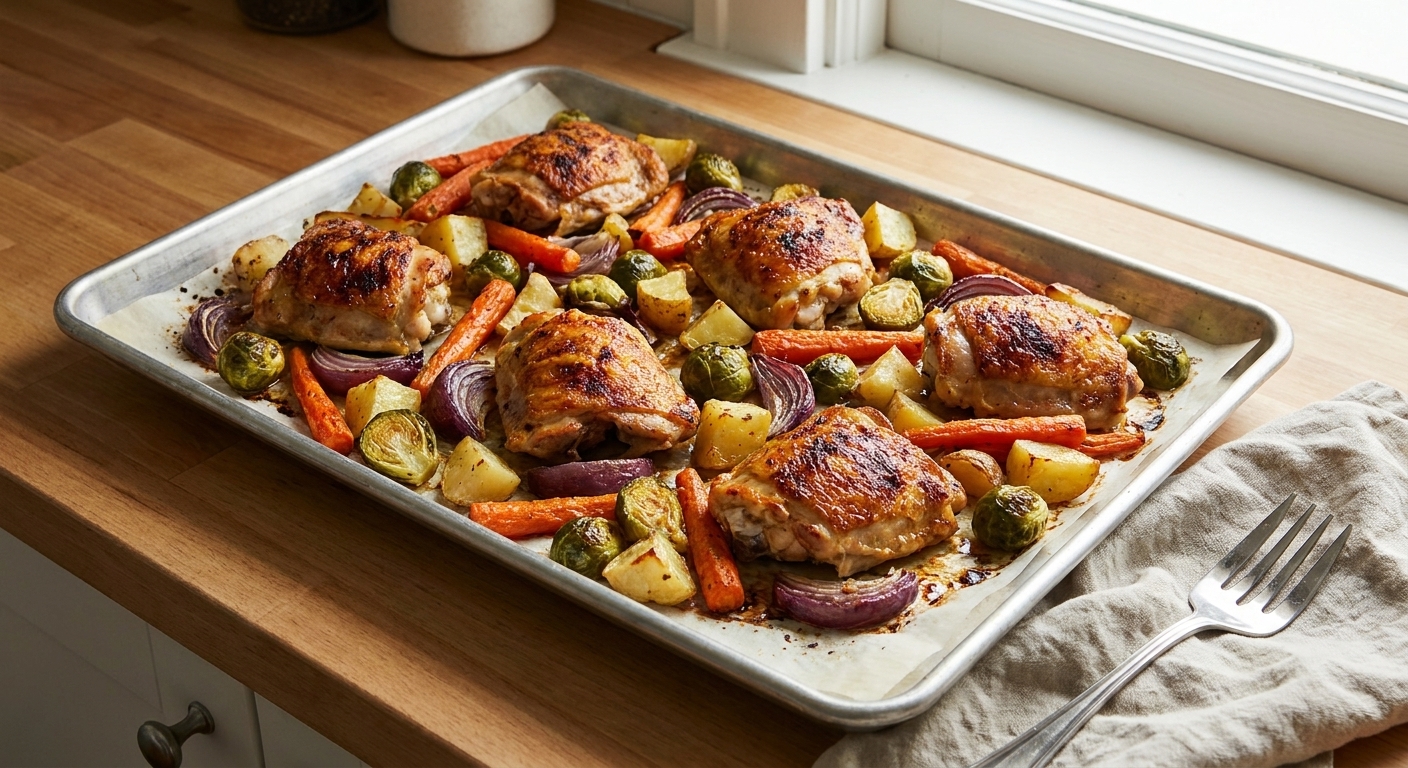
The flavor math
Roasting gives you browning (mostly Maillard magic), crisp edges, and some true caramelization, especially on sweeter vegetables. What it does not automatically give you is acidity, fresh herbs, or that glossy, restaurant-style finish. Here is the simple formula I use when I am building a sheet pan dinner on a weeknight:
- Salt (always) to wake everything up.
- Fat (oil, yogurt, mayo, or butter) to help spices bloom and encourage browning.
- Spice blend for aroma and color.
- Something bright at the end (lemon, vinegar, yogurt sauce, chimichurri, salsa verde).
- Something punchy at the end (garlic, mustard, chili, parmesan, miso).
If you do nothing else, remember this: season before roasting, sauce after roasting. Sauces with sugar, fresh herbs, raw garlic, or dairy are happiest off the heat or added in the last 1 to 3 minutes.
Spice blends, simplified
I used to treat spice blends like mysterious wizard dust. Then I realized most of them follow the same structure:
- 2 parts base spices (paprika, cumin, coriander, chili powder, curry powder)
- 1 part supporting spices (garlic powder, onion powder, oregano, thyme)
- 1 part “spark” (black pepper, crushed red pepper, cayenne, sumac, mustard powder)
- Salt added separately, unless you are intentionally making an all-in-one blend
For sheet pan cooking, I like to keep blends unsalted so I can salt meat and vegetables properly based on size and moisture. (Potatoes want more salt than zucchini. Chicken thighs want more salt than shrimp.)
My baseline: the 3-2-1 method
When I am in a hurry, this is my default for a full pan (about 1½ to 2 pounds protein plus 1½ to 2 pounds vegetables):
- 3 tablespoons oil
- 2 teaspoons spice blend
- 1 to 1½ teaspoons kosher salt (split between protein and veggies)
If you are using table salt, start with ½ to ¾ teaspoon total and adjust. (Different brands pack differently, so go slow.)
Adjust up if you have a huge pan of potatoes or cauliflower. Adjust down for delicate seafood.
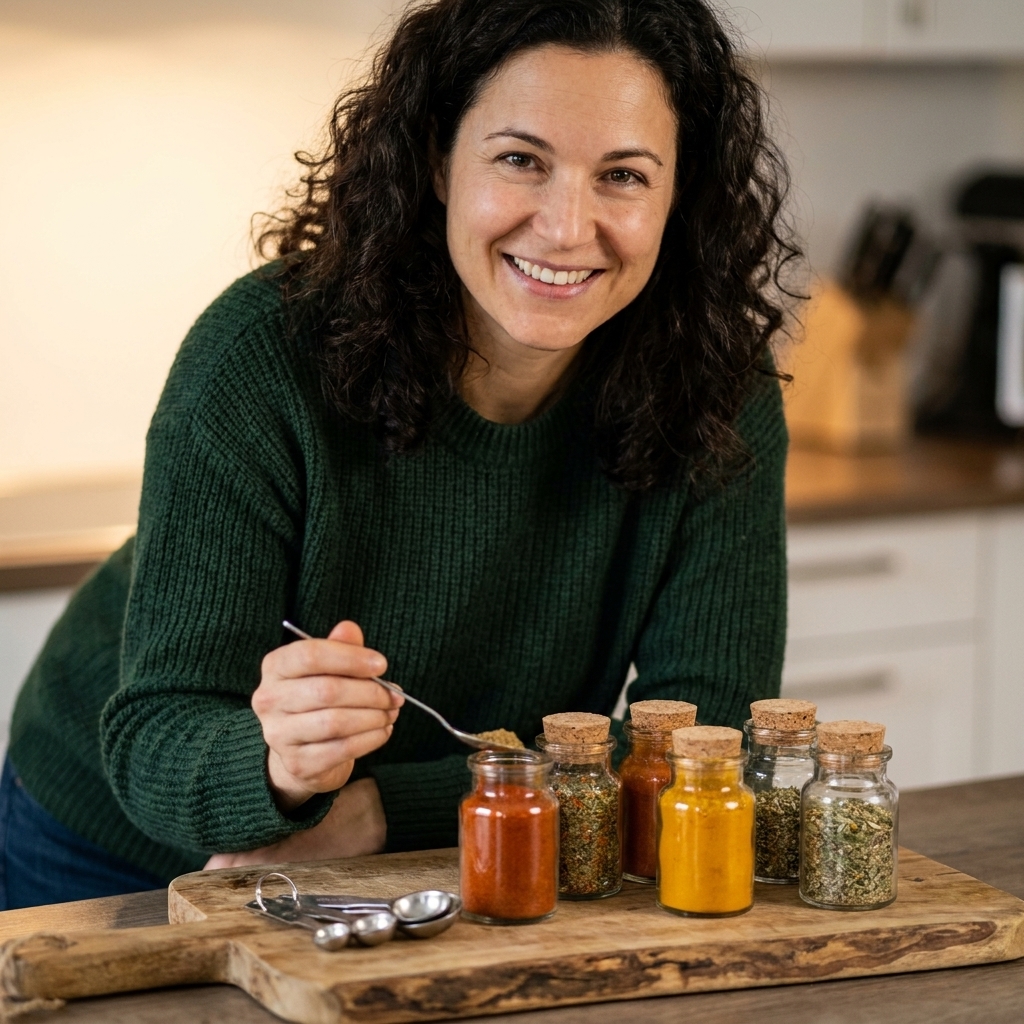
8 spice blends
Each blend below is written as a small batch you can stir together in a bowl or jar. Multiply as needed. Store tightly covered, away from heat and sunlight.
1) Smoky Paprika Garlic (my “everything” blend)
- 2 teaspoons smoked paprika
- 1 teaspoon garlic powder
- 1 teaspoon onion powder
- ½ teaspoon dried oregano
- ½ teaspoon black pepper
Best with: chicken thighs, pork chops, chickpeas, broccoli, sweet potatoes.
Finisher idea: lemony yogurt sauce or a quick garlic butter drizzle.
2) Lemon Herb Pepper
- 2 teaspoons dried thyme or Italian seasoning
- 1 teaspoon garlic powder
- 1 teaspoon lemon zest (fresh is best) or ½ teaspoon dried lemon peel
- ½ teaspoon black pepper
Best with: salmon, chicken breast, green beans, asparagus, baby potatoes.
Finisher idea: squeeze of lemon plus parmesan.
3) Taco Night Roaster Blend
- 2 teaspoons chili powder
- 1 teaspoon ground cumin
- ½ teaspoon smoked paprika
- 1 teaspoon garlic powder
- ¼ teaspoon dried oregano
Best with: chicken, shrimp, sliced bell peppers and onions, cauliflower, sweet potatoes.
Finisher idea: lime crema or cilantro-lime drizzle.
4) Mediterranean Roast Blend
- 2 teaspoons ground coriander
- 1 teaspoon ground cumin
- 1 teaspoon dried oregano
- ½ teaspoon garlic powder
- ½ teaspoon black pepper
Best with: chicken, lamb, chickpeas, zucchini, eggplant, red onion.
Finisher idea: tahini lemon sauce.
5) Curry-Roast Shortcut
- 2 teaspoons curry powder
- 1 teaspoon ground cumin
- ½ teaspoon turmeric (optional but pretty)
- ½ teaspoon garlic powder
- ¼ teaspoon cayenne (optional)
Best with: chicken thighs, tofu, cauliflower, carrots, potatoes.
Finisher idea: yogurt + lime + pinch of salt.
6) Cajun-Inspired Sheet Pan Blend
- 2 teaspoons paprika
- 1 teaspoon garlic powder
- 1 teaspoon onion powder
- ½ teaspoon dried thyme
- ¼ to ½ teaspoon cayenne
- ½ teaspoon black pepper
Best with: shrimp, sausage, chicken, peppers, corn, potatoes.
Finisher idea: butter + lemon + parsley.
7) Sesame Ginger Roaster (pantry version)
- 2 teaspoons toasted sesame seeds
- 1 teaspoon ground ginger
- 1 teaspoon garlic powder
- ½ teaspoon white pepper or black pepper
Best with: salmon, chicken, broccoli, snap peas, carrots.
Finisher idea: soy-lime drizzle or spicy mayo drizzle.
8) Za’atar Plus (shortcut, but worth it)
- 2 teaspoons za’atar
- 1 teaspoon garlic powder
- ½ teaspoon ground coriander
- ½ teaspoon black pepper
Yes, this one starts with store-bought za’atar and builds from there. Consider it your “open the jar and keep moving” option.
Best with: chicken, halloumi, chickpeas, cauliflower, carrots.
Finisher idea: tahini + lemon, or a simple cucumber yogurt sauce.
Quick marinades
Marinades are great, but I am picky about them for roasting. Too much sugar can burn. Too much liquid can steam your vegetables. These are the weeknight-friendly versions that play nicely with high heat.
Timing: how long is enough
For most proteins, 20 to 30 minutes makes a difference. For food safety, marinate in the fridge, then let the protein sit on the counter just long enough to take the chill off while the oven heats (about 15 to 20 minutes).
A few quick guardrails:
- Chicken: 30 minutes to overnight is fine, especially with yogurt marinades.
- Pork: 30 minutes to 8 hours is a sweet spot.
- Fish and shrimp: keep it short, about 10 to 30 minutes, especially if the marinade is acidic or salty.
Pat off excess marinade before roasting if it looks wet.
1) Yogurt garlic marinade (tenderizes and browns beautifully)
- ½ cup plain Greek yogurt
- 1 tablespoon olive oil
- 1 to 2 grated garlic cloves
- 1 teaspoon spice blend (Mediterranean or curry is great)
- Salt to taste
Best with: chicken thighs, chicken drumsticks, cauliflower florets on the same pan.
2) Mustard herb marinade (no mess, big payoff)
- 2 tablespoons Dijon mustard
- 1 tablespoon olive oil
- 1 teaspoon dried herbs
- 1 teaspoon maple syrup or honey (optional, keep it light)
- Salt and pepper
Best with: pork tenderloin medallions, chicken, Brussels sprouts.
3) Soy ginger marinade (minimal liquid, maximum flavor)
- 2 tablespoons soy sauce
- 1 tablespoon neutral oil
- 1 teaspoon toasted sesame oil
- 1 teaspoon grated ginger
- 1 minced garlic clove
Best with: salmon, chicken thighs, broccoli, mushrooms.
10 finishing sauces
Finishing sauces are my favorite trick because they make a basic pan taste intentionally composed. Also, they are usually one bowl, one whisk, and done. If you can stir, you can sauce.
1) Lemon-Garlic Butter Drizzle
Melt 3 tablespoons butter with 1 grated garlic clove. Off heat, stir in 1 to 2 teaspoons lemon juice, pinch of salt, and chopped parsley if you have it. Spoon over chicken, shrimp, potatoes, broccoli.
2) Honey Mustard Sauce
Whisk 2 tablespoons Dijon, 1 tablespoon honey, 1 tablespoon olive oil, and 1 to 2 teaspoons vinegar or lemon juice. Great on pork, chicken, roasted carrots, and Brussels sprouts.
3) Tahini Lemon Sauce
Whisk ¼ cup tahini, 2 tablespoons lemon juice, 1 small grated garlic clove, pinch of salt, and enough warm water to make it drizzleable. Perfect for cauliflower, chickpeas, chicken, sweet potatoes.
4) Quick Chimichurri
Finely chop 1 cup parsley, then stir in 1 small grated garlic clove, 2 tablespoons red wine vinegar, ⅓ cup olive oil, pinch of salt, and crushed red pepper. Spoon over steak bites, chicken, roasted mushrooms, and peppers.
5) Yogurt Dill Sauce
Stir ¾ cup Greek yogurt with 1 tablespoon lemon juice, salt, pepper, and 1 to 2 tablespoons chopped dill. Amazing with salmon, chicken, roasted potatoes, and cucumbers on the side.
6) Spicy Mayo Lime Drizzle
Mix ⅓ cup mayo with 1 to 2 teaspoons lime juice and 1 to 2 teaspoons hot sauce or sriracha. Thin with a teaspoon of water if needed. Great with shrimp, chicken, roasted corn, sweet potatoes.
7) Salsa Verde Shortcut
Chop a handful of parsley or cilantro, stir in 1 tablespoon capers (or chopped pickles), 1 tablespoon lemon juice, ⅓ cup olive oil, and a pinch of salt. Spoon over chicken, pork, fish, or roasted zucchini.
8) Miso Maple Glaze (use at the end)
Whisk 1 tablespoon white miso with 1 tablespoon maple syrup and 1 tablespoon warm water. Brush on salmon or chicken for the last 2 to 3 minutes of roasting. It caramelizes fast, so keep an eye on it.
9) Parmesan Pepper Finish
When the pan comes out, shower everything with finely grated parmesan and lots of black pepper. Add a squeeze of lemon if you want it brighter. This is the easiest “I actually finished it” move on earth.
10) Herby Olive Oil and Vinegar
Stir ¼ cup olive oil with 1 tablespoon vinegar (red wine, champagne, or sherry), pinch of salt, and a handful of chopped herbs. Drizzle over roasted vegetables right before serving for instant salad energy.
Easy swaps (allergy-friendly)
- Dairy-free: use olive oil + lemon + garlic as a finisher, or try a dairy-free yogurt.
- Egg-free: use vegan mayo or swap mayo drizzles for olive oil based sauces.
- Sesame-free: swap tahini for sunflower seed butter, then thin with warm water and lemon.
Best pairings
If you ever stare at a sheet pan and think, “Okay, but what flavors actually go together?” this is my cheat sheet.
| Sheet pan main | Spice blend | Vegetables that love it | Finishing sauce |
|---|---|---|---|
| Chicken thighs | Smoky paprika garlic | Broccoli, sweet potatoes, red onion | Lemon-garlic butter |
| Salmon | Lemon herb pepper | Asparagus, green beans, baby potatoes | Yogurt dill sauce |
| Sausage | Cajun-inspired | Peppers, onions, potatoes, corn | Spicy mayo lime drizzle |
| Pork chops | Mustard herb | Brussels sprouts, carrots | Honey mustard sauce |
| Tofu | Curry-roast | Cauliflower, carrots, potatoes | Yogurt lime sauce |
| Steak bites | Chimichurri-friendly (salt, pepper, paprika) | Mushrooms, peppers, onions | Quick chimichurri |
| Chickpeas | Za’atar plus | Cauliflower, zucchini | Tahini lemon sauce |
Timing tricks
This is the unglamorous part of sheet pan life, but it is what keeps dinner from turning into “why is the broccoli burnt and the chicken still pale?”
Stagger the pan
- Start dense vegetables first: potatoes, carrots, cauliflower, Brussels sprouts. Give them 10 to 15 minutes head start at 425°F.
- Add quick-cooking vegetables later: zucchini, asparagus, green beans, cherry tomatoes. They often need only 10 to 15 minutes total.
- Add finishing sauce last: drizzle after roasting, or brush on in the final 2 to 3 minutes if it contains sugar or miso.
Dry vegetables roast better
Wet veggies steam. If you rinsed something, give it a quick towel dry. Also, do not crowd the pan. If everything is piled, you will get soft vegetables instead of crisp edges.
Pan and oven basics
- Use a heavy sheet pan: thicker pans brown better and warp less.
- Preheat the oven fully: give it time to actually hit 425°F.
- Convection helps: if you have convection, use it for extra browning (and start checking a few minutes early).
- Optional move: preheat the pan while the oven heats, then add oiled vegetables and protein. You will hear a little sizzle, and that is the point.
Make-ahead
If you want sheet pan dinners to feel effortless, do a tiny bit of prep when you have five minutes. Not a meal prep marathon. Just enough to make weeknights smoother.
Batch your blends
- Make 2 to 3 blends you love.
- Store in small jars.
- Label in your head by color: smoky red, herby green, curry gold.
Keep two sauces “always possible”
I recommend one creamy and one vinegary:
- Creamy: yogurt + lemon + garlic + salt
- Vinegary: olive oil + vinegar + chopped herbs or capers
Both take under 3 minutes and cover a huge range of sheet pan meals.
Common mistakes
“My spices taste dusty.”
Use enough oil and roast hot. Spices need fat and heat to bloom. Also check if your spices are ancient. If your paprika smells like nothing, it is not doing you any favors.
“It tastes flat even though I salted it.”
Add acid at the end. Lemon juice, vinegar, pickled onions, even a spoonful of salsa can snap everything into focus.
“My sauce burned.”
If it has honey, maple, brown sugar, or miso, apply it at the end. Roast first, glaze later.
“The chicken is done but the vegetables are not.”
Give dense vegetables a head start, or cut them smaller. You can also pull the protein to rest and keep roasting the veg for 8 to 10 more minutes.
FAQ
Should I season vegetables and meat the same way?
You can, but you do not have to. I often use the same spice blend, then salt them separately. Vegetables usually need a touch more salt and oil to taste lively after roasting.
When do I add fresh garlic or fresh herbs?
Fresh garlic can burn at 425°F, especially if it is minced. Whole cloves, big slices, or garlic tucked into oil hold up better, but my usual move is garlic powder before roasting, then fresh garlic in a finishing sauce. Fresh herbs are best stirred into sauces or sprinkled on after roasting.
Can I use store-bought spice blends and sauces?
Absolutely. This guide is here so you are never stuck without them. If you are buying blends, check if they contain salt and adjust your salting accordingly.
What is the easiest finisher if I have nothing in the fridge?
Olive oil, lemon (or any vinegar), salt, and black pepper. Add grated parmesan if you have it. That combo rescues more sheet pan dinners than I care to admit.
If you want to start small, pick one blend and one finishing sauce from this list and make them your default for the week. That is the whole secret. Not more work, just better timing and bolder finishing.