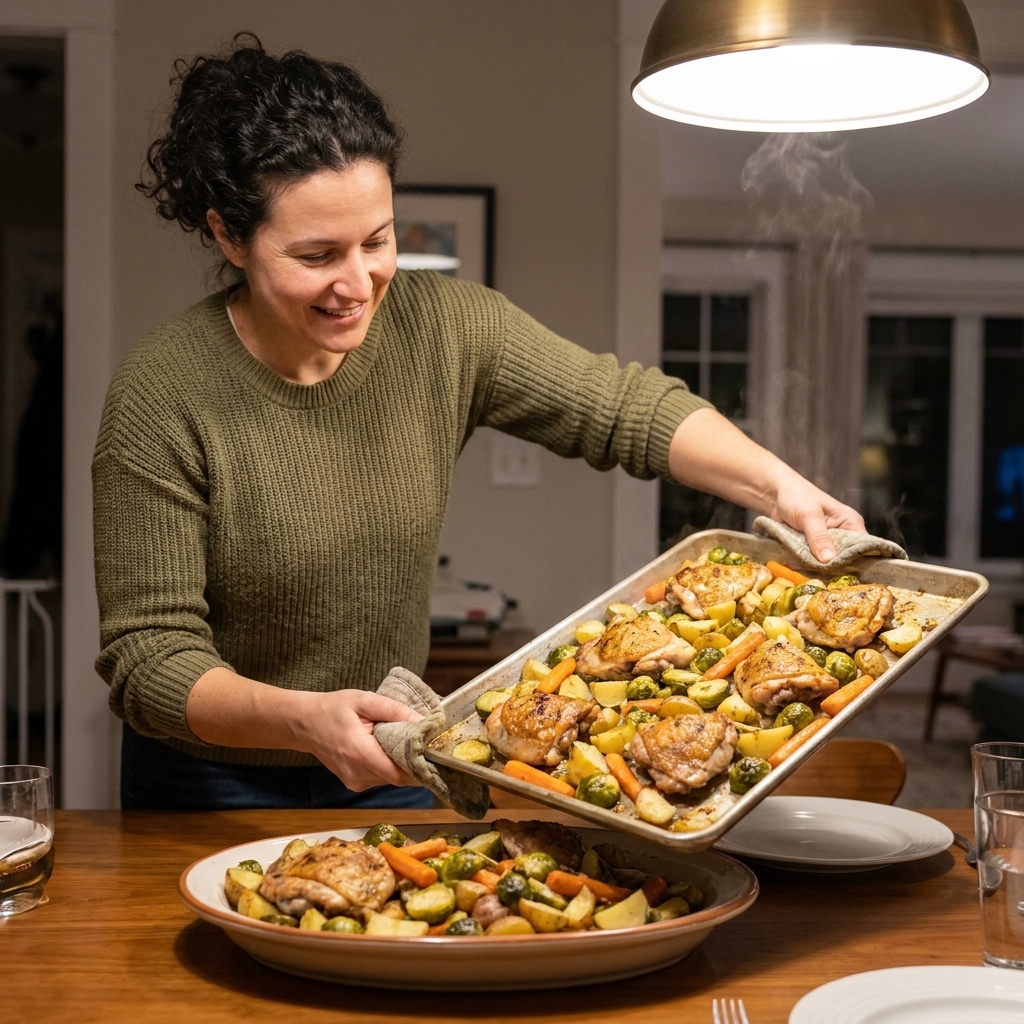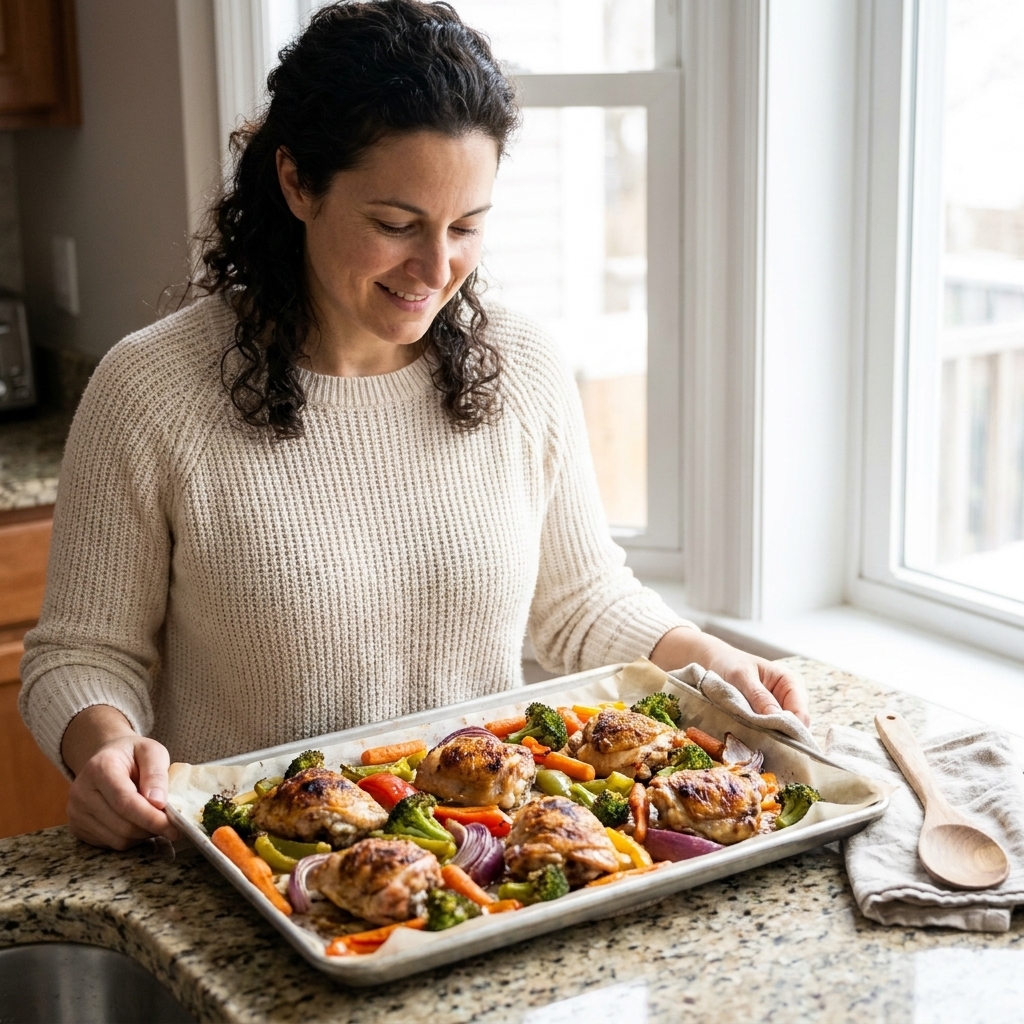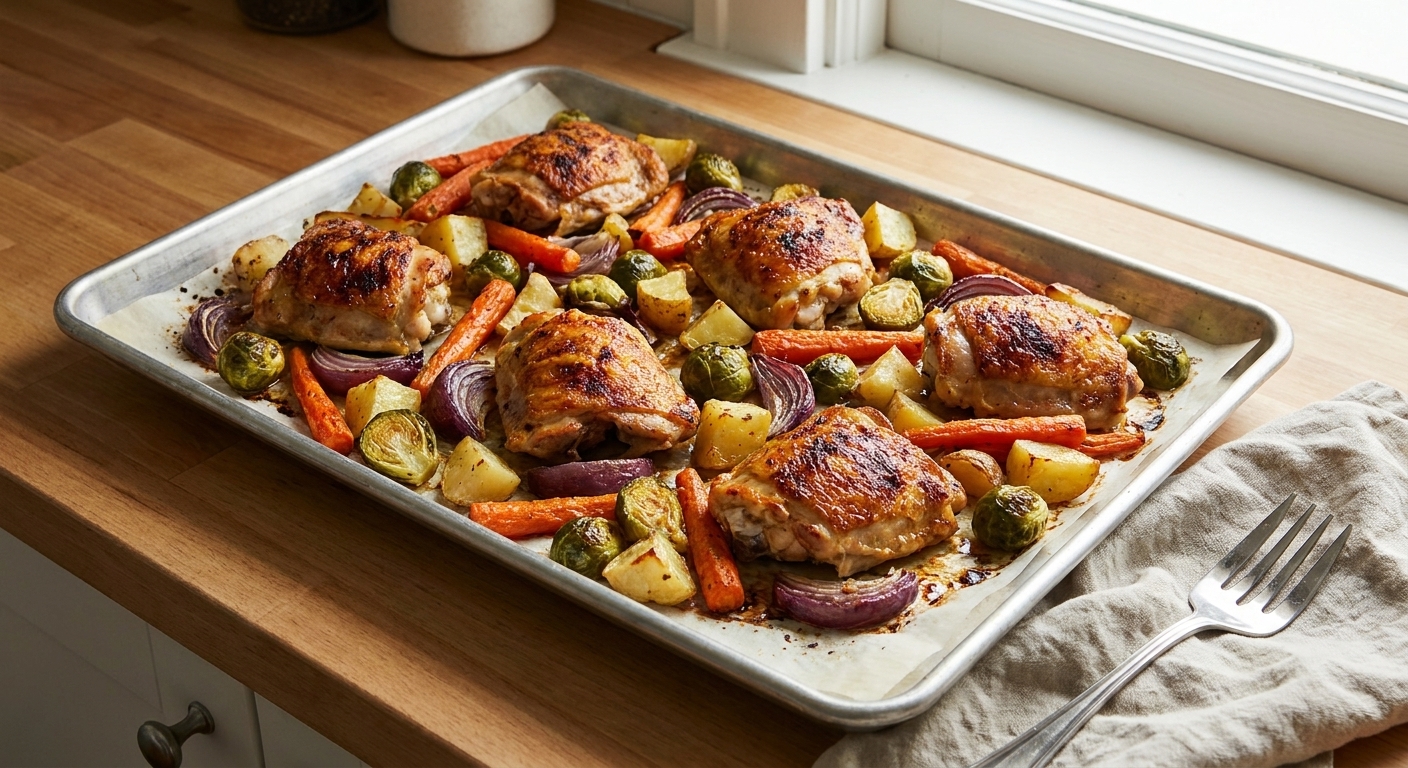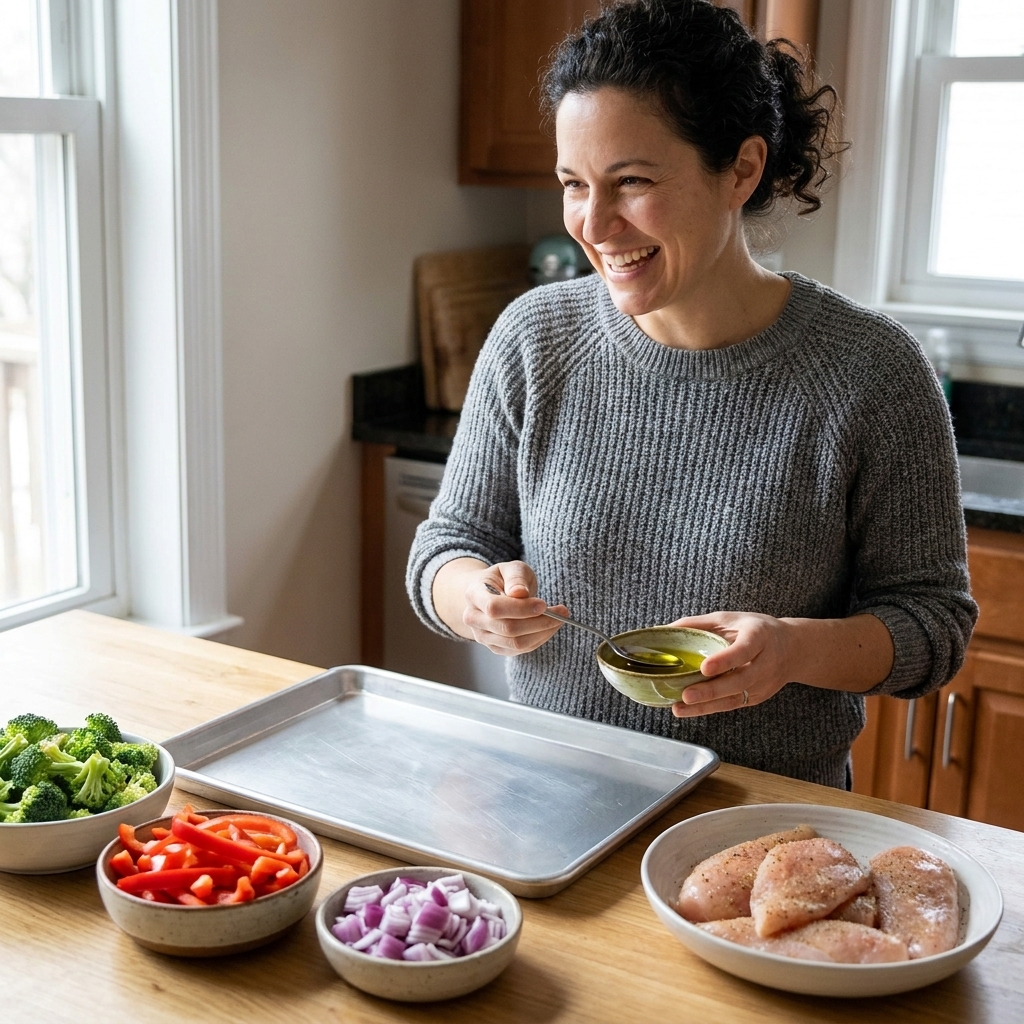
I love a sheet pan dinner for the same reason I love a one-pot pasta: it gives me my evening back. But let’s be honest, sheet pan meals can swing wildly between “restaurant-level caramelization” and “sad, watery vegetables next to dry chicken.” The good news is you do not need a specific recipe every time. You need a formula.
This is the exact ratio and timing framework I use when I’m staring into the fridge at 5:30 pm, trying to turn random ingredients into a real dinner with one pan and minimal regret.
The core formula
For one standard half sheet pan (about 18 x 13 inches), here’s the sweet spot for a balanced dinner that actually roasts instead of steams.
Ratio
- Protein: 1 to 1 1/2 pounds
- Vegetables: 4 to 6 cups, chopped
- Starch (optional): 2 to 3 cups, chopped or small
- Fat: 2 to 3 tablespoons oil (total for the whole pan)
- Seasoning: 1 1/4 to 1 3/4 teaspoons kosher salt total (about 4 to 7 g), plus pepper and spices
- Acid to finish: 1 to 2 tablespoons (lemon, lime, vinegar, pickled something)
Quick crowding note: If you’re using the optional starch, aim for the lower end of the vegetable range or keep everything a little tighter (smaller portions, more space). If you can’t keep it in a single layer, you need a second pan. This is not a personal failure. It is physics.
Why this works: Most soggy sheet pan dinners come down to crowding (too much food) and wet ingredients. This ratio keeps everything in a single layer with breathing room so hot air can circulate and browning can happen.
The non-soggy rules
1) Hot oven, hot pan
Set the oven to 425°F (or 450°F if your vegetables are sturdy and your smoke alarm is emotionally stable). Slide the empty sheet pan in while the oven preheats, then carefully pull it out, add your oil, and then add your ingredients.
Small but important caveat: At 450°F, choose a higher-smoke-point oil (avocado, grapeseed, canola) and be cautious with sugary marinades or glazes. Sugar and extra-virgin olive oil can go from “charming” to “why is the kitchen foggy” fast.
That initial sizzle is your insurance policy against steaming.
2) One layer means one layer
If you can’t see the pan peeking through in a few places, you are crowded. Use a second pan or cook in batches. Future you will be grateful when you are not eating limp zucchini.
3) Dry ingredients roast, wet ingredients steam
- Pat protein dry with paper towels before seasoning.
- After washing vegetables, dry them well.
- Keep cut sizes consistent. Small pieces cook faster; big chunks stay crunchy and resentful.
- If using frozen vegetables, roast them from frozen on a very hot pan and expect less browning. Better yet, save frozen veg for soups and stir-fries.
4) Oil goes on the food, not just the pan
Toss vegetables with oil and salt in a bowl (or right on the pan if you like living on the edge), then spread them out. Oil helps heat transfer and browning. Dry seasoning alone does not.
The timing blueprint
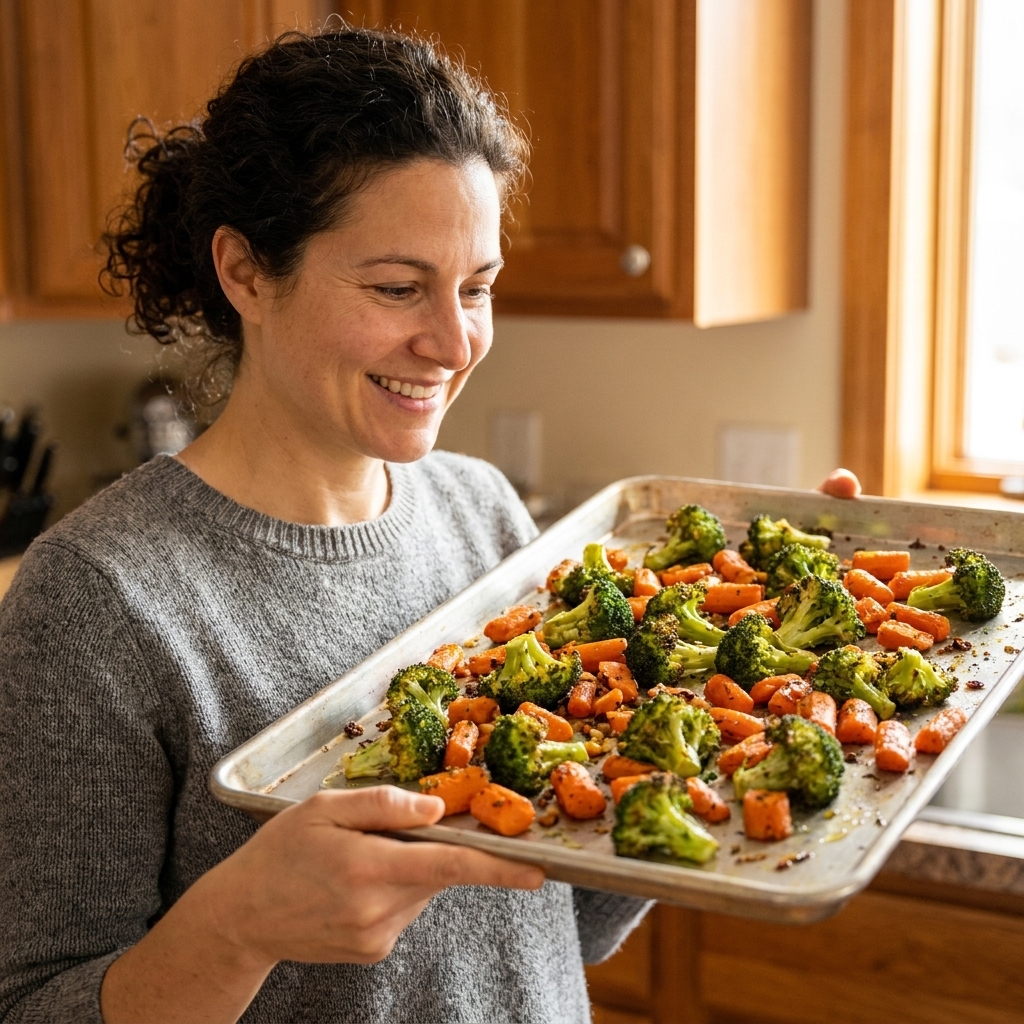
Here’s the trick: sheet pan dinners work best in waves. Start the items that take longest, then add the quick-cooking ingredients later. You can do this with one pan and one oven, I promise.
Also: ovens have personalities. If your oven runs hot on one side (many do), rotate the pan halfway through for more even browning.
Quick timing guide at 425°F
| Ingredient | Typical cook time | When to add |
|---|---|---|
| Bone-in chicken thighs | 35 to 45+ min | Start at minute 0 (cook to 165°F minimum; many prefer 175 to 185°F for juicy thighs) |
| Chicken breasts (cutlets or small pieces) | 18 to 25 min | Cutlets (about 1/2-inch) at minute 0; thicker pieces start at minute 10 (pull at 165°F) |
| Sausage links (pre-cooked) | 15 to 20 min | Minute 10 to 15 (you’re mainly browning and heating through) |
| Salmon (1-inch fillet) | 10 to 14 min | Last 10 to 14 minutes (pull around 120 to 125°F for medium, or cook longer if you like it more done) |
| Shrimp (large, peeled) | 6 to 10 min | Last 6 to 10 minutes (done when opaque and just curled into a C) |
| Firm tofu (pressed, cubed) | 20 to 30 min | Start at minute 0 (toss halfway for even browning) |
| Potatoes (1-inch chunks) | 30 to 40 min | Start at minute 0 |
| Sweet potatoes (1-inch chunks) | 25 to 35 min | Start at minute 0 |
| Broccoli florets | 12 to 18 min | Minute 15 to 20 |
| Green beans | 12 to 18 min | Minute 15 to 20 |
| Bell peppers, onions | 18 to 25 min | Minute 10 |
| Zucchini, asparagus | 8 to 12 min | Last 8 to 12 minutes |
| Cherry tomatoes | 8 to 12 min | Last 8 to 12 minutes |
My weeknight move: I set a timer for the long-cook item, then add the quick veg halfway through. If something delicate is on the menu (salmon, shrimp, asparagus), it goes on during the final stretch.
How to build your pan
Step 1: Pick a protein that can handle high heat
Sheet pan dinners are happiest with proteins that roast well at 425°F.
- Best: chicken thighs, sausages, shrimp, salmon, cod, pork tenderloin medallions, tofu, chickpeas
- Trickier: thick chicken breasts (they dry out fast), delicate white fish (needs late add-in timing), lean pork chops (benefit from brining or a sauce finish)
Pork tenderloin note: Medallions cook fast. Think 3/4 to 1-inch thick, and pull at 145°F, then rest a few minutes.
Step 2: Choose 1 to 2 long-roast vegetables
These form your sturdy base and give you those sweet browned edges.
- Potatoes, sweet potatoes
- Carrots, parsnips, beets
- Cauliflower, Brussels sprouts
- Winter squash (cut small)
Step 3: Add 1 quick-roast vegetable later
This keeps color and texture on the plate.
- Broccoli, green beans
- Bell peppers, onions
- Zucchini, asparagus
- Cherry tomatoes
Step 4: Choose a flavor lane
I think of sheet pan dinners like playlists. Pick a vibe, then keep seasonings and sauces in the same neighborhood.
- Mediterranean: lemon, oregano, garlic, olives, feta
- Tex-Mex: chili powder, cumin, lime, salsa, cotija
- Middle Eastern: za’atar, sumac, tahini, yogurt
- Honey mustard: Dijon, honey, thyme
- Teriyaki-ish: soy sauce, ginger, sesame oil, scallions (added after roasting)
Step 5: Finish with acid and something crunchy
This is what makes it taste like a full recipe instead of “meat and vegetables.”
- Acid: lemon juice, lime juice, red wine vinegar, rice vinegar, pickled onions
- Crunch: toasted nuts, pepitas, panko crumbs toasted in a little oil, crispy onions
- Fresh: herbs, scallions, arugula tossed on at the end
The seasoning math
Underseasoning is the quiet villain of sheet pan dinners. Because everything is spread out, salt has to be consistent. Here’s the simple approach I use for one half sheet pan:
- Kosher salt: 1 1/4 to 1 3/4 teaspoons total for the whole pan (about 4 to 7 g)
- Black pepper: 1/2 to 1 teaspoon
- Dried spices: 2 to 4 teaspoons total (or to taste)
- Garlic: 2 to 4 cloves, minced (or 1 to 2 teaspoons garlic powder)
Note on salt brands: If you use Diamond Crystal, 1 teaspoon weighs less than Morton. If you have ever wondered why your food went from “fine” to “salty surprise,” this is often the reason. Grams keep you sane.
Another note on salt: If your protein is already salty (sausages, marinated meats, feta, soy sauce), start at the lower end. You can always add a finishing sprinkle at the end.
Layout tricks
Give wet ingredients their own zone
Mushroom lovers, I see you. Mushrooms release a lot of water. Same with zucchini and tomatoes. Keep them in a smaller section so they do not steam everything around them.
Use the hot spots
Many ovens run hotter at the edges, but some have weird side hot spots. Use that to your advantage. Park your “I want you extra browned” items in the hottest zone once you learn where it is. If you do not know, rotate the pan halfway and call it even.
Flip once, not constantly
Stirring every five minutes drops the oven temp and interrupts browning. I aim for one good toss halfway through for vegetables, and leave proteins alone unless they need turning.
Pan matters more than you think
A light-colored, sturdy half sheet pan browns more evenly. Dark pans can brown faster. Warped pans can tilt and send hot fat drifting to one corner like it pays rent there.
My three go-to formulas
1) Chicken thigh classic
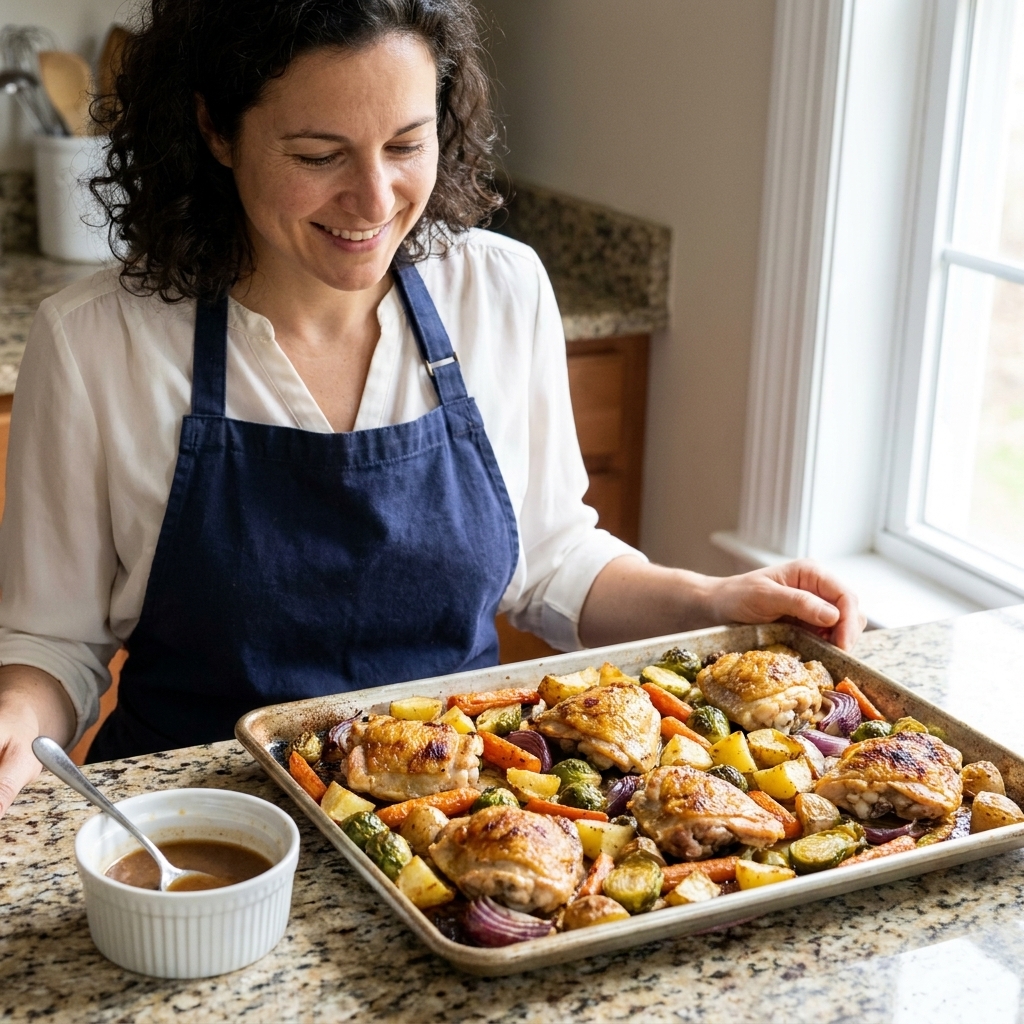
- Protein: 1 1/2 lb bone-in, skin-on chicken thighs
- Veg: 4 cups broccoli + 2 cups red onion wedges
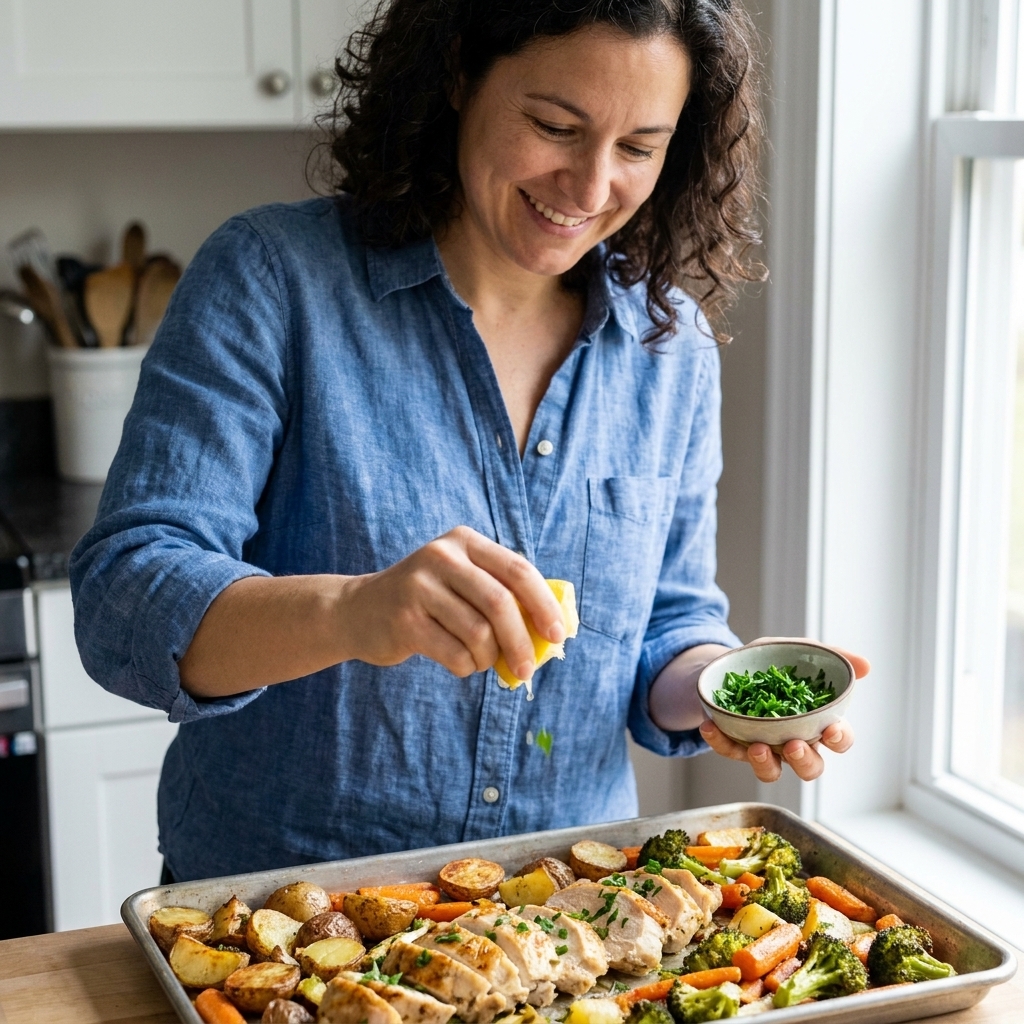
- Flavor lane: lemon, garlic, oregano
- Timing: chicken starts at 0, onions at 10, broccoli at 18 to 20
- Doneness: pull chicken at 165°F minimum, or keep going to 175 to 185°F if you want the classic thigh payoff
2) Sausage and potatoes
- Protein: 12 to 16 oz smoked or fully cooked sausage, sliced
- Starch: 3 cups baby potatoes halved
- Veg: 3 to 4 cups green beans
- Flavor lane: Dijon, garlic, thyme
- Timing: potatoes at 0, sausage at 15, green beans at 20
3) Salmon, quick and fancy
- Protein: 1 to 1 1/4 lb salmon fillet
- Veg: 4 cups asparagus + 2 cups cherry tomatoes
- Flavor lane: lemon, capers, butter or olive oil
- Timing: asparagus and tomatoes go in first for 8 minutes, then add salmon for 10 to 12 minutes
- Doneness: salmon is happiest pulled around 120 to 125°F for medium
If you steal nothing else from this article, steal this: salmon belongs at the end. It does not want to hang out in a 425°F oven for 30 minutes while potatoes get their life together.
Troubleshooting
My vegetables are soggy
- You crowded the pan. Reduce the amount or use two pans.
- Your oven temp was too low. Go 425°F.
- Your vegetables were wet. Dry them well before oiling.
- You lined the pan and got slightly less browning than you wanted. Parchment is not evil, but if you want maximum caramelization, try foil or a lightly oiled bare pan, or preheat the pan with the parchment already on it.
My protein is dry
- You cooked it too long because you waited for the vegetables. Stagger the add-ins.
- Choose a more forgiving cut (chicken thighs over breasts).
- Use a thermometer. Time is a suggestion; temperature is the truth.
- Add a finishing sauce (yogurt sauce, chimichurri, pesto, tahini drizzle) to bring moisture back.
Everything tastes flat
- Add salt. Then add acid. Finish with fresh herbs.
- Use a bold seasoning blend (smoked paprika, curry powder, Cajun seasoning) instead of only garlic and pepper.
My pan is smoking
- Skip extra oil on very fatty proteins (bacon, some sausages, skin-on thighs). The rendered fat is enough.
- At 450°F, use a higher-smoke-point oil and go easy on sugary glazes until the last few minutes.
- Check your oven for old drips. This is not a moral failing. It happens to all of us.
Sheet pan dinner checklist
- Oven: 425°F
- Pan: half sheet pan, preheated
- Load: 1 to 1 1/2 lb protein + 4 to 6 cups veg (less veg if adding starch)
- Oil: 2 to 3 tbsp total (choose higher-smoke-point oil if roasting at 450°F)
- Salt: 1 1/4 to 1 3/4 tsp kosher salt total (about 4 to 7 g, adjust for salty add-ins)
- Timing: add quick veg late, delicate proteins latest
- Even browning: rotate pan halfway if your oven has hot spots
- Finish: acid + fresh herbs or crunch
FAQ
Do I need to line my sheet pan?
Not strictly. Foil is great for easy cleanup. Parchment is great for easy cleanup too, and it can slightly reduce browning because you lose direct metal contact. If I’m chasing max caramelization, I use foil or roast directly on a lightly oiled pan.
Can I do this at 400°F?
You can, but browning is slower and steam has more time to win. If you must use 400°F, give everything more space and extend the roast time. You might also finish under the broiler for 1 to 3 minutes, watching closely.
How do I make a sheet pan dinner for picky eaters?
Use zones. Keep seasonings simple on one section (salt, pepper, oil), go bolder on another. Serve sauces on the side: pesto, ranch, honey mustard, tzatziki. Everyone wins.
What is the easiest way to add a sauce without making things soggy?
Roast first, sauce second. Toss roasted vegetables or sliced protein with sauce after they come out of the oven, or drizzle right before serving. If you bake a sauce the whole time, you often end up steaming instead of roasting.