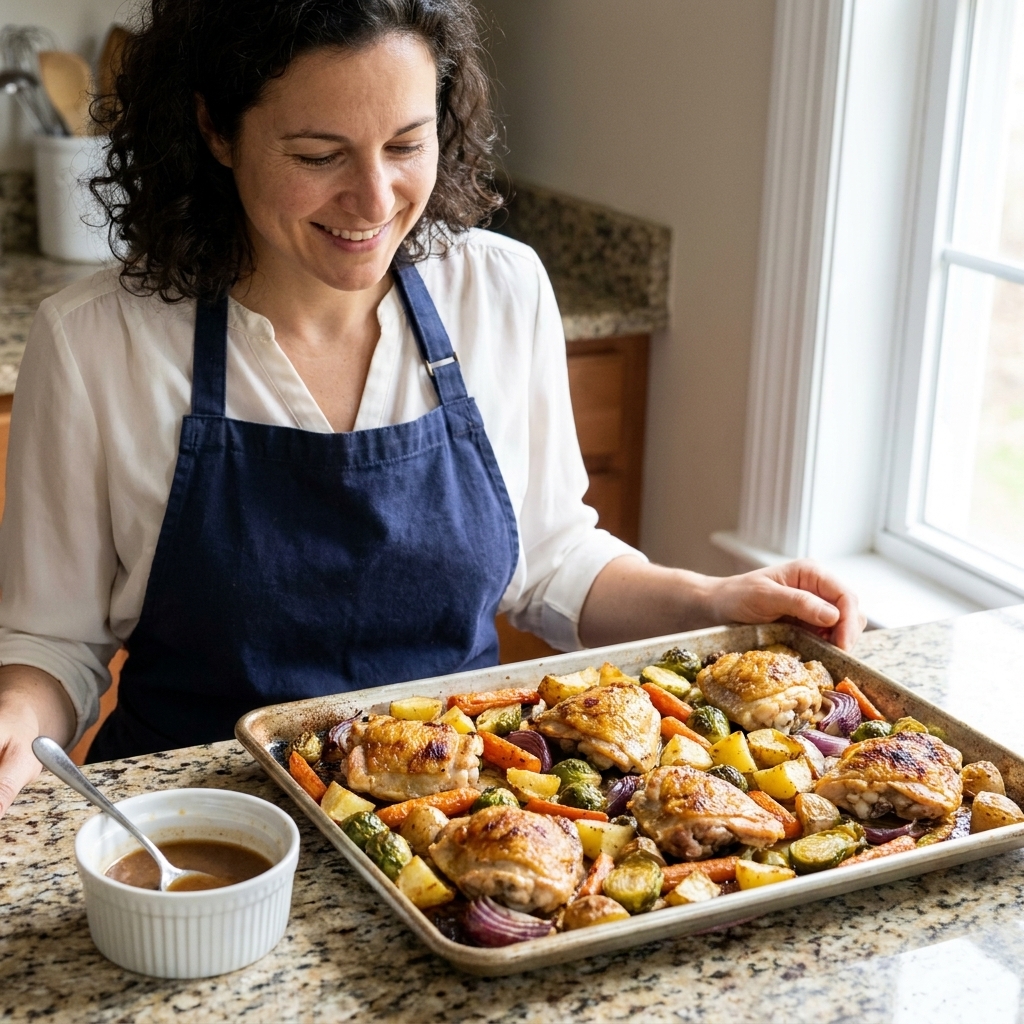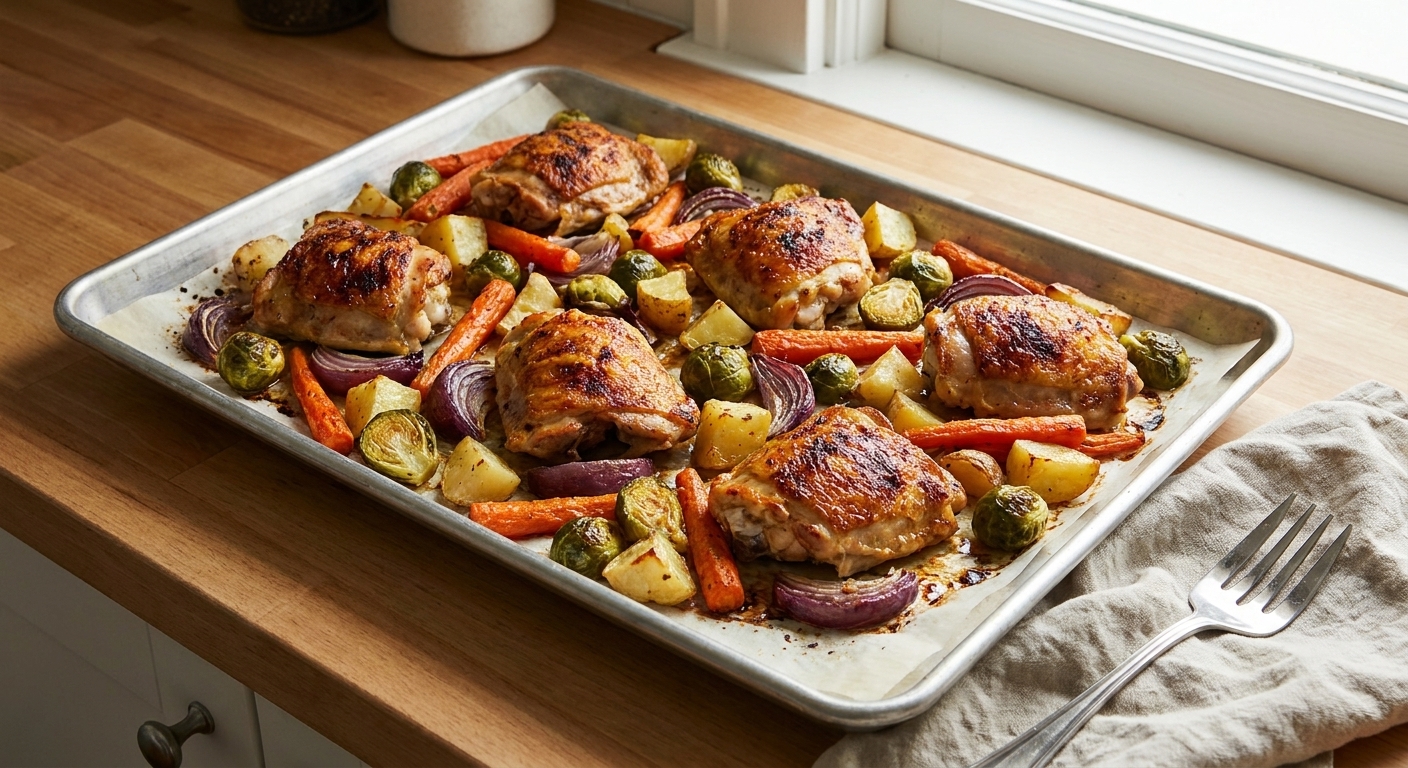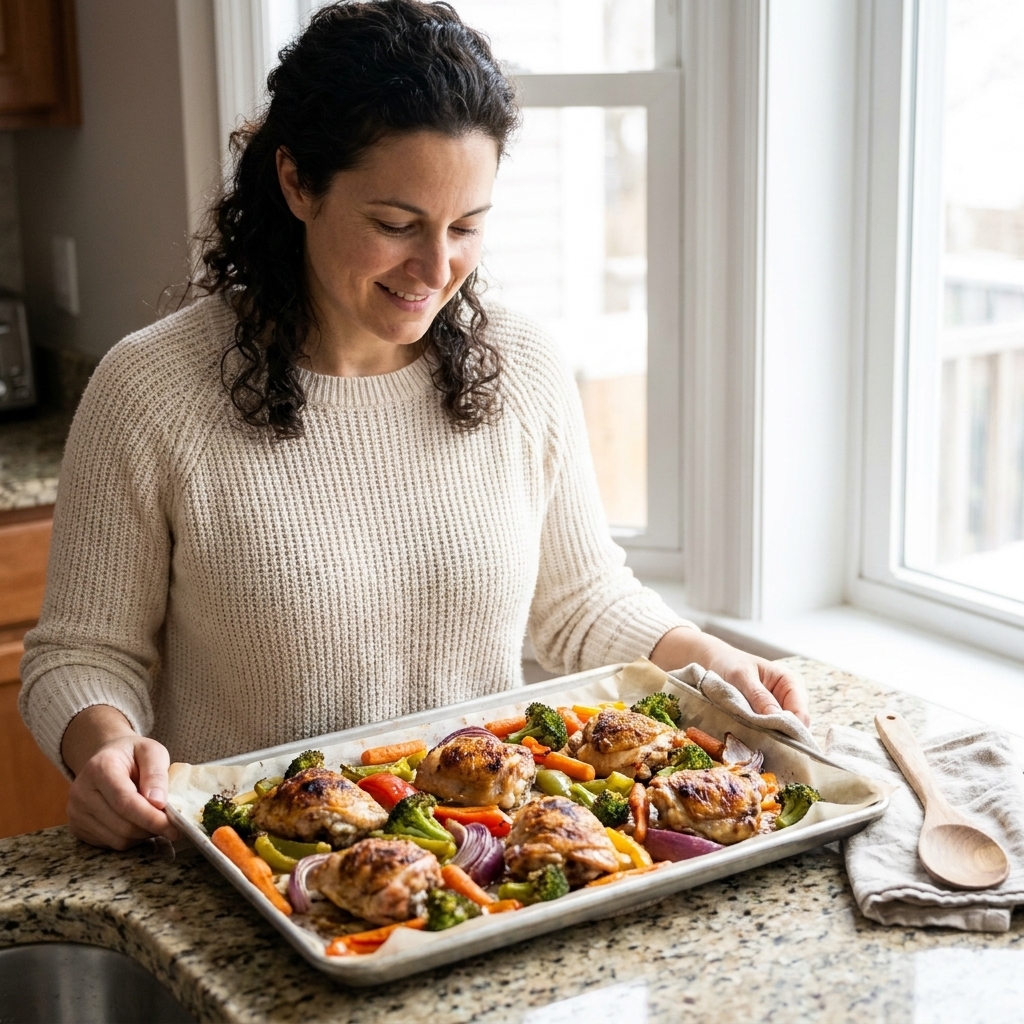
If you have ever looked at a week of lunches and thought, “I should meal prep,” and then immediately pictured a sink full of containers and five different pots, I am right there with you. Sheet pan meal prep is my favorite cheat code: high heat, big batches, simple timing, and you only wash what you cooked on.
This guide will walk you through a repeatable system for roasting proteins and veggies on baking sheets so you can portion out a full week of healthy lunches. No fussy recipes required, just a solid method you can remix forever.
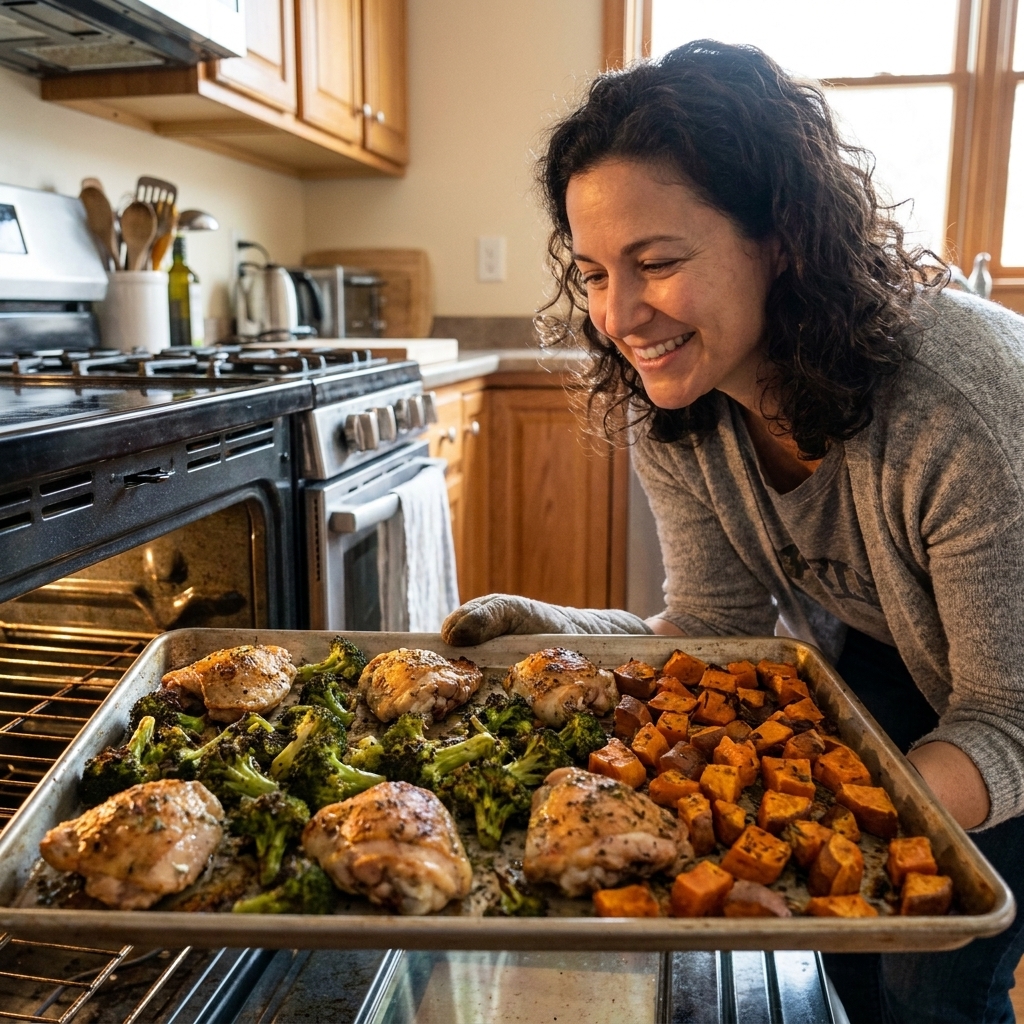
The sheet pan method
Roast one to two proteins and two to three vegetables at high heat, stagger what goes in the oven based on cook time, then portion with a sauce and a starch (optional) so every lunch feels different.
Why sheet pans work so well
- Hands-off cooking: the oven does the heavy lifting while you portion containers or make a sauce.
- Flavor without extra dishes: browning and caramelization are your best friends.
- Easy scaling: doubling a recipe is basically “use a second pan.”
- Built-in variety: one roast can turn into bowls, salads, wraps, and grain plates all week.
What you need
Essential gear
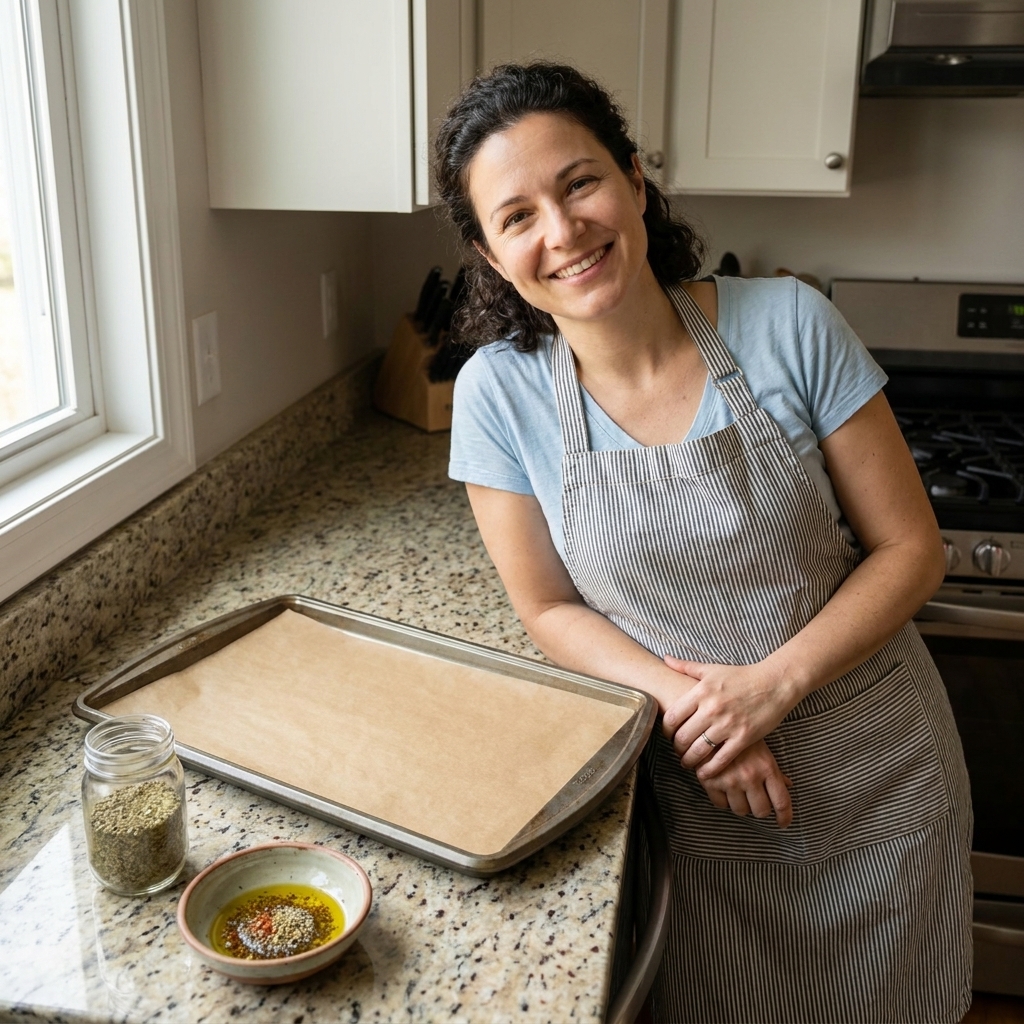
- 2 rimmed sheet pans (half-sheet size is ideal). One works, two makes life calmer.
- Parchment paper or foil for easier cleanup.
- Instant-read thermometer for perfect proteins without guesswork.
- A big bowl for tossing veggies with oil and seasoning.
- Meal prep containers (5 to 8). I like shallow, wide containers so food cools faster.
Nice-to-have
- Wire rack set inside the pan for crispier chicken pieces.
- Silicone spatula to scrape up every roasted bit without wrecking your pan.
Plan your week fast
The easiest way to avoid meal prep burnout is to stop trying to make five different lunches. Instead, make two proteins and two to three vegetables, then mix-and-match with sauces and add-ins.
A simple formula
- Proteins: choose 1 or 2 (chicken thighs, salmon, shrimp, tofu, chickpeas, sausage, pork tenderloin)
- Vegetables: choose 2 or 3 with different textures (broccoli, bell peppers, zucchini, green beans, cauliflower, carrots, Brussels sprouts, onions)
- One “stretch” item: a quick starch or base (rice, quinoa, couscous, potatoes, tortillas, salad greens)
- One to two sauces: this is where the variety lives (tahini-lemon, chimichurri, pesto, yogurt-dill, peanut sauce, salsa verde)
How much to roast for 5 lunches
- Protein: 2 to 2 1/2 pounds total
- Vegetables: 3 to 4 pounds total (about 10 to 12 cups chopped)
- Optional base: 3 cups cooked grains, or 6 to 8 small potatoes, or 5 large tortillas
Prep without the mess
Step 1: Heat the oven
Crank the oven to 425°F. High heat is what gives you roasted flavor instead of steamed sadness. Line your pans with parchment for minimal scrubbing.
Step 2: Cut veggies by cook time
Roasting succeeds when pieces finish at the same time. Use this quick sizing guide:
- Fast cookers (12 to 18 minutes): zucchini, asparagus, thin green beans, bell peppers. Cut into larger pieces so they do not collapse.
- Medium (18 to 25 minutes): broccoli, cauliflower, Brussels sprouts (halved), carrots (coins or batons).
- Slow (25 to 40 minutes): sweet potatoes, regular potatoes, winter squash. Cut into 3/4-inch chunks.
Step 3: One-bowl seasoning
For 1 pan of vegetables (about 6 cups):
- 2 tablespoons olive oil
- 1 teaspoon kosher salt
- 1/2 teaspoon black pepper
- 1 teaspoon garlic powder or 2 cloves minced garlic
- Optional: 1 teaspoon smoked paprika or Italian seasoning
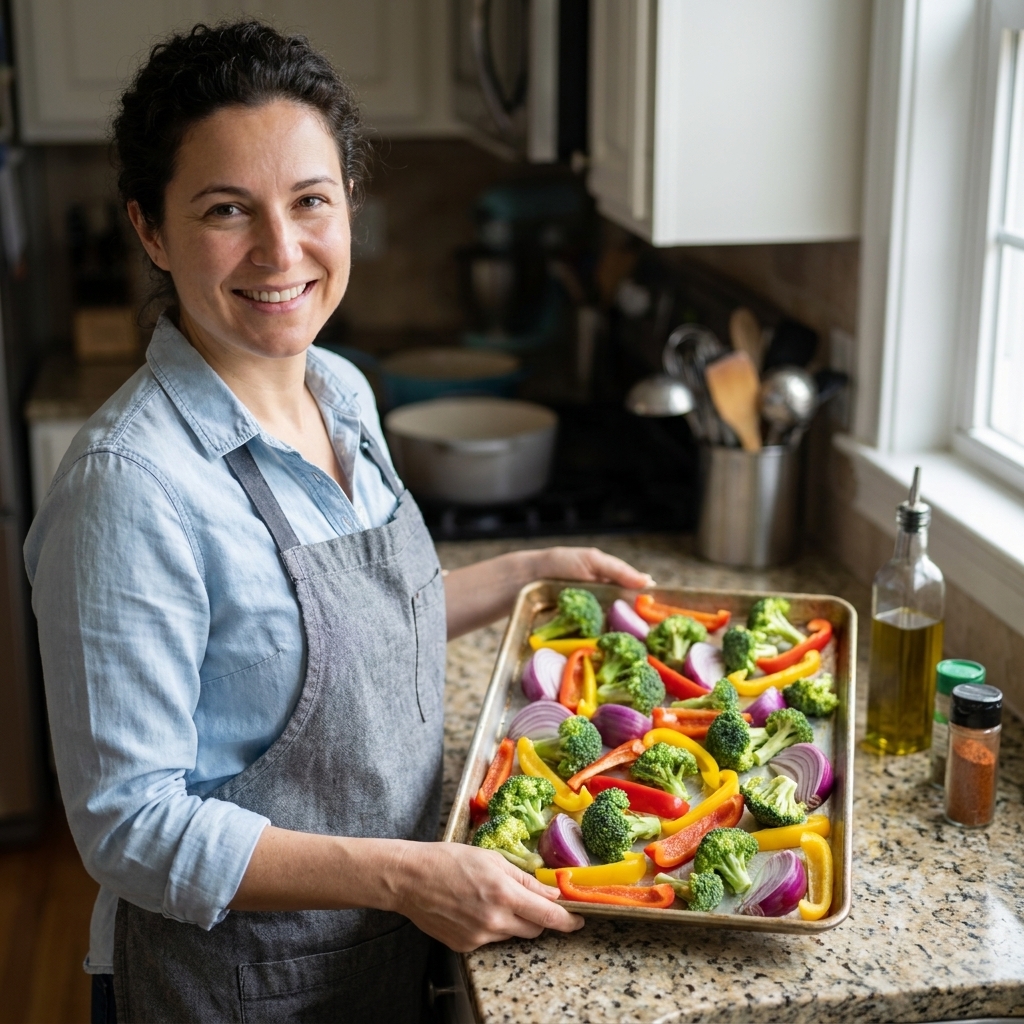
Toss well, then spread in an even layer. Crowding is the fastest way to turn roasting into steaming, so give veggies breathing room or use a second pan.
Sheet pan best practices
- Space matters: leave a little breathing room between pieces so they roast, not steam.
- Flip once: stir veggies or flip proteins about halfway through for even browning.
- Rotate pans: swap racks and rotate front-to-back if your oven has hot spots.
- Know your racks: top rack browns faster; middle is the most even. If you are doing two pans, use upper and lower racks and rotate halfway.
- Convection tip: if you have convection, use it for extra browning and start checking a few minutes early.
Roast together
Here is the part that feels like magic once you do it a few times: you can cook different foods in the same oven window by simply staggering when they go in.
Timing roadmap
- T - 40 minutes: put in slow veggies (potatoes, squash)
- T - 25 minutes: add medium veggies (broccoli, cauliflower, Brussels sprouts)
- T - 18 minutes: add most proteins (chicken pieces, sausage, pork medallions) depending on thickness
- T - 12 minutes: add fast veggies (zucchini, peppers) and quick proteins (shrimp)
Protein cheat sheet (temps + typical times at 425°F)
| Protein | Cut | Approx time | Target temp |
|---|---|---|---|
| Chicken thighs | boneless, skinless | 18 to 25 min | 165°F |
| Chicken breasts | halved lengthwise | 16 to 22 min | 165°F |
| Sausage | links | 18 to 25 min | Follow package directions; if raw: 160°F (pork/beef) or 165°F (poultry) |
| Salmon | fillets | 10 to 14 min | FDA guidance is 145°F; many people prefer 125 to 135°F for texture (use reputable sourcing and personal risk tolerance) |
| Shrimp | large, peeled | 6 to 9 min | opaque and firm |
| Tofu | extra-firm, cubes | 20 to 28 min | heated through, crisp edges |
| Chickpeas | drained, dried well | 20 to 30 min | crisped to taste |
Times vary: pan size, crowding, and thickness change everything. Use the thermometer and your eyes, not the clock.
My hard-won lesson: if you are roasting chicken and vegetables together, keep the chicken on one side of the pan and veggies on the other. Less cross-contact, easier flipping, and the veggies do not get drowned in chicken juices unless you want that.
Three easy combos
Use these as your starting point, then swap what you have. Each combo makes about 5 lunches.
1) Lemon-garlic chicken
- Protein: 2 pounds boneless chicken thighs
- Veg: 2 pounds baby potatoes (halved), 6 cups broccoli florets
- Seasoning: olive oil, salt, pepper, garlic, lemon zest
- Sauce idea: yogurt + lemon + dill
Timing: start potatoes first, add chicken and broccoli later. Finish with a squeeze of lemon right out of the oven.
2) Smoky sausage tray
- Protein: 1 1/2 to 2 pounds sausage links (slice after roasting)
- Veg: 3 bell peppers, 2 onions, 1 large head cauliflower
- Seasoning: olive oil, salt, pepper, smoked paprika, oregano
- Sauce idea: salsa verde or a simple vinaigrette
This one is great in bowls, stuffed into wraps, or piled onto salad greens.
3) Crispy tofu tray
- Protein: 2 blocks extra-firm tofu, pressed and cubed
- Veg: 1 pound green beans, 4 to 5 carrots
- Seasoning: soy sauce, sesame oil, garlic, cornstarch on tofu for crisp edges
- Sauce idea: peanut sauce or chili crisp + lime
Keep tofu on its own pan if you want maximum crispiness.
Portion for the week
Cool, then pack
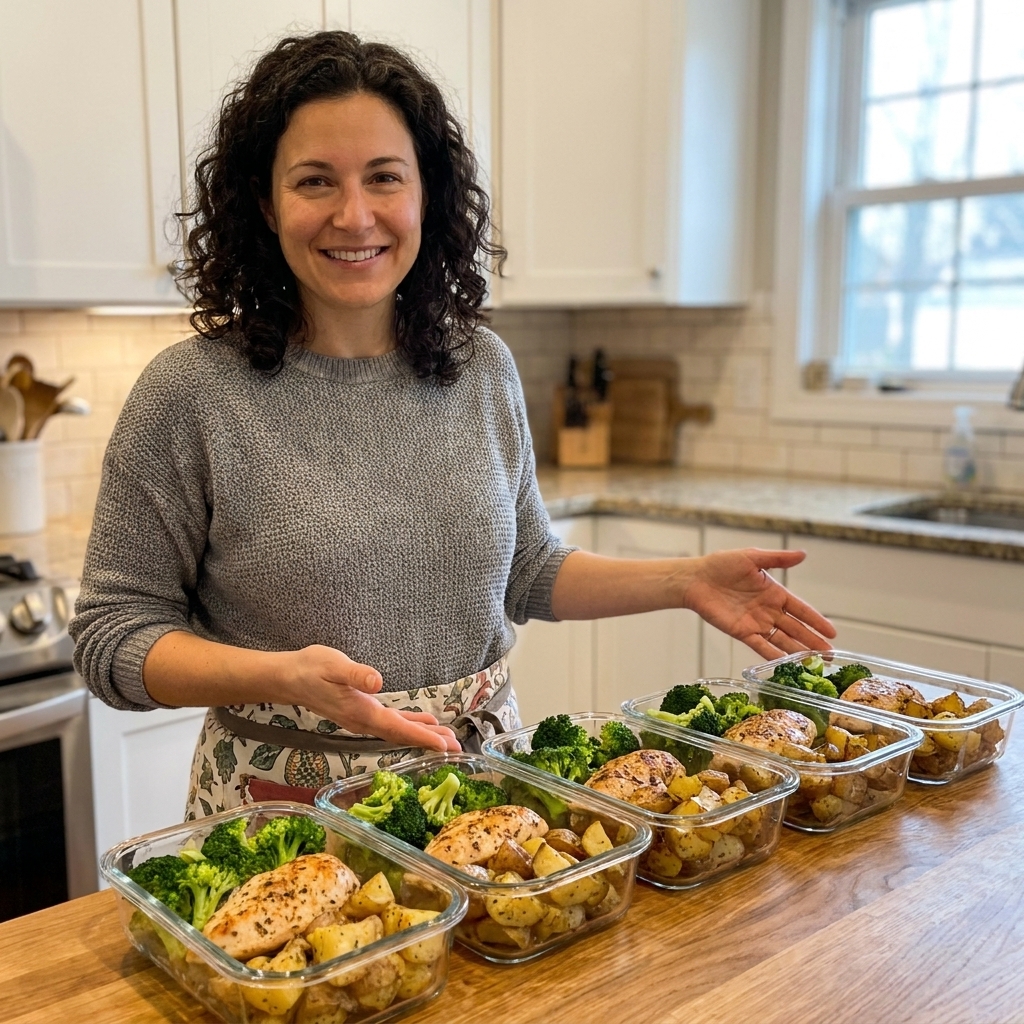
Hot food sealed in containers turns steamy and soggy fast. Let everything cool for about 15 to 25 minutes, then portion. If your kitchen is warm or you cooked a huge batch, spread food out on the pan (or vent the container lids) so it cools faster. For safety, aim to get everything into the fridge within 2 hours of cooking (within 1 hour if it is very hot out).
A simple lunch template
- 4 to 6 ounces protein
- 1 to 2 cups roasted vegetables
- Optional: 1/2 to 1 cup cooked grain, or 1 small roasted potato
- Sauce on the side (seriously, it is worth the extra tiny container)
How to build variety
- Bowls: add rice or quinoa, drizzle with tahini or chimichurri.
- Salads: serve cold over greens with a punchy vinaigrette.
- Wraps: tuck into tortillas with a crunchy slaw.
- Snack-plate lunch: add hummus, olives, feta, and pita.
Storage and safety
How long it lasts
- Roasted vegetables: up to 4 to 5 days in the refrigerator
- Cooked chicken, sausage, pork: up to 3 to 4 days
- Cooked seafood: up to 2 to 3 days (I usually plan seafood for earlier in the week)
- Cooked grains: up to 4 to 5 days
These are general guidelines and assume prompt cooling and a properly cold fridge. When in doubt, trust your senses and your comfort level.
Freezing
Yes, with a few caveats. Chicken, tofu, chickpeas, roasted carrots, and cauliflower freeze well. Zucchini and peppers get softer after freezing, so I prefer to keep those for fridge-only weeks.
Reheating
- Microwave: add a splash of water for grains, and heat in 45-second bursts.
- To bring back crisp edges: reheat in a 400°F oven or toaster oven for 6 to 10 minutes.
- Keep sauces cold: add after reheating for better texture and brightness.
Allergens and swaps
If you are feeding a mixed-diet household, sheet pans are still your friend. Roast a neutral base (veg plus one protein), then let everyone finish their portion with their own sauce and toppings.
- Nut-free: skip pesto and peanut sauce; try salsa verde, chimichurri, or a lemony vinaigrette.
- Dairy-free: swap yogurt sauce for tahini-lemon or blended white beans with garlic and lemon.
- Gluten-free: use tamari instead of regular soy sauce, and double-check sausages, spice blends, and tortillas.
Common problems
“My vegetables are soggy.”
- Use two pans instead of overcrowding one.
- Roast at 425°F and fully preheat the oven.
- Dry vegetables well after washing.
“My chicken is dry.”
- Switch to thighs, they are more forgiving.
- Use a thermometer and pull at 165°F.
- Marinate for even 15 minutes while the oven heats.
“Everything tastes the same by day three.”
- Make two sauces with different flavor profiles.
- Add one crunchy fresh element midweek (cucumber, shredded cabbage, sliced radishes).
- Change the base: salad greens one day, rice the next, wrap on Friday.
“My pan is hard to clean.”
- Line with parchment.
- Soak the pan as soon as it cools.
- For stubborn bits: sprinkle baking soda, add hot water, and let it sit 15 minutes before scrubbing.
A 90-minute prep session
- 00:00: Preheat oven to 425°F. Line two sheet pans.
- 00:05: Chop slow veggies (potatoes or squash) and get them roasting first.
- 00:15: Chop remaining veggies. Toss with oil and seasoning.
- 00:25: Season protein.
- 00:30: Add protein and medium veggies to the oven (second pan if needed).
- 00:40: Mix a quick sauce while everything roasts.
- 00:55: Check temps, stir veggies, rotate pans if your oven has hot spots.
- 01:10: Pull pans, rest protein 5 minutes.
- 01:20: Cool slightly, portion into containers, sauce on the side.
- 01:30: Wipe counters, admire your very uncluttered sink.
FAQ
How many sheet pans do I need?
You can do it with one, but two makes it easier to avoid crowding and helps proteins and veggies roast properly. If you only have one pan, roast in batches and reuse the same parchment-lined pan.
What temperature is best?
425°F is my default for vegetables and most proteins. If something is browning too fast, drop to 400°F and give it a few extra minutes.
Can I meal prep without grains?
Absolutely. Roast extra vegetables, use salad greens, or add beans. A sauce and a crunchy topping can make a grain-free lunch feel complete.
What are the best sauces?
Anything bold that holds up for a few days: tahini-lemon, pesto, salsa verde, yogurt-herb sauce, peanut sauce, chimichurri, or a simple olive oil and vinegar dressing with mustard.
Your next week
If you want the easiest starting point, do this: chicken thighs + broccoli + potatoes, then make two sauces. One creamy (yogurt-dill) and one zippy (lemon-tahini). Same roast, two totally different moods, and you just meal prepped like a person who has their life together, even if your kitchen drawer is still full of takeout soy sauce packets.
When you try your first sheet pan prep week, pay attention to what finished early, what needed longer, and what you got excited to eat again. That is how you dial in a system that fits your real life.