I love salmon nights for one big reason: they can feel fancy with almost zero effort, as long as you respect the clock. Salmon does not need a long speech or a long bake. It needs high heat, smart veggie timing, and you refusing to wander off and start a sink full of dishes.
Below are five 5-ingredient sheet pan salmon dinners that I make on repeat. Each one is built so the vegetables and the fish finish together, on the same pan, with no mystery steps.
What counts as an ingredient: Salt and pepper are free. Water is free. Everything else is counted. (Yes, even “just a splash.”)
Servings: Each recipe makes 4 servings (about 1 1/2 pounds salmon total) on a standard half-sheet pan (18 x 13 inches). For 2 servings, you can halve everything and use a quarter-sheet pan, or keep the amounts and plan for leftovers.
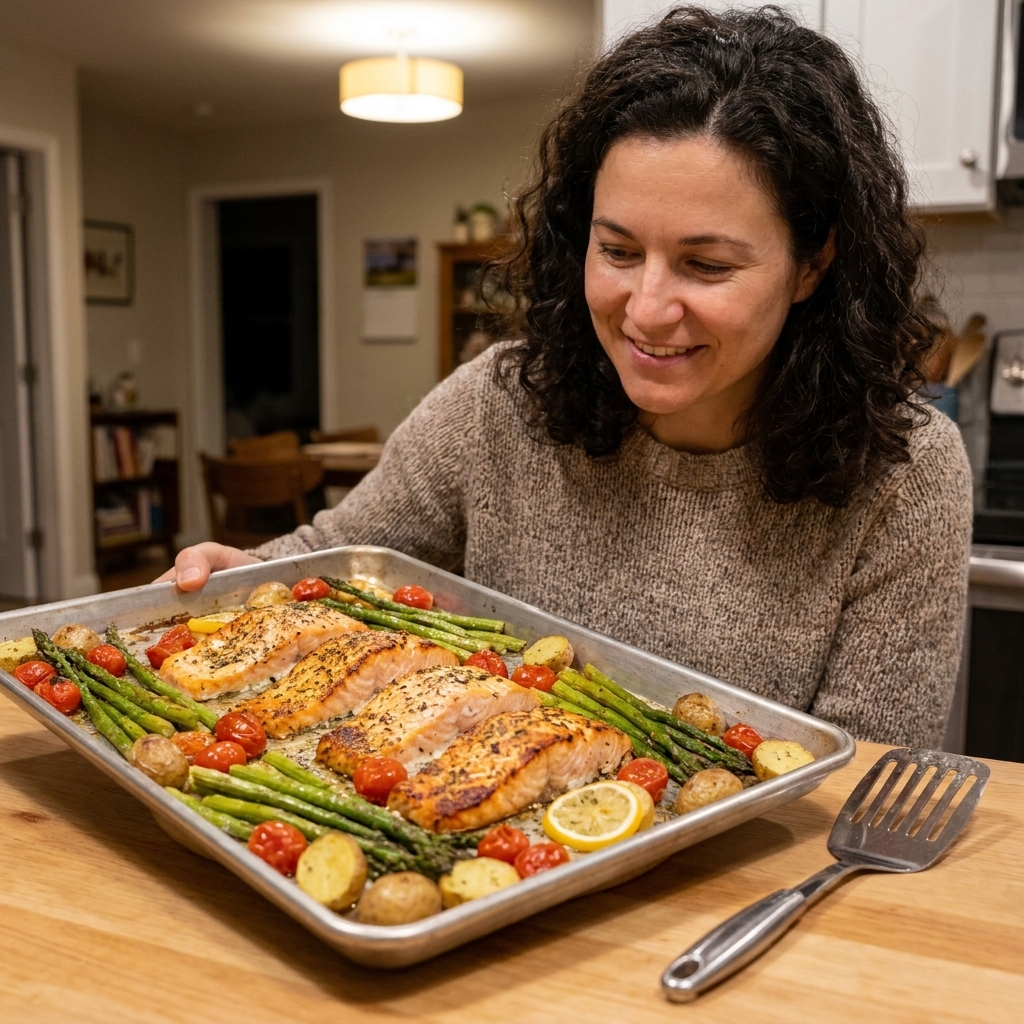
The one rule for salmon
Start the vegetables first, then add the salmon later. Most veggies need more time than salmon. If you put everything on the pan at once, you end up choosing between undercooked vegetables or overcooked fish. I am choosing neither.
Timing that works
- Oven: 425°F, fully preheated
- Pan size: half-sheet (18 x 13 inches) for 4 portions
- Typical salmon thickness: 1 to 1 1/4 inches
- Salmon cook time: 10 to 12 minutes (added after vegetables have started)
- Skin-on or skinless: both work; roast skin-side down if using skin-on
Doneness, two ways: The most reliable cue is temperature. The other is visual, but it can trick you.
- Thermometer cue: 120 to 130°F for juicy/medium; 145°F is the USDA guideline for fully cooked fish.
- Visual cue: mostly opaque with a slightly translucent center if you like it medium. If it flakes aggressively and looks chalky, it is already past the sweet spot.
If your fillets are thinner, pull closer to 9 or 10 minutes. If they are extra thick, give them 12 to 14 minutes, but start checking at 12, then check every 1 to 2 minutes. Salmon goes from perfect to dry while you are answering a text.
My sheet pan setup
- Use a rimmed baking sheet.
- Line with parchment for the easiest cleanup.
- Give ingredients space. Crowding traps steam and makes everything pale and soggy.
- Use oil on vegetables even if the sauce is doing heavy lifting on the salmon.
Recipe 1: Lemon-Garlic Broccoli Salmon
This is my “I forgot to plan dinner” dinner. Bright, simple, and you can serve it with rice, couscous, or straight from the pan with a fork. No judgment.
5 ingredients
- Salmon fillets: 1 1/2 lb (4 fillets, 5 to 6 oz each)
- Broccoli florets: 5 to 6 cups (about 1 1/2 lb)
- Lemon: 1 large
- Garlic: 3 cloves
- Olive oil: 3 tbsp
Exact sheet pan timing
- Heat oven to 425°F. Fully preheat. Line a rimmed sheet pan with parchment.
- Start the broccoli: Toss broccoli with 2 tbsp olive oil, minced garlic, and a generous pinch of salt and pepper. Spread out. Roast 10 minutes.
- Add salmon: Push broccoli to the sides. Place salmon in the center, skin-side down if applicable. Drizzle with remaining 1 tbsp olive oil and squeeze about half the lemon over the top. Roast 10 to 12 minutes.
- Finish: Squeeze the remaining lemon over everything and serve.
Why it works: broccoli needs that first blast of heat to get tender and caramelized. Salmon joins late and stays juicy.
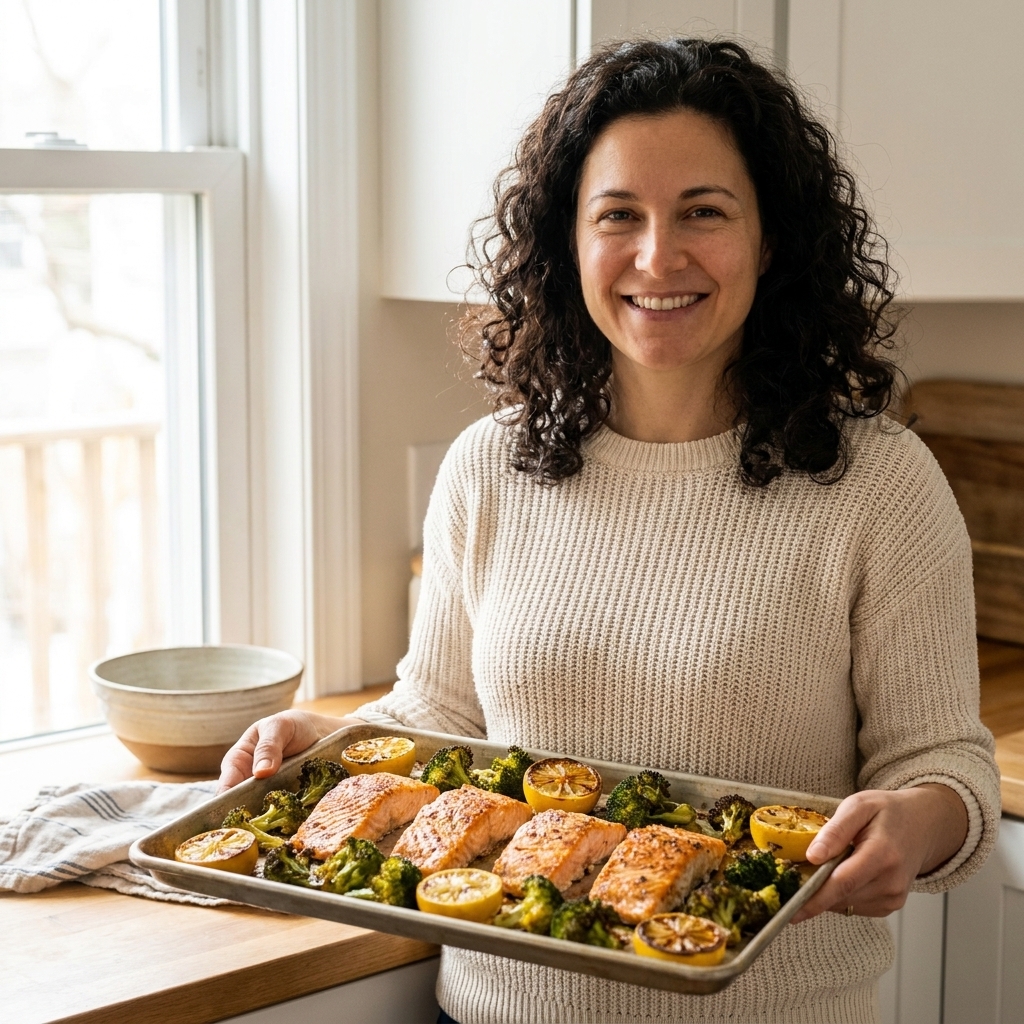
Recipe 2: Honey-Mustard Green Bean Salmon
Sweet, tangy, and extremely weeknight-friendly. The sauce doubles as both glaze and dressing. I love it with roasted potatoes, but green beans keep it truly fast.
5 ingredients
- Salmon fillets: 1 1/2 lb (4 fillets)
- Green beans: 1 lb, trimmed
- Dijon mustard: 3 tbsp
- Honey: 2 tbsp
- Olive oil: 2 tbsp
Exact sheet pan timing
- Heat oven to 425°F. Fully preheat. Line your pan.
- Start the green beans: Toss beans with 1 tbsp olive oil and a pinch of salt and pepper. Spread out. Roast 8 minutes.
- Mix glaze: Stir Dijon and honey with the remaining 1 tbsp olive oil. (Same olive oil ingredient, we are not being sneaky.)
- Add salmon: Push beans aside. Add salmon (skin-side down if applicable) and brush generously with honey-mustard. Roast 10 to 12 minutes.
- Finish: Toss beans in any extra glaze on the pan and serve.
Maya tip: If your honey is stubborn and thick, warm it for 5 seconds in the microwave so it blends smoothly.
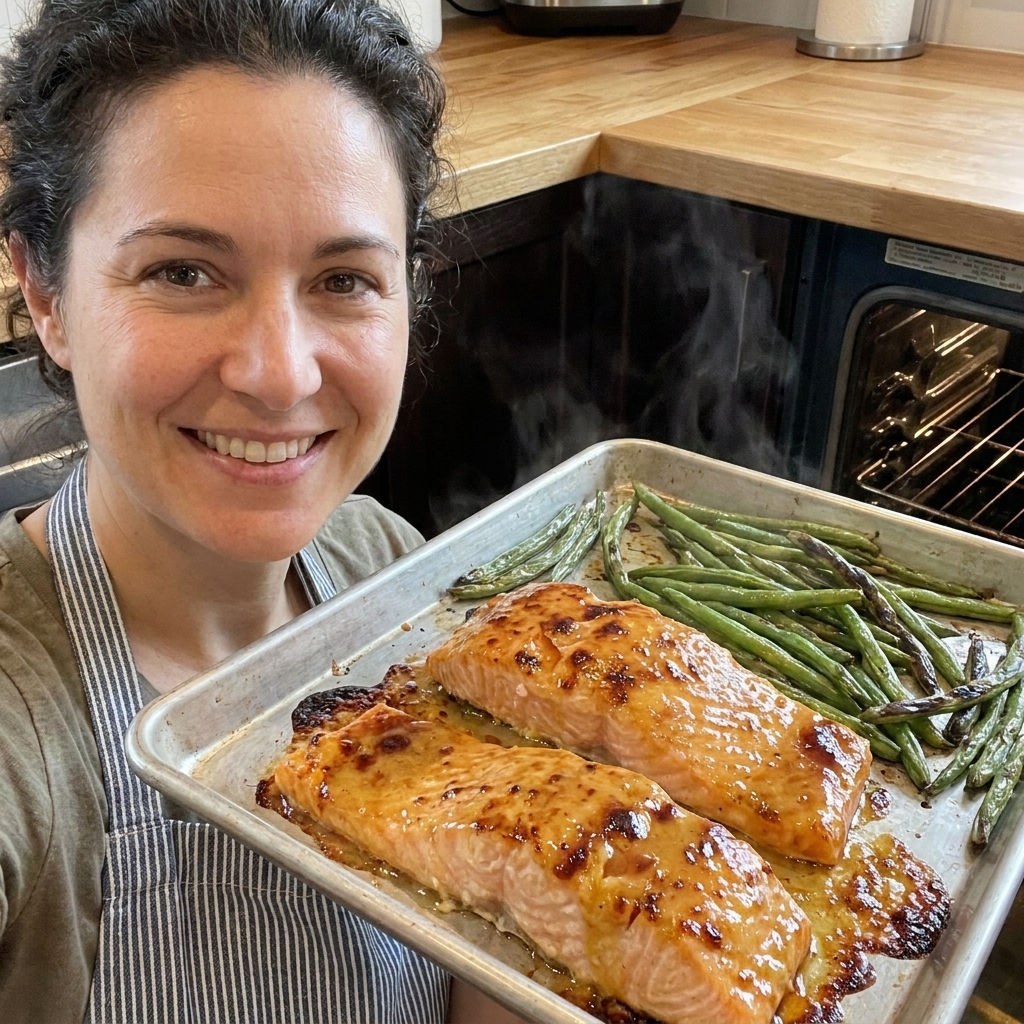
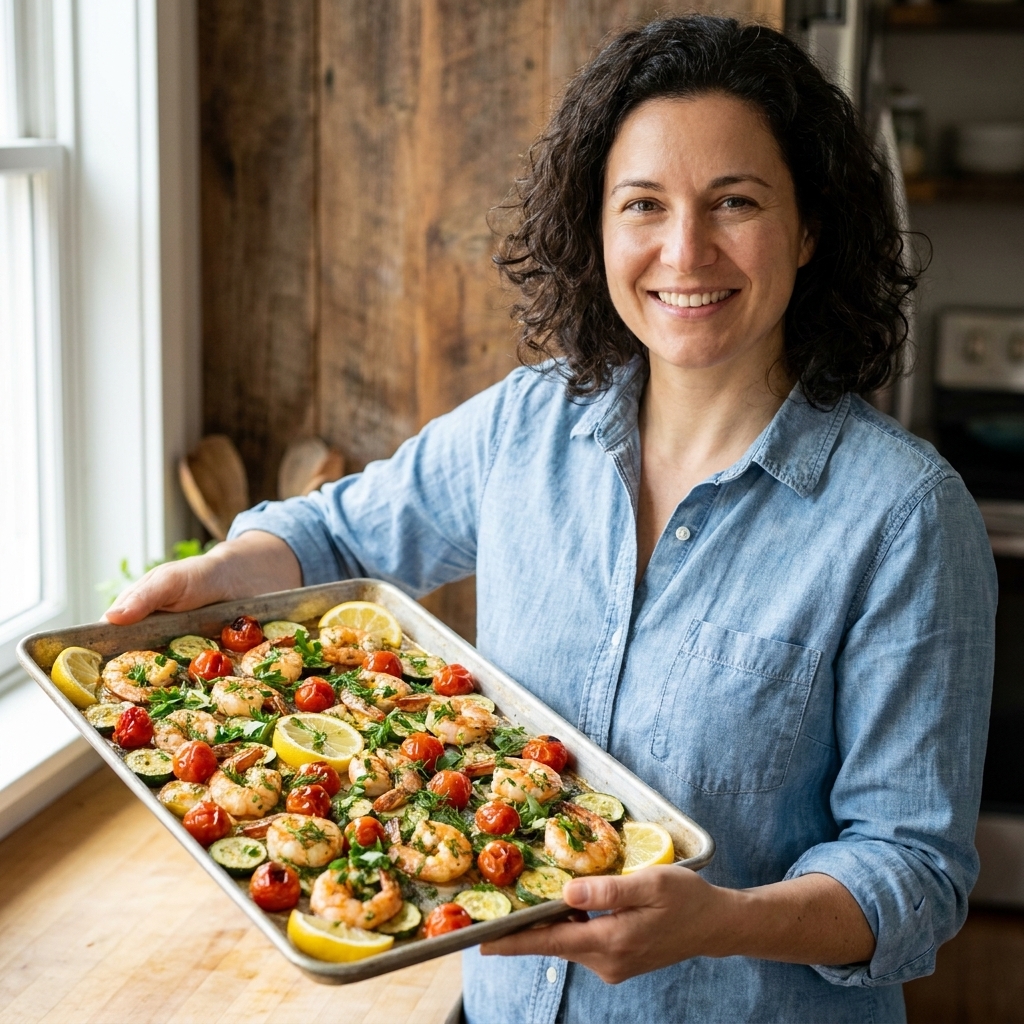
Recipe 3: Pesto Tomato Zucchini Salmon
This one tastes like you tried harder than you did. The tomatoes burst, the pesto turns into a quick sauce, and everything feels summery even in February.
5 ingredients
- Salmon fillets: 1 1/2 lb (4 fillets)
- Cherry tomatoes: 2 cups (about 12 oz)
- Pesto: 1/3 cup
- Zucchini: 2 medium (about 1 lb), sliced into half-moons
- Olive oil: 2 tbsp
Exact sheet pan timing
- Heat oven to 425°F. Fully preheat. Line pan.
- Start zucchini and tomatoes: Toss zucchini and tomatoes with olive oil and a pinch of salt and pepper. Spread out. Roast 12 minutes.
- Add salmon: Nestle salmon among the vegetables, skin-side down if applicable. Spoon pesto over each fillet. Roast 10 to 12 minutes.
- Finish: Stir the burst tomatoes and pan juices gently. The pesto mingles into a saucy situation. Spoon over salmon.
Why it works: zucchini needs a head start to soften. Tomatoes need time to blister and burst. Salmon comes in at the end and stays tender.
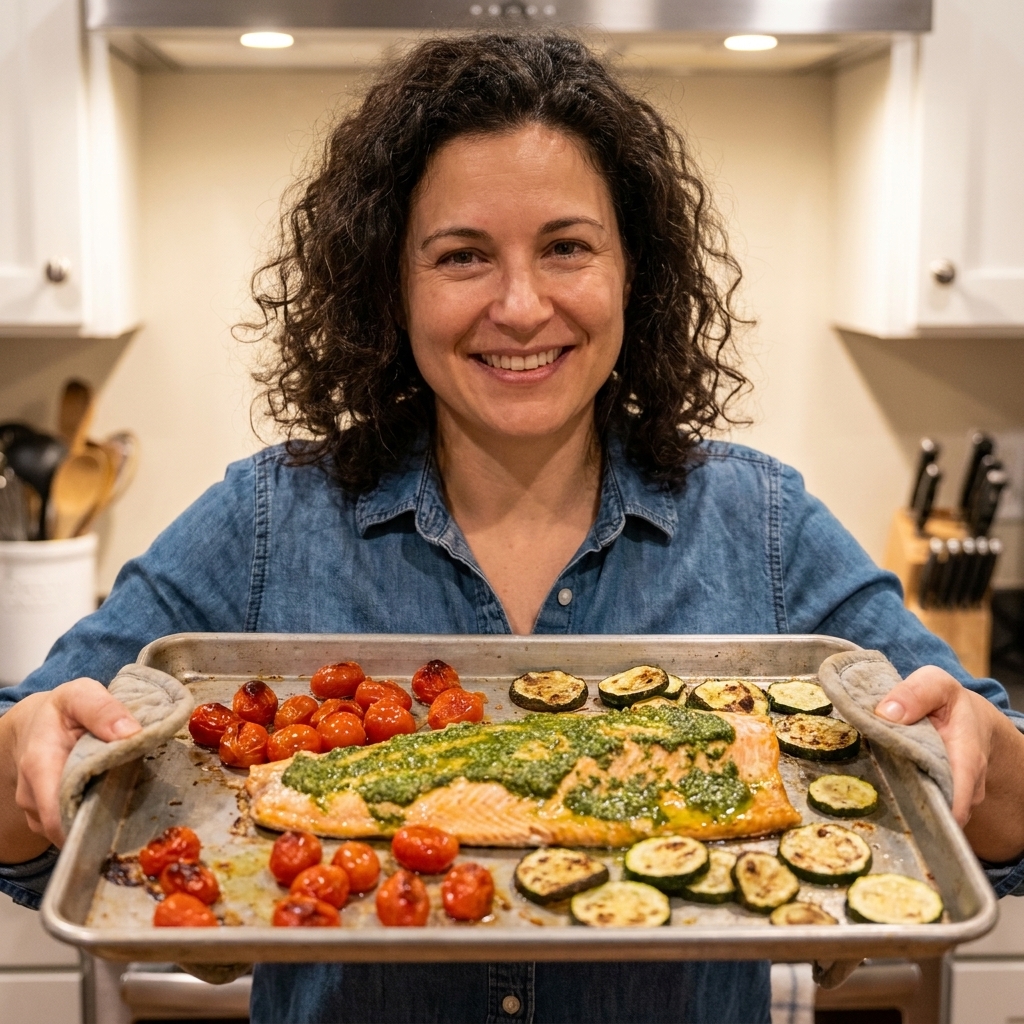
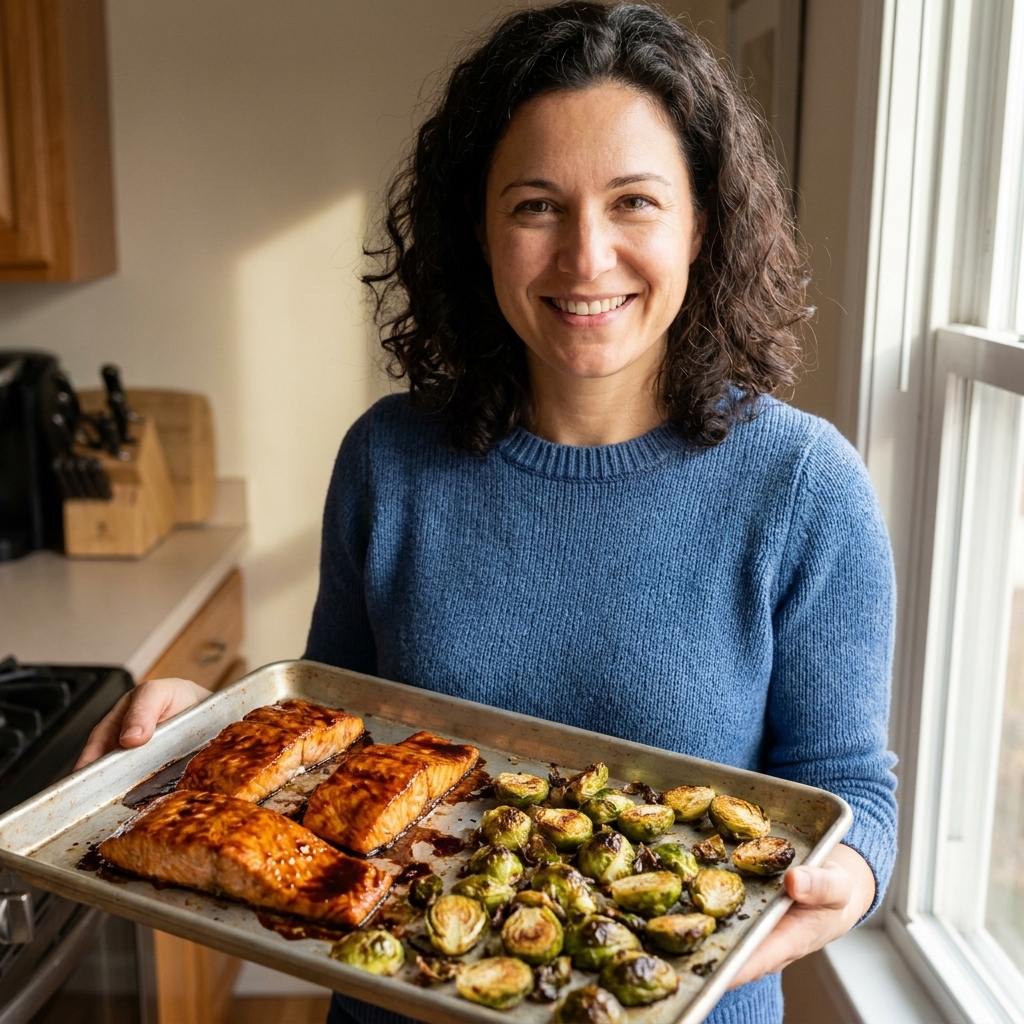
Recipe 4: Maple-Soy Brussels Salmon
Salty-sweet glaze plus crispy Brussels edges equals “restaurant vibes” without the restaurant bill or the restaurant dishes.
5 ingredients
- Salmon fillets: 1 1/2 lb (4 fillets)
- Brussels sprouts: 1 1/4 lb, halved
- Soy sauce: 3 tbsp
- Maple syrup: 2 tbsp
- Olive oil: 2 tbsp
Exact sheet pan timing
- Heat oven to 425°F. Fully preheat. Line pan.
- Start Brussels sprouts: Toss sprouts with olive oil and a pinch of salt and pepper. Place cut-side down for maximum browning. Roast 15 minutes.
- Mix glaze: Stir soy sauce and maple syrup.
- Add salmon: Push sprouts aside, add salmon skin-side down if applicable. Brush with about half the glaze. Roast 10 to 12 minutes.
- Finish: Brush salmon with the remaining glaze right at the end. Toss sprouts lightly in the drippings.
Maya tip: If you want extra-crisp sprouts, do not stir them during the first 15 minutes. Let them sear against the pan.
Recipe 5: Cajun Corn Pepper Salmon
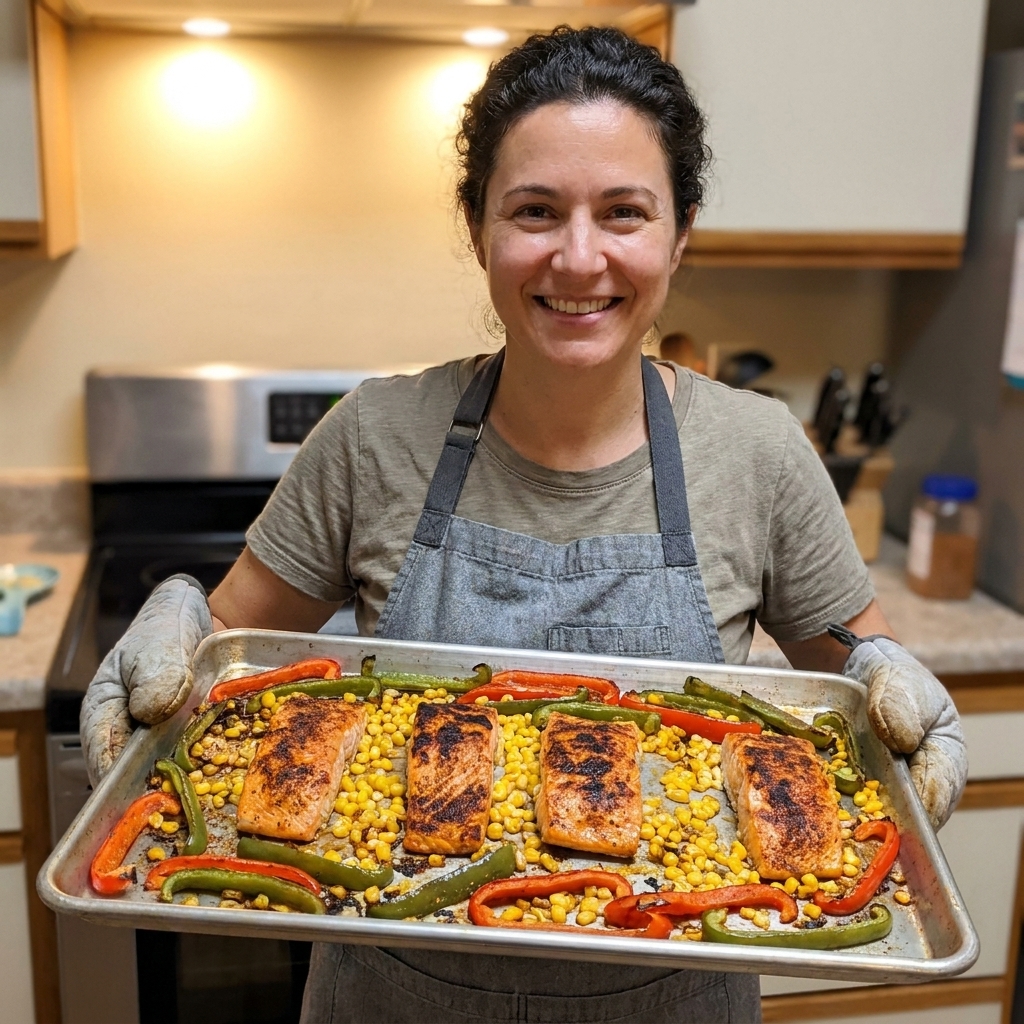
This one is bold, colorful, and perfect when you want something different without buying a cart full of ingredients. It is also kid-friendly if you go light on the Cajun seasoning and let adults add more at the table.
5 ingredients
- Salmon fillets: 1 1/2 lb (4 fillets)
- Bell peppers: 3, sliced
- Corn: 2 cups fresh kernels or thawed frozen
- Cajun seasoning: 2 to 3 tsp, plus more to taste
- Olive oil: 2 tbsp
Exact sheet pan timing
- Heat oven to 425°F. Fully preheat. Line pan.
- Start peppers and corn: Toss peppers and corn with 1 tbsp olive oil and half the Cajun seasoning. Spread out. Roast 12 minutes.
- Add salmon: Add salmon, skin-side down if applicable. Rub with remaining 1 tbsp olive oil and the remaining Cajun seasoning. Roast 10 to 12 minutes.
- Finish: Toss veggies in the pan juices and serve.
What to serve with it: tortillas, rice, or a bagged salad you do not have to chop. This is One Pot Table, not One More Task Table.
Quick timing chart
| Vegetable | Head start at 425°F | Salmon time after adding |
|---|---|---|
| Green beans | 8 minutes | 10 to 12 minutes |
| Broccoli florets | 10 minutes | 10 to 12 minutes |
| Zucchini + cherry tomatoes | 12 minutes | 10 to 12 minutes |
| Bell peppers + corn | 12 minutes | 10 to 12 minutes |
| Brussels sprouts (halved) | 15 minutes | 10 to 12 minutes |
Note: This assumes salmon is around 1 to 1 1/4 inches thick, starting from the fridge. Wild salmon can cook a touch faster and run a little drier, so start checking early. If you have convection, you can use it, just start checking 1 to 2 minutes sooner.
Common problems
My salmon is dry
- It likely baked too long. Use the late-add method and start checking at 10 minutes.
- Use a thermometer if you can. Pull around 120 to 130°F for juicy salmon.
- Aim for fillets with even thickness so the thin end does not overcook while the thick end catches up.
My vegetables are still crunchy
- Cut them smaller, especially broccoli stems and Brussels sprouts.
- Give them more head start time before adding salmon.
- Do not crowd the pan. Crowding steams instead of roasts.
The salmon stuck to the pan
- Parchment paper is the easiest fix.
- If you skip parchment, oil the pan lightly and avoid moving the salmon too early.
- Skin-on fillets release more easily if you let them sit for a minute after roasting before lifting.
My glaze burned
- Brush half before baking and half right at the end.
- Keep sugary glazes mostly on the salmon, not pooled on bare metal.
Prep and leftovers
Prep ahead
- Chop vegetables up to 2 days ahead and refrigerate in an airtight container.
- Mix honey-mustard or maple-soy glaze up to 3 days ahead and refrigerate. Stir before using.
- Pesto can be prepped ahead, but it may darken as it sits. Press plastic wrap directly on the surface before refrigerating if you care about color.
- Keep salmon in the fridge and season right before roasting for the best texture.
Leftovers that do not taste sad
- Refrigerate leftover salmon in a sealed container and eat within 3 to 4 days.
- Flake salmon into rice bowls or salads.
- Turn vegetables into a quick omelet filling.
- Reheat gently: 300°F oven for 8 to 10 minutes, just until warmed through. Overheating is how leftovers get dry and disappointing.
- Or eat it cold on purpose. Pesto and lemon versions are great chilled.
FAQ
Can I use frozen salmon?
Yes, but thaw it first for even cooking. The safest method is overnight in the fridge. If you cook from frozen, the timing becomes unpredictable, and “perfect every time” stops being true.
What if my salmon pieces are different sizes?
Put the thicker pieces toward the hotter spots (often the back of the oven), and pull thinner pieces a minute or two early. You can also choose a pan recipe where the sauce helps protect the fish, like pesto or honey-mustard.
Do I need to flip the salmon?
No. Roast it the whole time without flipping. Less handling means less sticking and prettier fillets.
Is 425°F too hot?
Not for this method. High heat is what gives you roasted vegetables and salmon that cooks quickly before it dries out.