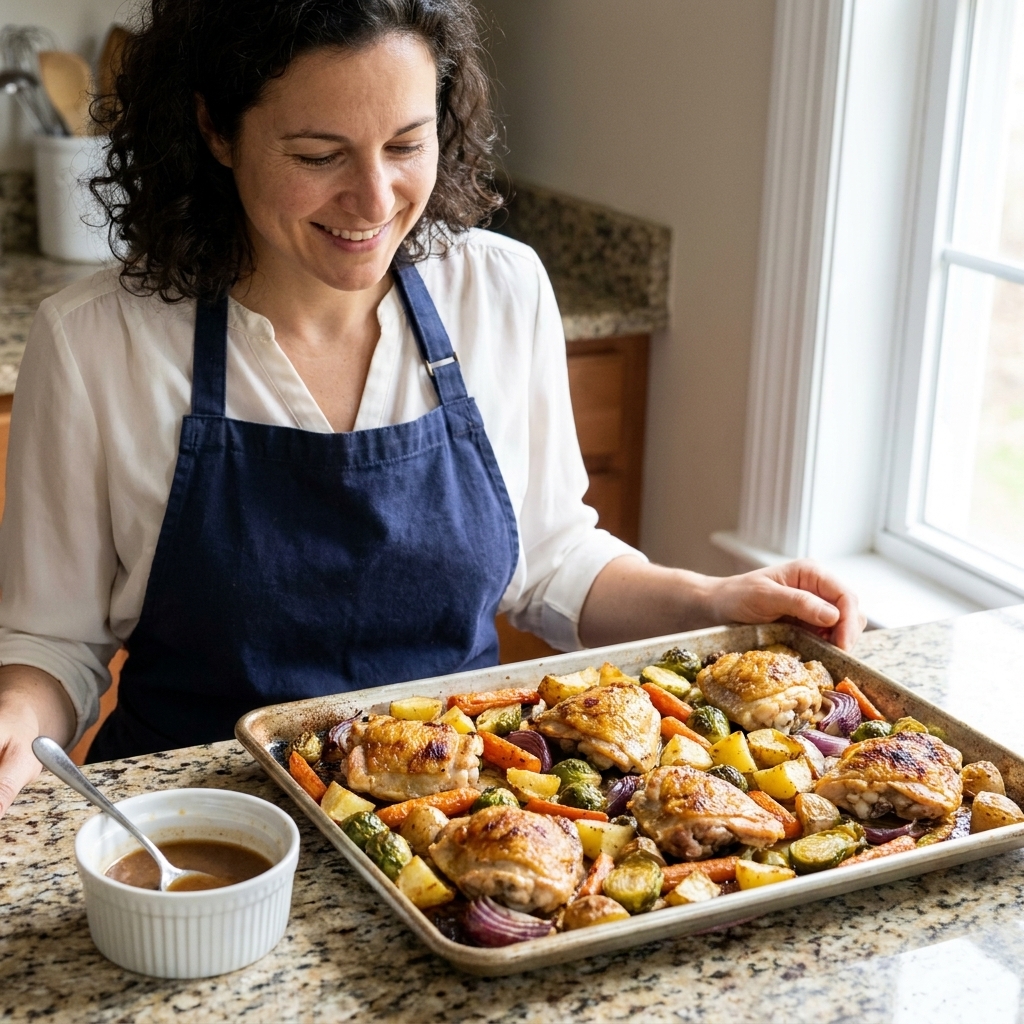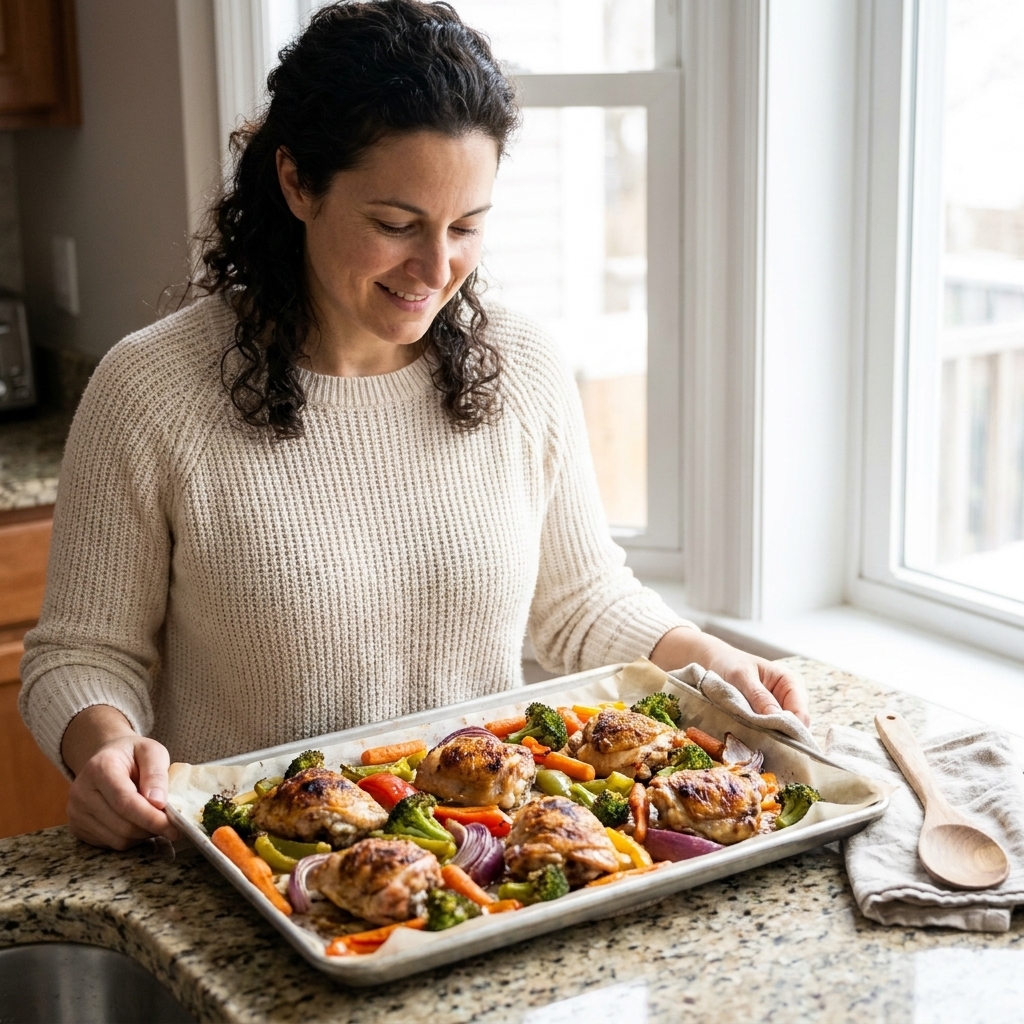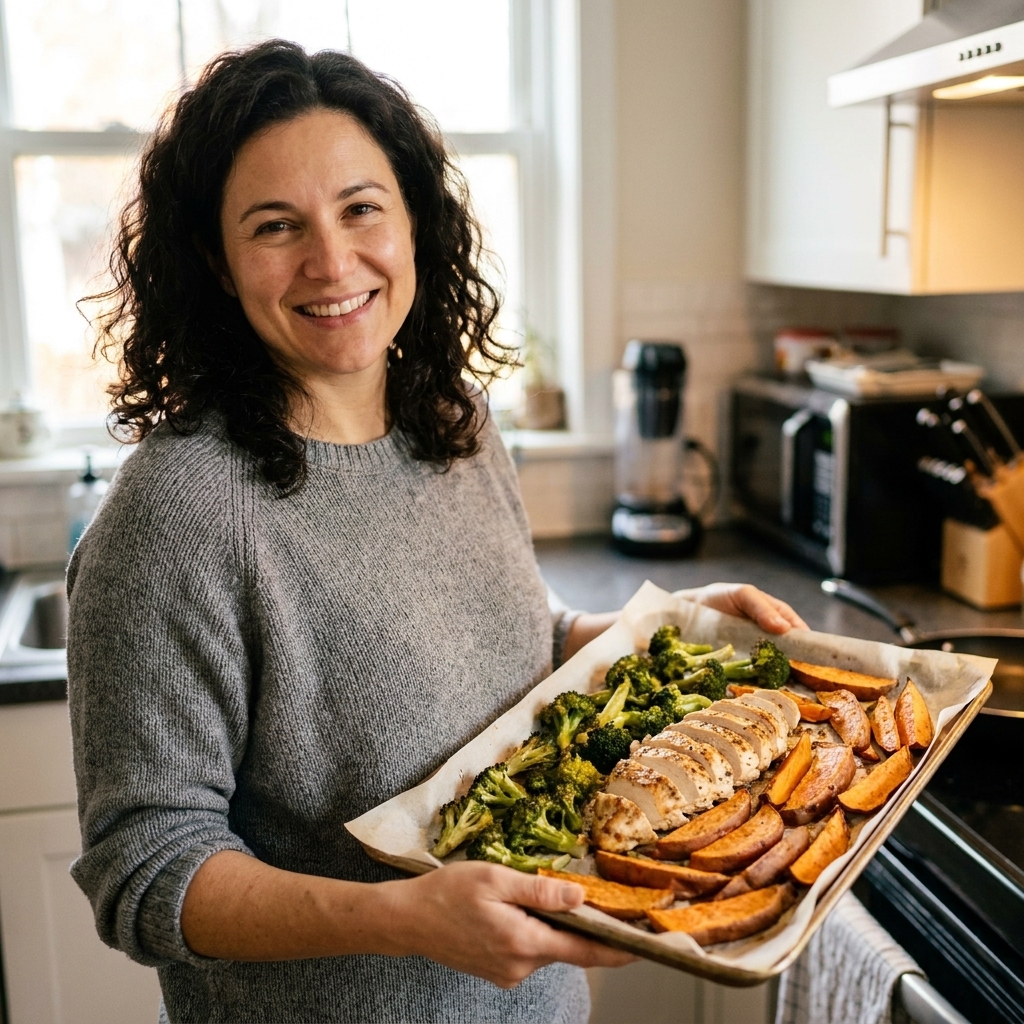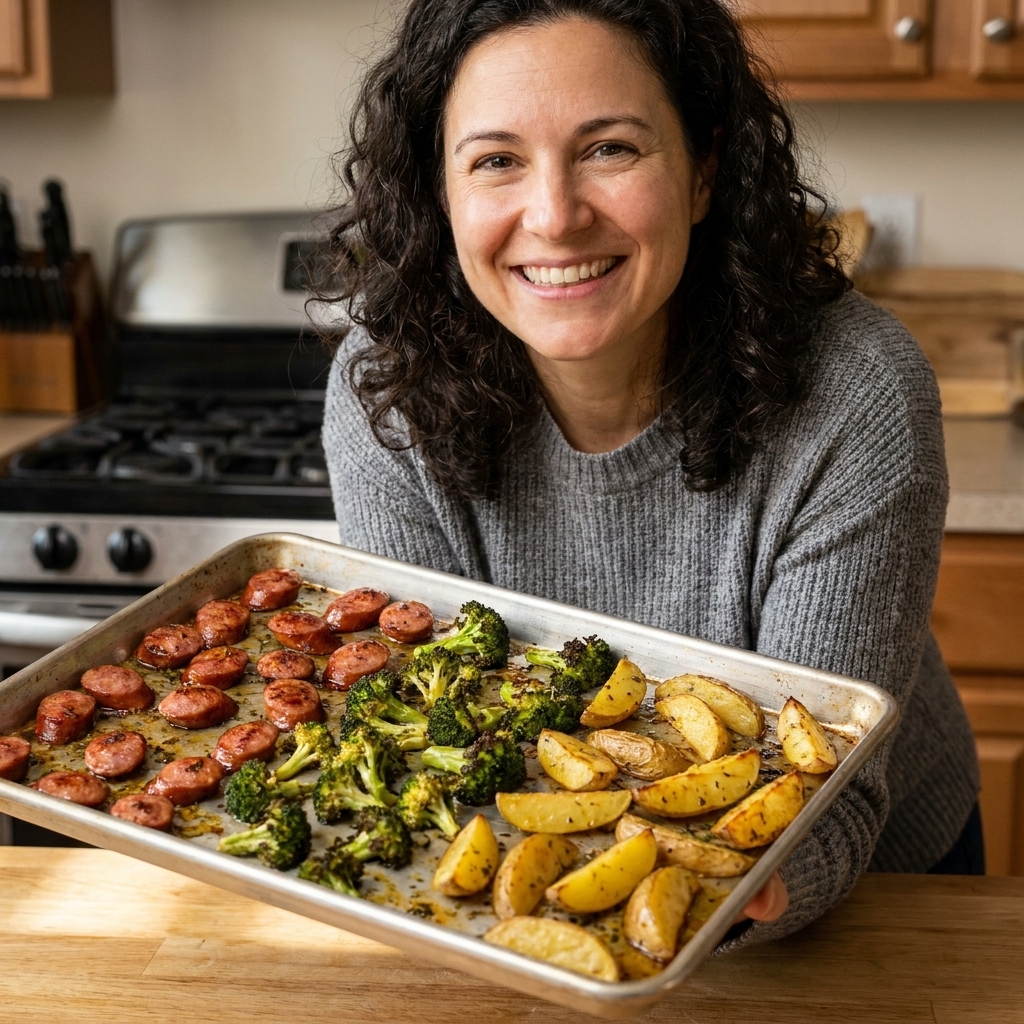
I love a sheet pan dinner with my whole heart. I love it even more when it is actually done when I said it would be. The secret is not a fancier oven or a new pan. It is sizing. When your chicken is thick and your broccoli is tiny, dinner turns into a relay race of pulling things out, putting things back in, and quietly eating a handful of roasted carrots while you wait.
This guide will help you cut proteins and vegetables so they finish together in about 30 minutes at high heat, with safe, juicy results and exactly one pan to wash.
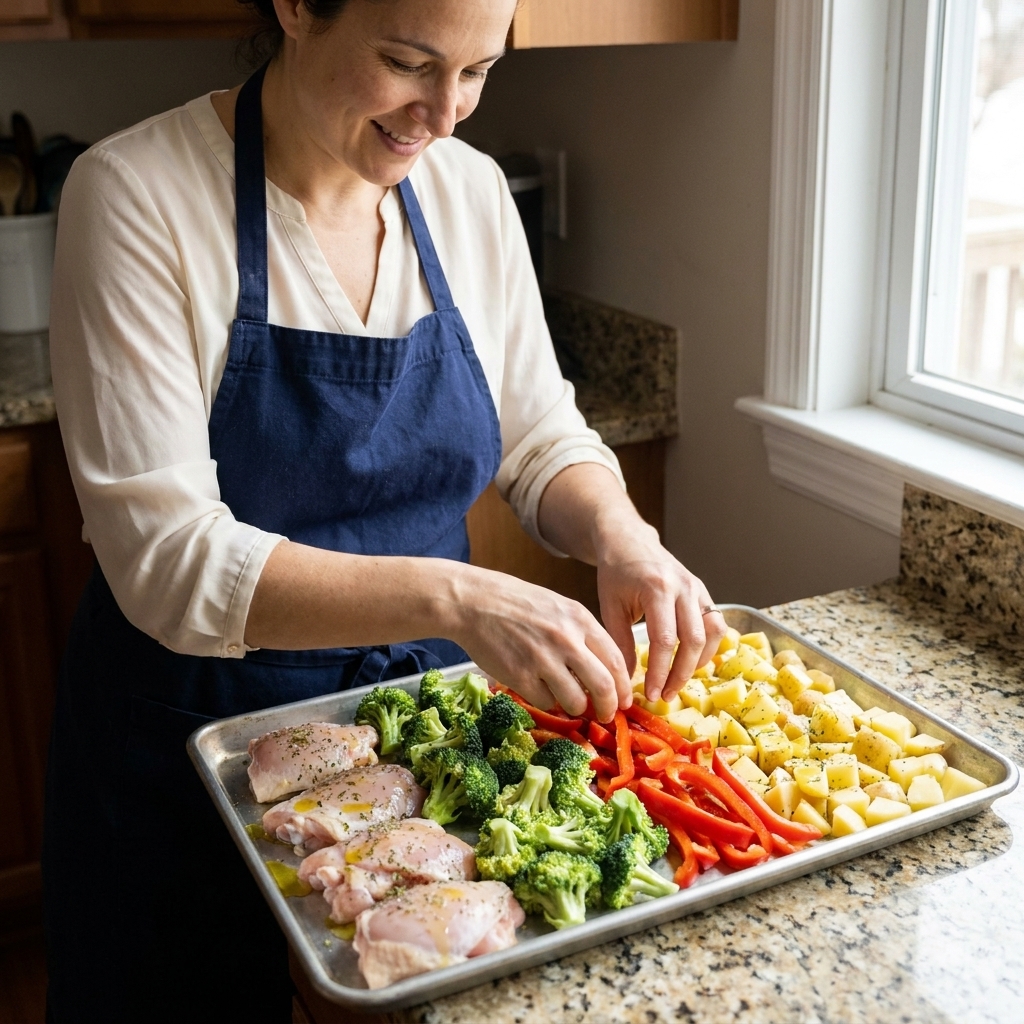
The 30-minute sheet pan formula
If you remember nothing else, remember this: things finish together when they are cut to match cook time.
- Oven temp: 425°F works for most 30-minute sheet pan dinners because it browns fast without turning vegetables to mush. Convection can run faster, so start checking a few minutes early.
- Pan space: one layer, with breathing room. Crowding makes steam, and steam makes everything take longer.
- Piece size: bigger pieces cook slower, smaller pieces cook faster. Your knife is your timer.
- Two-zone trick: if something needs extra time, keep it in larger pieces or place it near the pan edges where heat is often harsher. Your oven may disagree, so rotate the pan halfway through.
Quick visual: sizes that work
Think of this as your “everyone crosses the finish line together” cheat sheet.
| Ingredient | Best cut for 30 minutes | Notes |
|---|---|---|
| Chicken breast | Strips 1-inch thick or chunks 1 to 1.25 inches | Avoid whole breasts unless pounded to even thickness. |
| Chicken thighs (boneless) | Pieces about 2 inches | Thighs forgive you if you go a little bigger. |
| Sausage | Coins 3/4-inch thick | Pre-cooked sausage browns fast. Raw sausage timing depends on diameter, check doneness. |
| Salmon | Portions 1 to 1.25 inches thick | Often goes in for the last 10 to 12 minutes. |
| Shrimp | Large shrimp (16 to 20 count) | Add late. Overcooks in a blink. |
| Broccoli | Florets 1.5 to 2 inches, stems sliced 1/2-inch | Keep stem pieces similar thickness to florets. |
| Cauliflower | Florets about 1.5 inches | Smaller than broccoli because it is denser. |
| Green beans | Whole, trimmed | Choose thicker beans for better timing. |
| Bell pepper | 1-inch squares or thick strips | Thin strips go limp and can burn. |
| Zucchini | Half-moons 1/2-inch thick | Cut thicker to avoid sogginess. |
| Asparagus | Thick spears | Thin spears finish too fast and dry out. |
| Carrots | Coins 1/2-inch or batons 1/2-inch thick | Baby carrots often need to be halved lengthwise. |
| Sweet potato | 1/2-inch cubes | Any bigger and they can lag behind. |
| Brussels sprouts | Halved (quarters if very large) | Cut-side down for browning and speed. |
| Red onion | Wedges 1 inch at the widest | Keep the root end to hold wedges together. |
These sizes assume a typical sheet pan dinner setup: 425°F, ingredients in one layer, lightly oiled, and not piled.
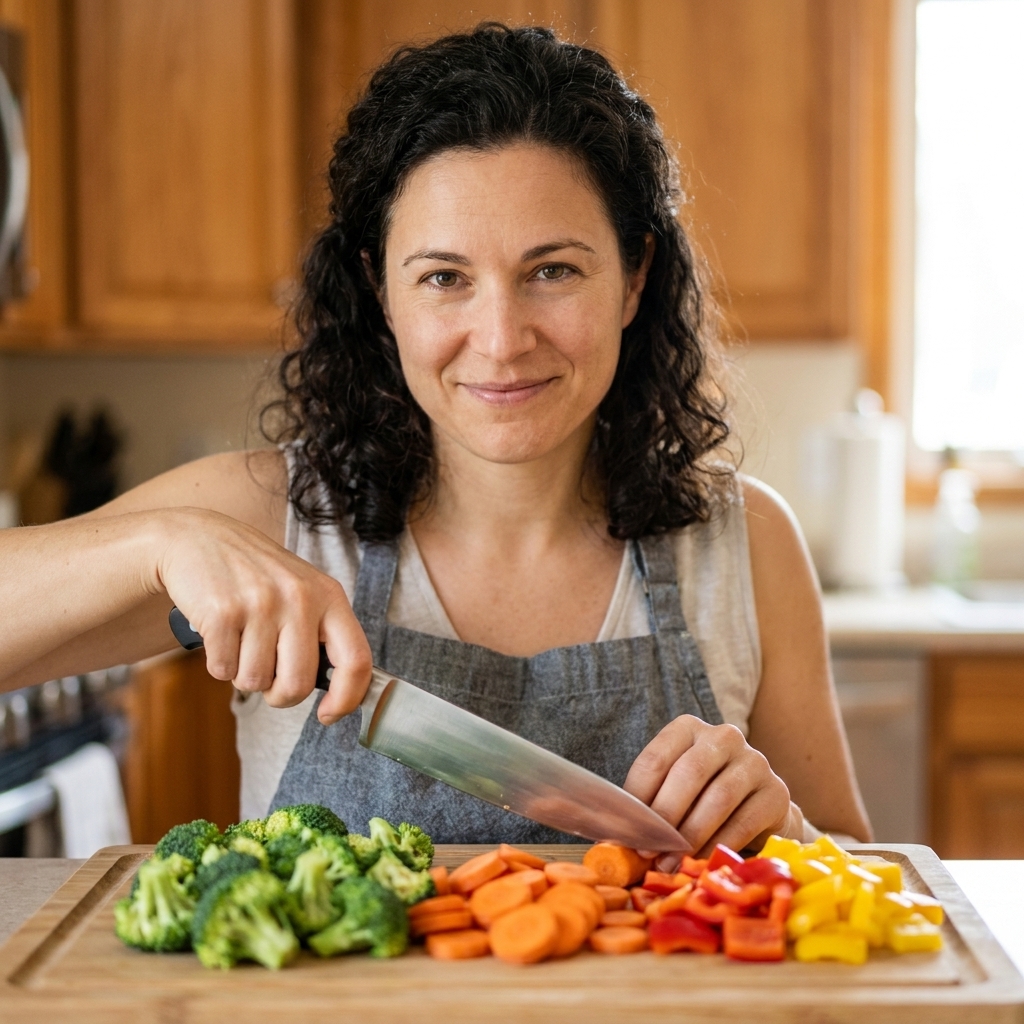
Proteins: safety first
With sheet pan dinners, proteins cause most of the “why is it still raw?” drama. The fix is mostly thickness. Heat travels from the outside in, so the thickest point sets your timeline.
Chicken breast
Best move: slice into 1-inch-thick strips or 1 to 1.25-inch chunks.
- If you really want whole cutlets, pound to an even 1/2- to 3/4-inch thickness.
- Skip tiny cubes. They cook fast but dry fast, especially at 425°F.
Chicken thighs (boneless, skinless)
Thighs are my weeknight safety net because they stay juicy. Cut into about 2-inch pieces so they keep pace with sturdier vegetables like broccoli, carrots, and Brussels sprouts.
Sausage
Pre-cooked: slice into 3/4-inch coins for browning without drying out.
Raw: you have two options for a true 30-minute dinner:
- Use small links and plan on roughly 25 to 35 minutes total depending on thickness. Turn once or twice for even browning.
- Par-cook in a skillet for 5 minutes, then slice and finish on the pan if you need it to sync with quicker vegetables.
Salmon and other fish
Fish is usually a late add. Cut salmon into portions that are 1 to 1.25 inches thick. If your vegetables need the full 25 minutes, roast them first, then add salmon for the last 10 to 12 minutes.
Shrimp
Choose large shrimp and add them late, usually 6 to 8 minutes at 425°F. If you roast shrimp from minute one, you will be chewing sadness.
Quick safety note: Use a thermometer when you can. Chicken should hit 165°F at the thickest point, then rest for 5 minutes so juices settle. Raw pork sausage is typically considered done at 160°F (or follow package guidance). For fish, the FDA food-safety target is 145°F, but many people prefer salmon pulled earlier (roughly 125 to 135°F) for a softer, moister texture.
Cross-contamination reality check: If you toss everything in one bowl, do vegetables first, then protein, or use separate bowls. Wash hands, knife, and board after handling raw chicken.
Vegetables: density wins
Two vegetables can be the same size and still cook at different speeds because density matters. Carrots are little orange rocks. Zucchini is basically summer water in a cute outfit. So we cut dense vegetables smaller and watery ones bigger.
Dense vegetables (cut smaller)
- Potatoes and sweet potatoes: 1/2-inch cubes usually land in the 25 to 35 minute range at 425°F. Check tenderness with a fork.
- Carrots: 1/2-inch coins, or batons about 1/2-inch thick.
- Brussels sprouts: halve them. If they are huge, quarter them.
- Cauliflower: 1- to 1.5-inch florets, slightly smaller than broccoli.
Medium vegetables (easy mode)
- Broccoli: florets 1.5 to 2 inches. Slice stems into 1/2-inch planks so they do not lag behind.
- Bell peppers: 1-inch squares or thick strips.
- Red onion: 1-inch wedges, root end intact.
Watery or delicate vegetables (cut bigger or add later)
- Zucchini and summer squash: 1/2-inch half-moons or thick spears. If you love it browned, add it during the last 12 to 15 minutes.
- Mushrooms: keep whole if small, halve if large. They shrink a lot.
- Asparagus: choose thick spears, trim, and consider adding in the last 10 to 12 minutes if your other veggies are dense.
- Cherry tomatoes: add late if you want them intact, add early if you want jammy burst tomatoes.
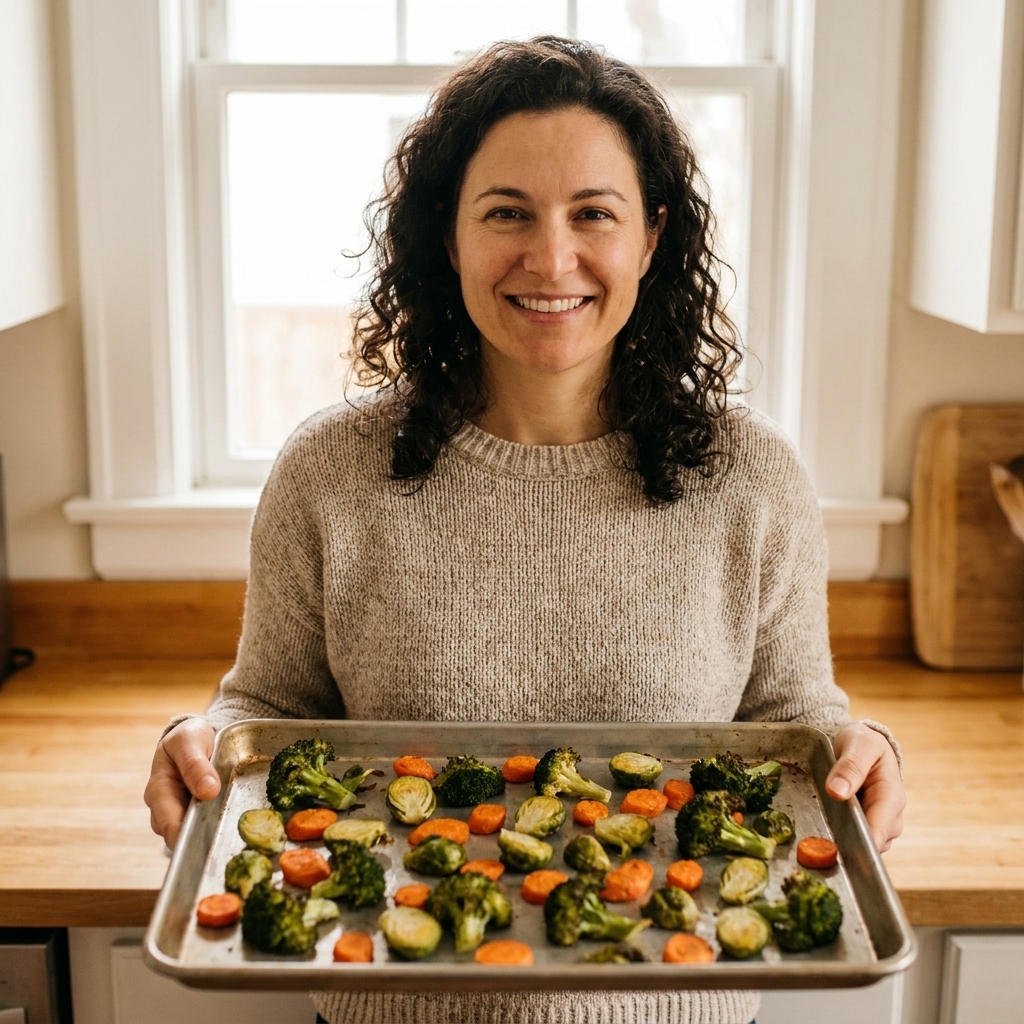
Timing: match thickness
Here is a sneaky reason sheet pan dinners run long: uneven shapes. A carrot coin and a carrot baton can share the same thickness, but the baton has more edges that brown quickly. Browning is not the same thing as doneness, and it can fool your eyes into thinking something is finished when the thickest part still needs time.
- Pick one main shape per vegetable and stick with it.
- Keep thickness consistent across everything on the pan. Thickness matters more than length.
- Flatten what you can: halved Brussels sprouts cook faster than whole sprouts because the flat side makes great contact with the hot pan.
When sizes do not match
Sometimes your fridge dictates the menu, and your vegetables are not interested in cooperating. No problem. Use one of these three saves.
1) Stagger the start
Give dense vegetables a head start. Roast potatoes or carrots for 10 minutes, then add chicken and quicker vegetables for the remaining 15 to 20 minutes.
2) Two-zone pan
Put slower items on the outer edges and faster items toward the center. On many sheet pans, edges brown harder, but ovens vary, so rotate the pan halfway through and adjust placement next time based on what you see.
3) Use a foil divider
If a saucy or juicy ingredient (hello, zucchini) is steaming your crispy candidates, create a simple foil barrier so each side roasts the way it wants to.
My 30-minute prep workflow
- Preheat first: oven to 425°F while you prep. Sheet pan goes in too if you want extra browning.
- Cut the slowest ingredient first: sweet potatoes, carrots, Brussels sprouts.
- Cut protein next: keep it in uniform thickness.
- Cut quick vegetables last: peppers, zucchini, asparagus.
- Oil and season in a bowl: faster coating, more even seasoning, less mess on the pan. If raw chicken is involved, either use a separate bowl or toss vegetables first, then chicken.
- Spread, do not pile: if it looks crowded, use a second pan or cook in two quick batches.
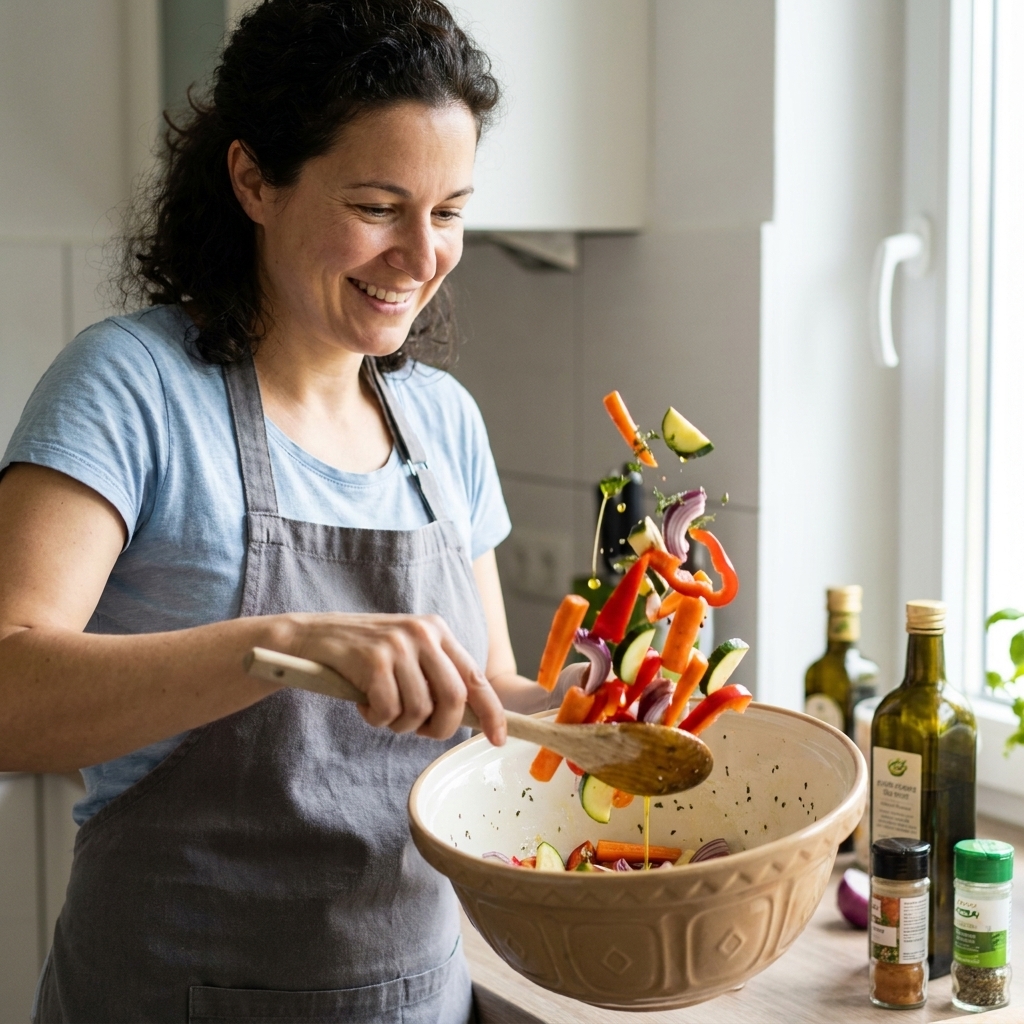
Common problems (real fixes)
“My vegetables are done but my chicken is not.”
- Cut chicken smaller or thinner next time, aiming for about 1-inch thickness.
- Use thighs instead of breasts for more forgiveness.
- Give chicken a head start for 5 to 8 minutes, then add vegetables.
“My chicken is done but my potatoes are still hard.”
- Potatoes often need 1/2-inch cubes to finish in about 30 minutes at 425°F.
- Switch to baby potatoes halved or quartered.
- Microwave potato cubes for 2 to 3 minutes before roasting if you are in a hurry.
“Everything is pale and watery.”
- It is almost always crowding. Use a bigger pan or two pans.
- Dry vegetables after washing. Wet vegetables steam.
- Increase heat to 450°F if your oven runs cool, but watch for burning sugars in marinades.
- If you are using convection, check early. It browns faster, and it can dry small pieces out faster too.
“Some pieces burn while others are undercooked.”
- Uniform thickness, especially for carrots, broccoli stems, and chicken pieces.
- Rotate the pan halfway through cooking.
- Move fast-cooking bits toward the center and slower bits toward the edges, then adjust based on your oven’s hot spots.
Fast cheat sheet
Cut smaller (or start earlier)
- Sweet potatoes, potatoes
- Carrots
- Beets
- Cauliflower
- Large broccoli stems
Cut medium
- Broccoli florets
- Bell peppers
- Onions
- Green beans
Cut bigger (or add later)
- Zucchini and summer squash
- Asparagus
- Mushrooms
- Cherry tomatoes
- Shrimp
- Salmon
Mini FAQ
What size sheet pan should I use?
A standard half-sheet pan (about 18 x 13 inches) is the weeknight workhorse. If you are trying to feed 4 hungry people, that size gives you the best chance of not crowding.
Do I need to line the pan?
Parchment helps with cleanup and reduces sticking. For maximum browning, skip parchment and oil the pan lightly. If you do that, do not wander away after minute 20.
Should I cut everything before I start cooking?
Yes, for a true 30-minute dinner. If you are still chopping while the oven is hot, timing gets messy fast. If prep time is your bottleneck, chop vegetables once or twice a week and store them in airtight containers.
Can I use frozen vegetables?
You can, but they release water. Roast them hot (425 to 450°F), spread them well, and accept that they will be more tender than crisp. Frozen broccoli and green beans do best. Frozen zucchini turns soft quickly.
The bottom line
Sheet pan dinners are not magic. They are geometry. When you cut ingredients to the right thickness and give them enough space, they roast evenly, taste better, and actually land on the table in about 30 minutes like you promised.
If you want a simple starting point: cut dense veggies to 1/2-inch pieces, cut chicken to about 1-inch thickness, roast at 425°F, and keep everything in a single layer. Your future self, and your sink, will thank you.