I love eggs for dinner for the same reason I love sweatpants with a blazer: it feels like a life hack. Eggs are quick, often budget-friendly, protein-packed, and they turn a random drawer of veggies into a real meal. Best part: you can do almost all of it in one skillet, which means your evening does not end with you staring into the sink like it personally wronged you.
This is my go-to guide for savory skillet egg dinners, from saucy shakshuka to loaded frittatas, plus a handful of mix-and-match formulas that keep things exciting even when your fridge is looking a little… sparse.
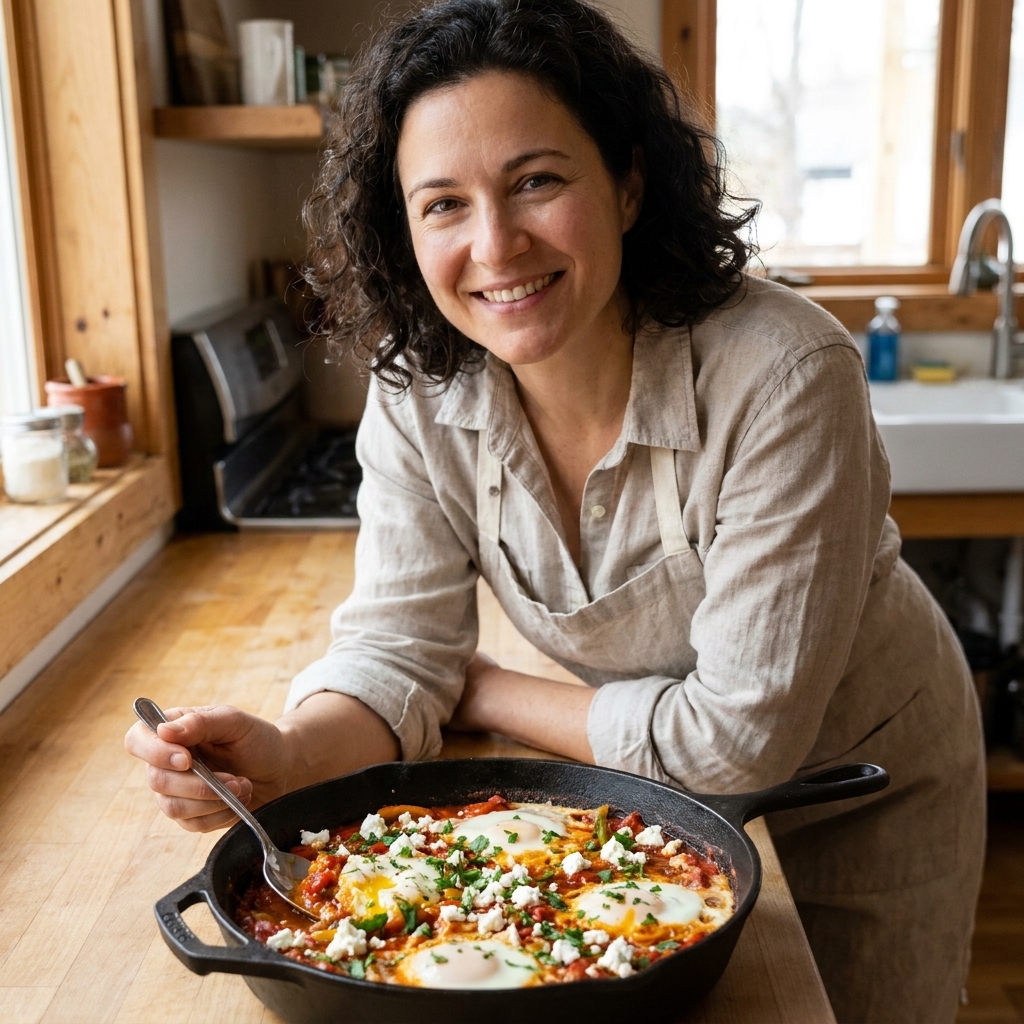
The 3 rules
If you remember nothing else, remember these. They are the difference between creamy eggs and the kind that bounce.
- Build a flavorful base first. Aromatics, spices, and a little fat go in before eggs. Eggs are fast. Flavor takes a minute.
- Control the heat. Eggs want gentle heat. Medium to medium-low is your friend once eggs hit the pan.
- Use carryover cooking. Pull the skillet when eggs look slightly underdone. They will finish as you set the table or cut some fruit.
One quick sanity check: timing varies a lot based on pan material, burner strength, lid fit, and whether your eggs are cold from the fridge. Use the times as a starting point and trust the visual cues.
Shakshuka night
Shakshuka is my favorite way to turn pantry staples into something that tastes like you planned ahead. It is basically eggs poached in a spiced tomato and pepper sauce, and it is wildly forgiving.
Serves: 2 to 4 (depending on how many eggs you crack in and how much bread is involved)
What you need
- Olive oil
- Onion and bell pepper (or whatever soft veg you have)
- Garlic
- Crushed tomatoes or tomato sauce
- Spices: cumin, smoked paprika, chili flakes (harissa if you have it)
- Eggs
- Finishers: feta, parsley, yogurt, lemon
How to make it
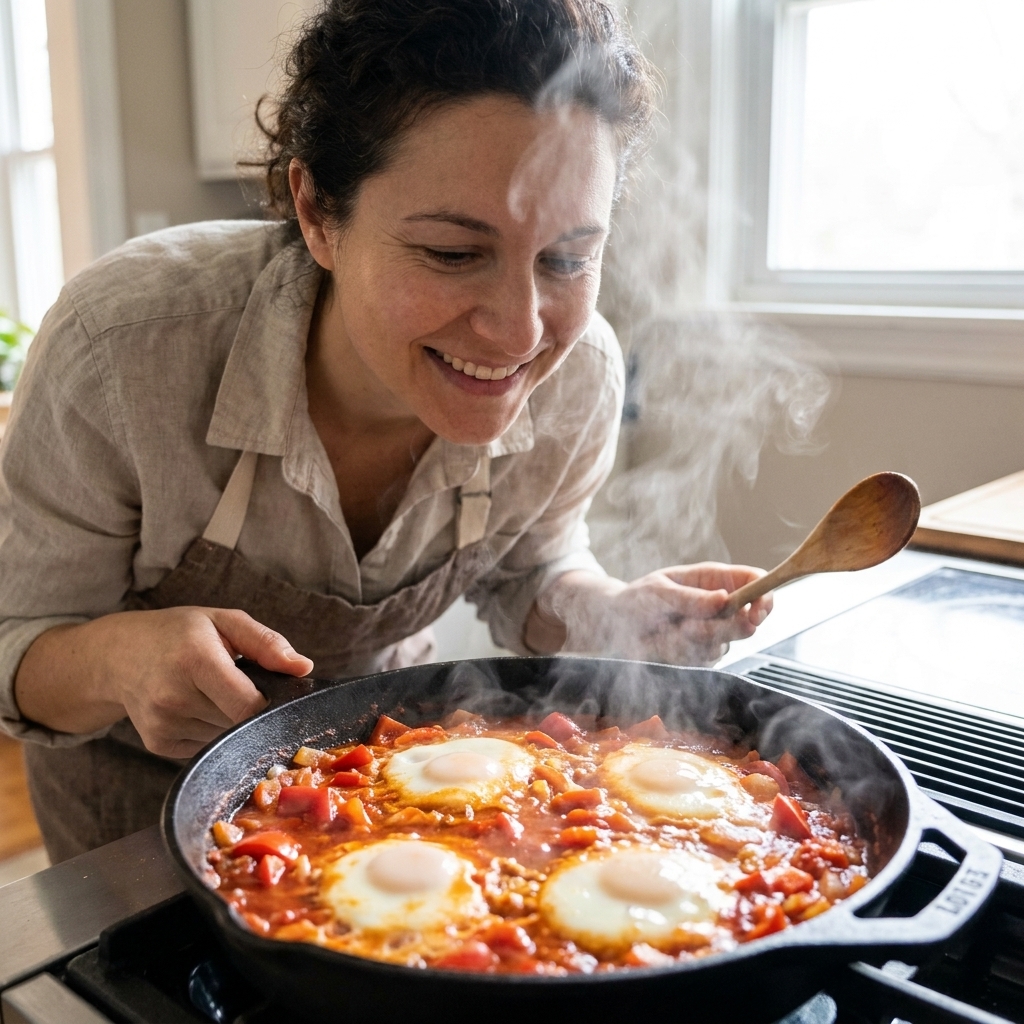
- Sauté the base. Cook onion and pepper in olive oil until soft, then add garlic and spices for 30 seconds.
- Simmer the sauce. Add tomatoes and a pinch of salt. Simmer 8 to 12 minutes until thick enough to hold a small crater.
- Nestle the eggs. Make little wells, crack eggs in, cover, and cook on low until whites set and yolks are still soft, usually 6 to 10 minutes. (If your lid leaks steam, it can take longer. No shame.)
- Finish. Sprinkle feta and herbs. I love a spoon of yogurt for cool contrast.
Veg boost: If you want extra veggies, wilt a few handfuls of spinach into the sauce right before you add eggs. It disappears in the best way.
No lid? Cover the skillet with a sheet pan, a piece of foil (crimped around the edges), or even a large plate. You just want to trap enough heat to set the whites.
Loaded frittata
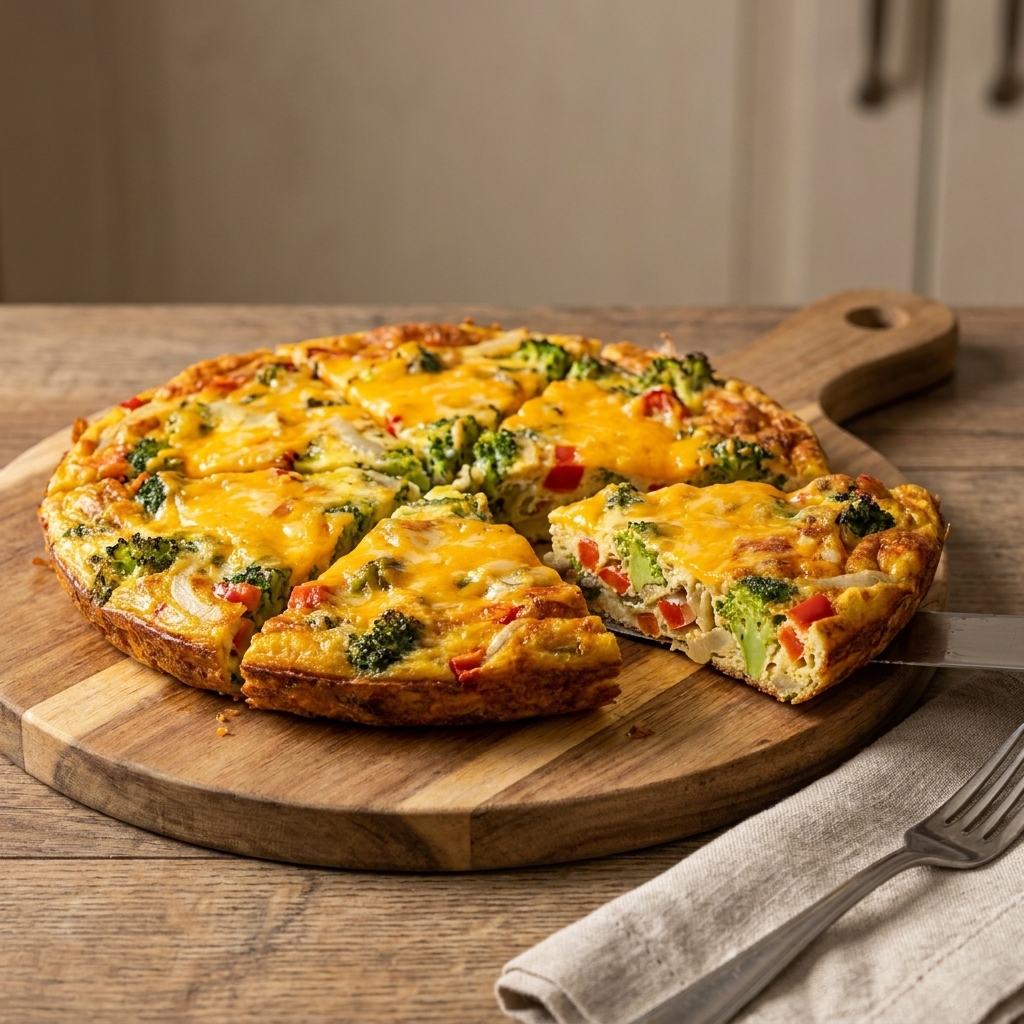
Frittatas are what I make when I want something hearty that still feels like a reset. They also reheat beautifully, which means tomorrow’s lunch is basically handled.
Serves: 3 to 4
The formula
- Veg and protein: 2 to 3 cups cooked add-ins total (think roasted veg, sautéed mushrooms, leftover chicken, ham, cooked sausage, or beans)
- Egg base: 8 to 10 eggs + 1/4 cup milk or half-and-half + salt and pepper
- Cheese: 1/2 to 1 cup (cheddar, mozzarella, goat cheese, feta, or whatever is hanging out)
Skillet method (stovetop to oven)
- Heat the oven to 375°F.
- Cook your add-ins in an oven-safe skillet. This is where you drive off moisture. Soggy veg equals watery frittata.
- Pour in eggs. Let the edges start to set, then use a spatula to gently pull the set edges toward the center once or twice. (You are not scrambling, just distributing.)
- Top with cheese.
- Bake 12 to 18 minutes. Pull when the center is just set and barely jiggles. If you use a thermometer, you are looking for roughly 160 to 165°F in the center.
No oven-safe skillet? Do a stovetop frittata: keep heat low, cover, and cook until set. If the top needs help, run it under the broiler in a baking dish after you slide it out. Still fewer dishes than you think, and sometimes you have to play the hand your cookware deals you.
Pan note: Nonstick is the most forgiving for frittatas. Cast iron is great too, as long as it is well-seasoned. Stainless can work, but it is less chill about sticking, so be generous with oil and keep the heat moderate.
Taco skillet eggs
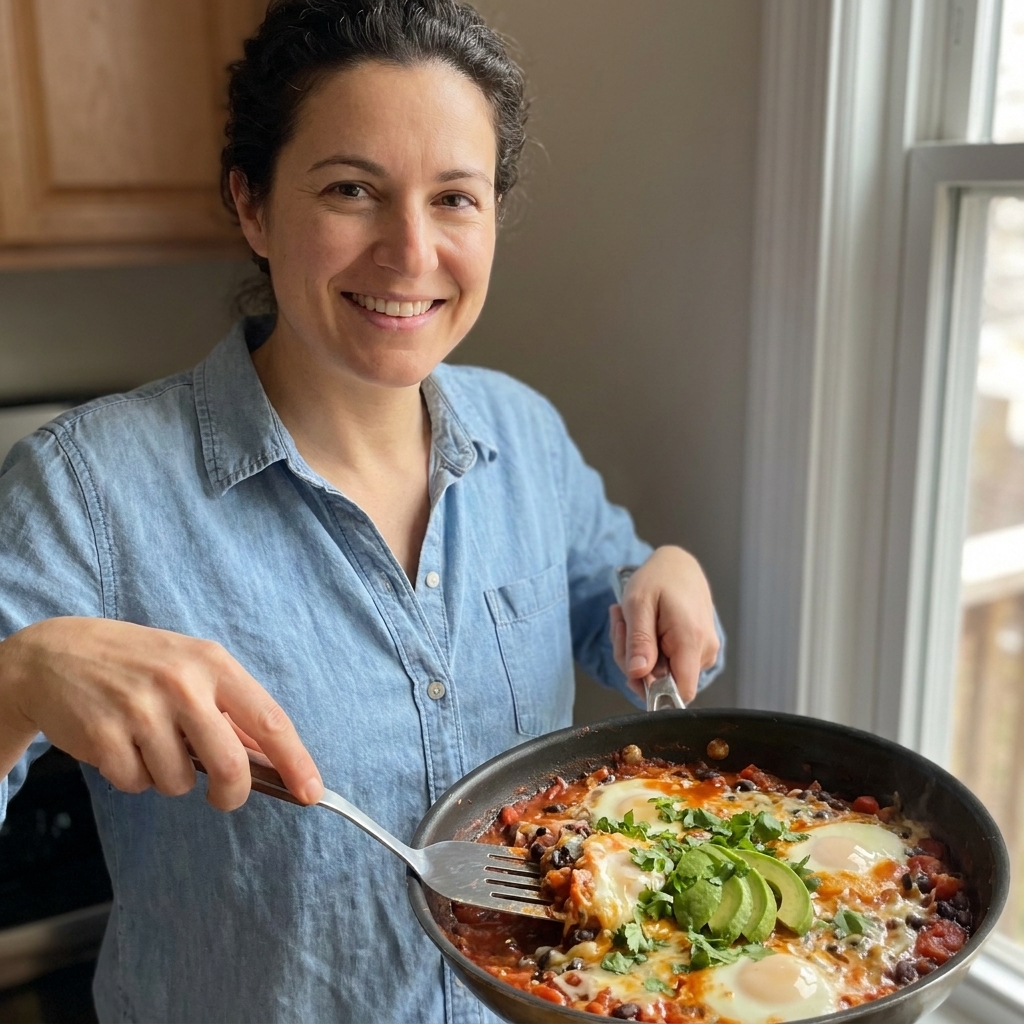
These are my “I have 20 minutes and people are hungry” eggs. Think of it like huevos rancheros meets pantry chili, minus the extra pans.
Serves: 2 to 4
Quick build
- Sauté aromatics. Onion and garlic in a little oil.
- Add your base. Stir in black beans (drained), salsa, and a pinch of cumin. Simmer 3 to 5 minutes.
- Crack in eggs. Make wells, add eggs, cover, cook until set.
- Top it. Cheese, cilantro, avocado, crushed tortilla chips, hot sauce.
Make it heartier: Add leftover rice, chopped cooked sweet potato, or frozen corn. Just warm it through before the eggs go in.
No lid? Same trick as shakshuka: sheet pan, foil, or a large plate.
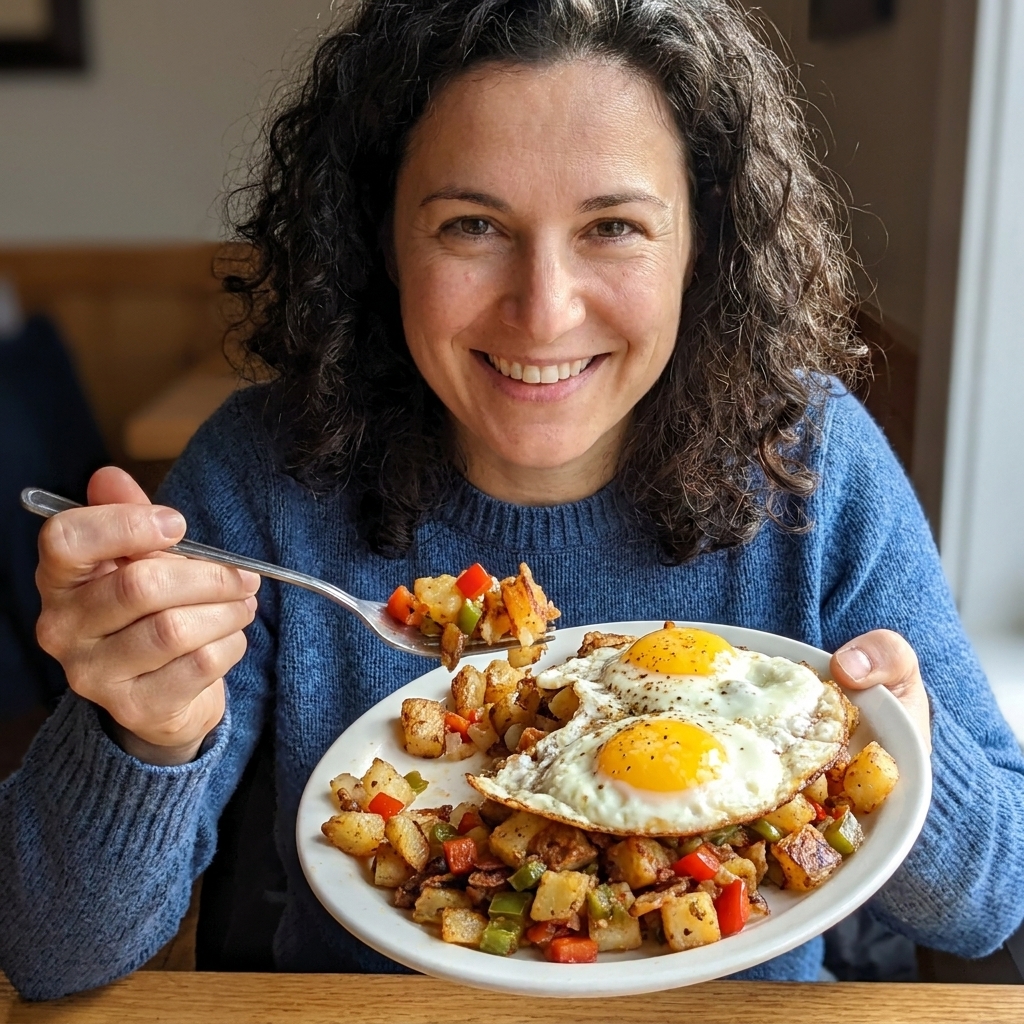
Crispy hash and eggs
If someone in your house says “breakfast for dinner” and secretly means “something filling,” this is the move. It is one skillet, maximum comfort.
Serves: 2 to 3 (or 2 very hungry people)
How to get real crispiness
- Use a starchy base: diced potatoes, leftover roasted potatoes, or sweet potatoes
- Do not crowd the pan: if your skillet is small, cook in two batches
- Let it sit: once potatoes hit the skillet, leave them alone for a few minutes to brown
Basic method
- Brown potatoes in oil until crisp and tender.
- Add diced onion and any quick-cooking veggies (bell pepper, zucchini, spinach at the end).
- Season generously (salt, pepper, paprika).
- Make wells and crack in eggs, or scramble eggs separately in the same skillet by pushing the hash to one side.
Shortcut I use all the time: Start with a bag of frozen diced potatoes or hash browns. They crisp best if you pat off excess frost and use a hot skillet.
Pan note: Cast iron is a crispiness machine for hash. Nonstick works too, but you may not get quite the same crunch. Stainless can do it, but you have to preheat properly and use enough fat, or the potatoes will weld themselves to the pan.
Green skillet eggs
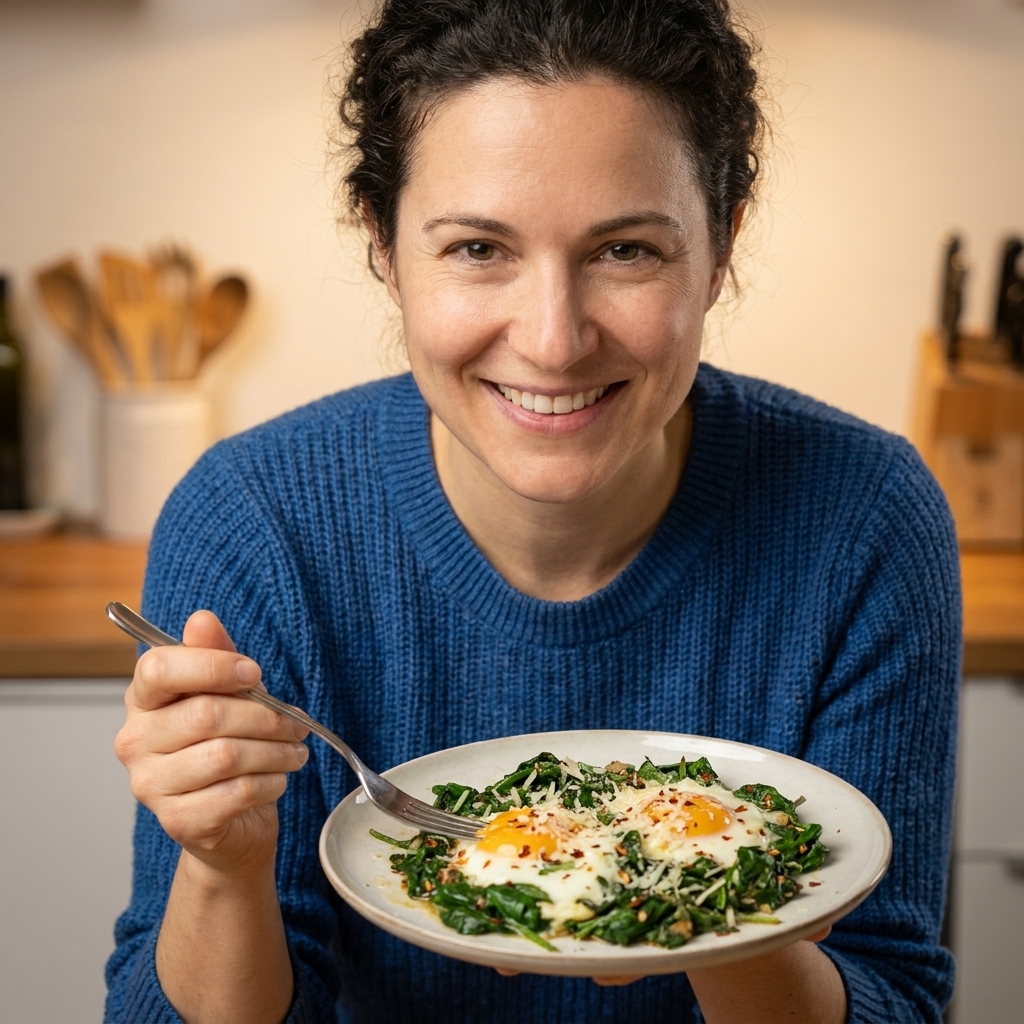
This is my “I want something lighter but still satisfying” dinner. It is also a great way to use that half-bag of greens that is starting to look suspicious.
Serves: 2
What to do
- Sauté garlic in olive oil.
- Add greens (spinach, kale, arugula) with a pinch of salt and cook until wilted.
- Add a splash of cream or a spoon of pesto if you want it richer.
- Crack in eggs, cover, and cook until set.
Finishers that make it feel fancy: lemon zest, chili flakes, parmesan, toasted nuts, or a drizzle of good olive oil.
Add-ins that work
Eggs are basically the friendliest protein in your kitchen. Here are my favorite skillet-friendly add-ins, plus how to avoid the common texture traps.
Best add-ins (and how to prep them)
- Mushrooms: sauté until they release moisture and then brown
- Zucchini: cook until lightly golden, not mushy
- Bell peppers and onions: soften first for sweetness
- Leafy greens: wilt at the end and squeeze out extra water if needed
- Cooked sausage or bacon: brown first, then pour off excess fat if it is a lot
- Beans and lentils: warm through in sauce or with aromatics
- Cheese: add near the end or on top so it melts without turning greasy
One important note: if you add leftovers, make sure they are already cooked and warmed through if they are thick or dense. Raw add-ins (or cold, bulky leftovers) are how you end up overcooking the eggs while waiting for everything else to catch up.
Timing chart
| Skillet egg style | Heat | Covered? | Typical time | What to look for |
|---|---|---|---|---|
| Eggs in sauce (shakshuka style) | Low | Yes | 6 to 10 min | Whites set, yolks still soft |
| Frittata (baked) | 375°F oven | No | 12 to 18 min | Center barely set, slight jiggle |
| Scramble with add-ins | Medium-low | No | 3 to 6 min | Soft curds, glossy finish |
| Sunny-side or basted eggs | Medium-low | Optional | 4 to 7 min | Whites cooked, yolk runny |
Reminder: treat these like training wheels. The egg is done when it looks done.
Make it dinner
The trick is choosing sides that do not require their own skillet. Here are my favorite low-effort add-ons.
- Toast, pita, or tortillas: straight into the toaster or warmed over a burner flame
- Bagged salad: yes, it counts. Add a handful of nuts for crunch
- Cut veggies and dip: cucumbers, carrots, hummus
- Quick fruit: oranges, grapes, apple slices
- Microwave grains: warm rice or quinoa cups under shakshuka are shockingly good
Cleanup tips
- Use a silicone spatula. It scrapes eggs clean without wrecking your pan.
- Deglaze while it is hot. After serving, add a splash of water to the warm skillet and scrape up any stuck-on bits. Instant head start.
- Line up your toppings first. Nothing makes eggs stick like sitting in a hot pan while you hunt for cilantro.
- If you used cheese, soak sooner. Melted cheese turns into cement when it cools. Ask me how I know.
Skillet egg FAQs
What size skillet works best?
A 10- to 12-inch skillet is the sweet spot. If you are cooking for four hungry people, 12-inch makes life easier, especially for frittatas and hashes.
Does skillet type matter?
Yes, but you can make all of these work. Nonstick is the easiest for scrambles and frittatas. Cast iron is the crispiness champion for hash and does great with saucy eggs once it is well-seasoned. Stainless is totally usable, just preheat well and use enough oil to prevent sticking.
Can I make these dairy-free?
Absolutely. For shakshuka or salsa eggs, skip cheese or use a dairy-free option. For frittatas, you can replace the milk with a small splash of unsweetened, unflavored non-dairy milk, but the texture can vary by brand. Honestly, omitting milk entirely works great and keeps things simple.
How do I keep eggs from overcooking?
Lower the heat and trust carryover cooking. Pull the skillet when eggs look slightly underdone, then let it sit off the heat for a couple minutes.
Can I meal prep skillet egg dinners?
Frittatas and scrambled egg mixes reheat best. Saucy eggs like shakshuka are best cooked fresh, but you can absolutely prep the sauce ahead and reheat it, then add eggs right before serving.