I used to cook like I was competing on a chaotic cooking show: every bowl in the house, a cutting board glued to the counter, and a sink that looked personally offended by my life choices. These days, I still want dinner fast, healthy, and actually good, but I want the kitchen to feel like a kitchen, not a disaster scene.
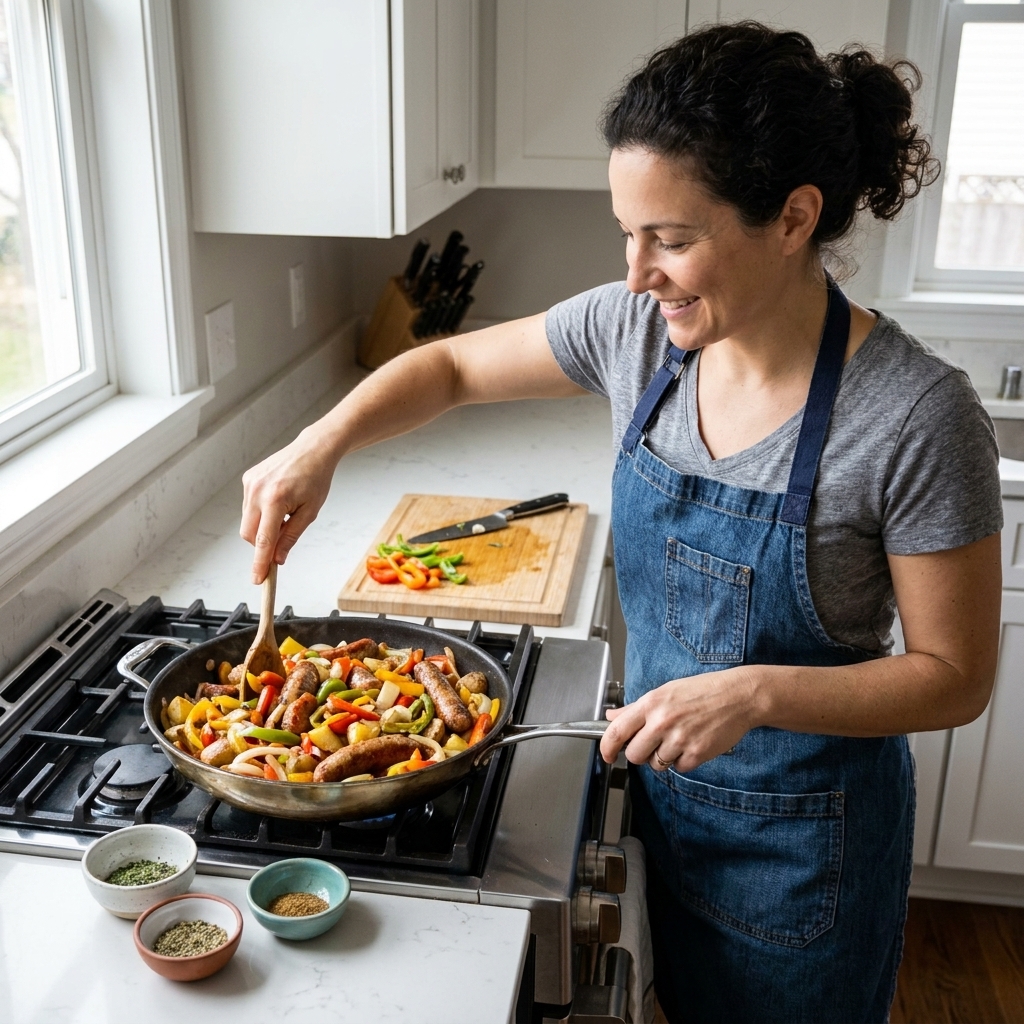
This is my 30-minute dinner workflow for skillet and sheet pan meals. The trick is simple: you are not just cooking dinner, you are managing time. While the pan is doing its job, you are quietly resetting your space so cleanup never piles up.
The rule that makes it work
Batch your hands-on work into two zones: before food goes in, and after it comes out. In the middle, when something is simmering, roasting, or covered and cooking unattended, your job switches to cleanup and next-step prep.
I think of it as a loop:
- Prep a little
- Start cooking
- Clean while it cooks
- Prep the next add-in
- Repeat
Set up in 2 minutes
This is the mini mise en place I actually use. You do not need a million prep bowls to be organized. You need a plan and a place for scraps.
1) Pick the right pan
For 30-minute dinners, I reach for:
- 12-inch skillet with a lid for pastas, skillet rice and grain-style dishes, saucy chicken, taco-style mixes, and anything that needs a covered simmer.
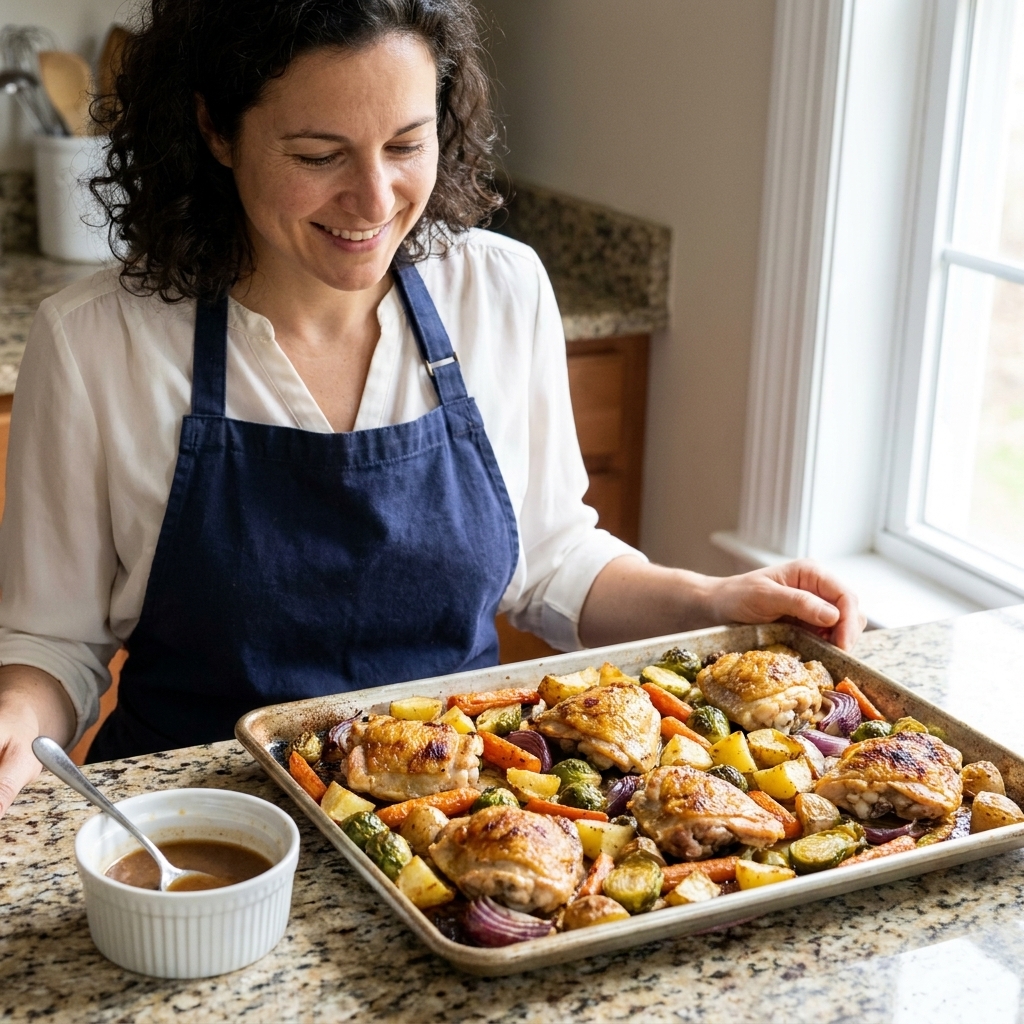
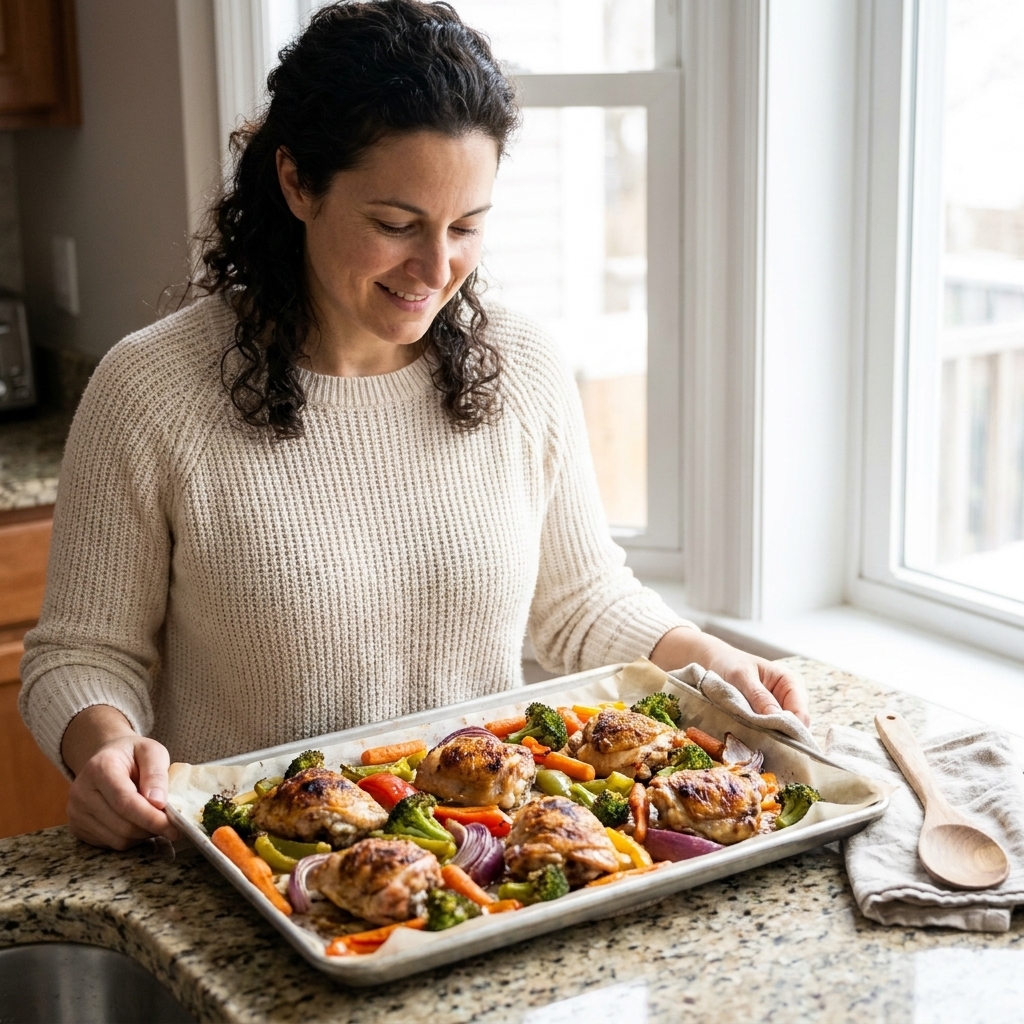
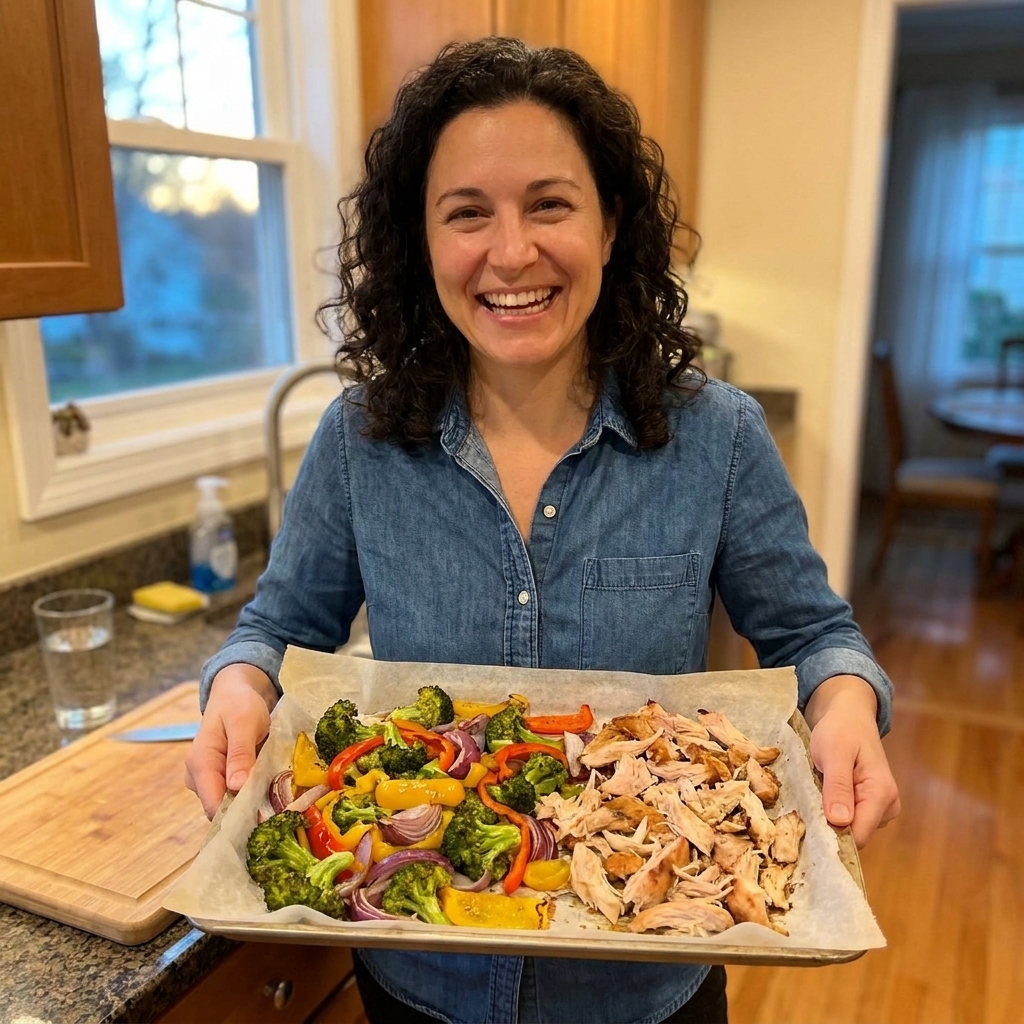
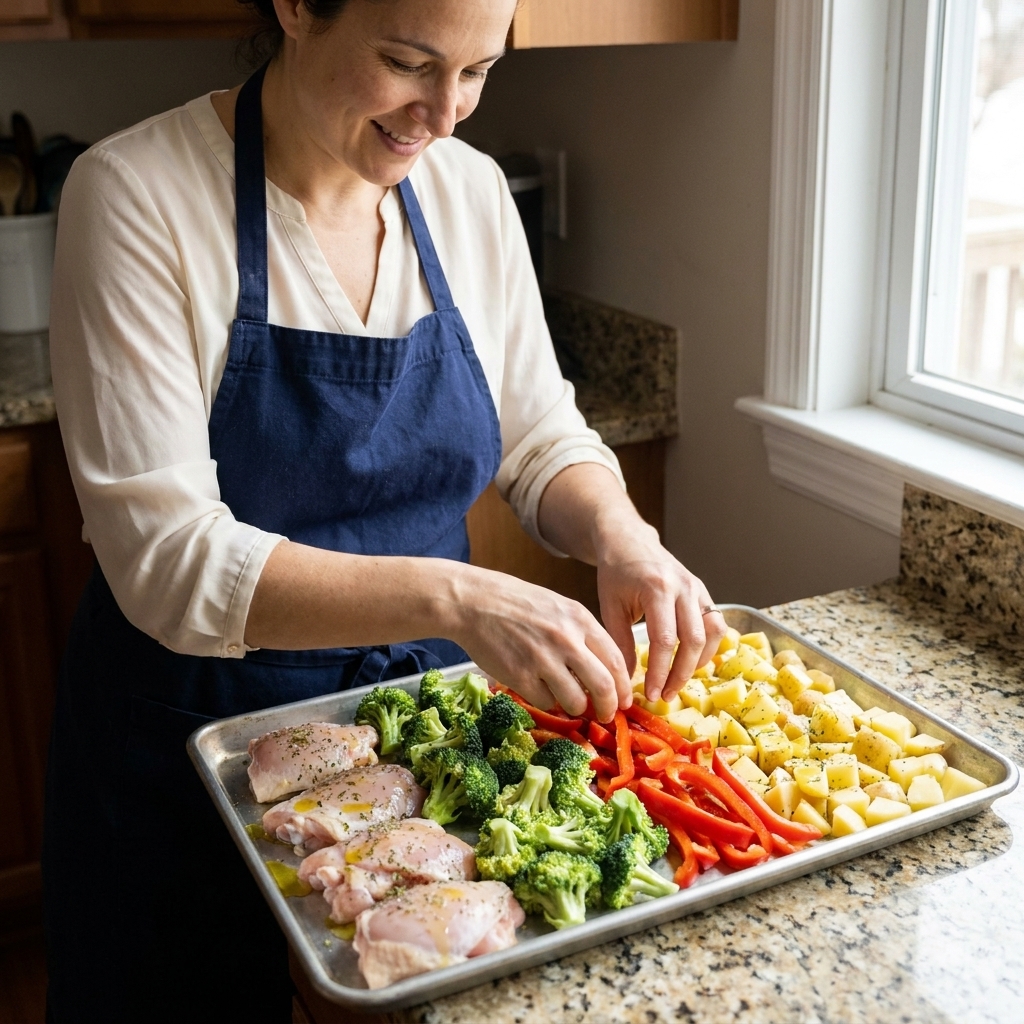
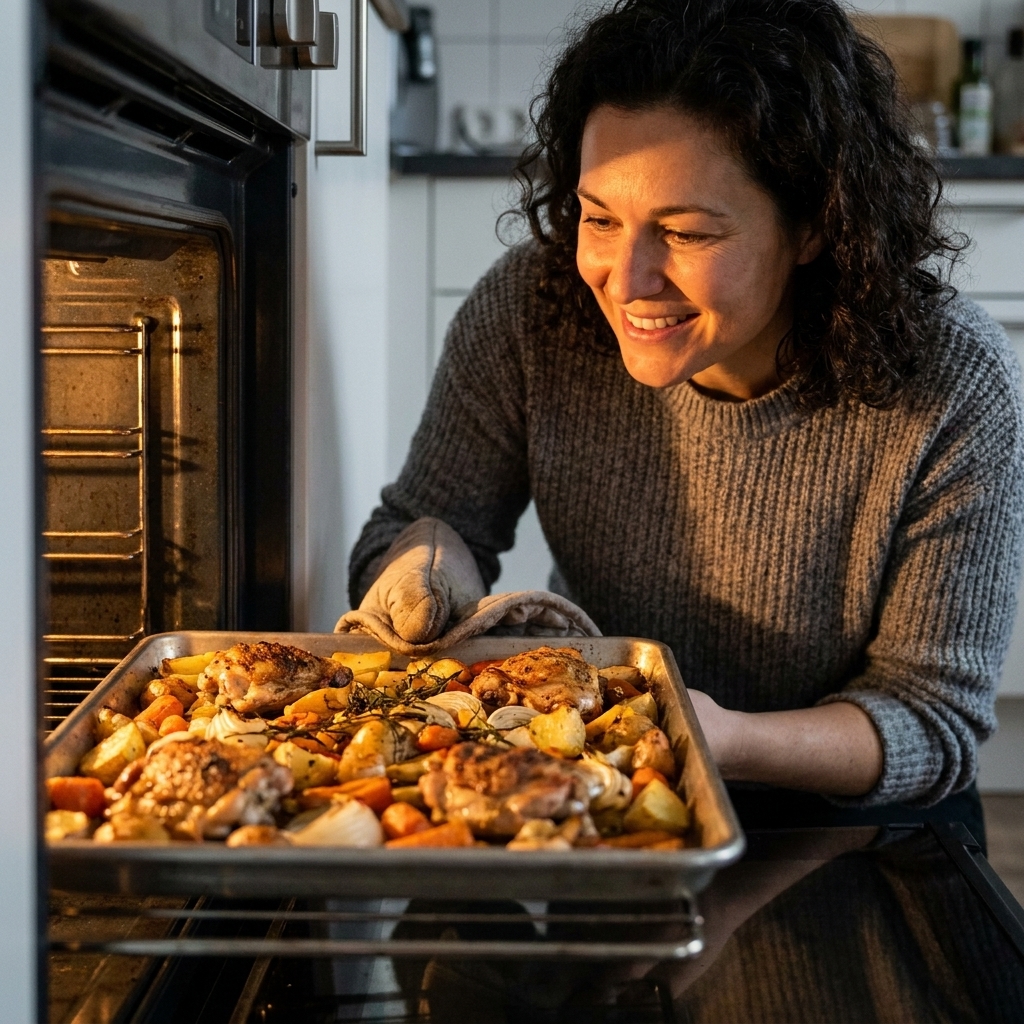
- Half-sheet pan for high-heat roasting: sausage and veggies, salmon and asparagus, chicken thighs and potatoes.
- One big pot when the meal is mostly liquid or needs room to bubble without boiling over.
2) Put a trash bowl on the counter
This is my biggest tiny habit. A medium bowl near your cutting board catches onion skins, herb stems, and packaging. It keeps you moving and stops the counter from turning into a confetti parade.
3) Fill the sink with hot, soapy water
Not a full soak bath, just a few inches. It turns “washing up later” into “rinsing quickly now.” If you have a dishwasher, still do this. The sink is your landing zone.
The 30-minute timeline (skillet)
This is the flow I use for most one-skillet meals: tacos, creamy orzo, sausage and peppers, quick curries, skillet enchilada bakes, you name it.
Minute 0 to 5: Fast prep
- Heat the skillet (dry or with oil, depending on the recipe).
- Prep the aromatics first: onion, garlic, ginger, scallions. These are usually step one in the pan.
- Prep one “long cook” vegetable: carrots, broccoli stems, potatoes (thin), Brussels sprouts (halved), bell peppers.
Clean while you prep: As soon as you finish with a wrapper, peel, or herb stems, toss it in the trash bowl. If you used a measuring spoon for oil or spice, drop it into the soapy sink immediately.
Minute 5 to 10: Start cooking (stay at the stove)
- Sear or sauté your protein or aromatics. This is the hands-on moment. Stay close and do not leave the stove during high heat.
- Add seasoning early so it blooms in the fat and you build flavor fast.
Clean while it cooks: During the first sear, you get little pockets of waiting time. Use them:
- Rinse your knife and cutting board if you are done with raw meat.
- Wipe the counter where you prepped.
- Load any small bowls into the dishwasher, or wash one or two items in the sink.
Safety note: If you touched raw chicken, treat this like a hard reset: wash hands, then wash the board and knife with hot soapy water and sanitize (dishwasher, or a food-safe sanitizer), and wipe down the faucet handle. It takes about a minute and saves you a lot of worry.
Minute 10 to 18: The simmer window
Most skillet dinners have a phase where you add liquid, cover, and let it simmer. That is your golden window.
- Add your liquid (broth, canned tomatoes, coconut milk, wine, water).
- Scrape the pan to lift browned bits. Free flavor, no extra time.
- Cover and reduce heat.
Clean while it simmers:
- Wash the cutting board, knife, and one mixing bowl.
- Wipe the counter fully, including the spot where spices landed.
- Put away any ingredients you are done with (oil, salt, spice jars).
If you do only one thing during the simmer, do the cutting board and knife. That is the difference between “quick rinse later” and “why is my board crusty now.”
Minute 18 to 25: Prep quick add-ins
Now prep the ingredients that overcook easily or only need a minute:
- Leafy greens (spinach, kale ribbons)
- Fresh herbs
- Lemon or lime wedges
- Cheese for finishing
- Pre-cooked beans or quick-cook veggies (peas, corn)
Clean while you prep: Refresh the soapy sink water if it looks grimy. It takes 10 seconds and makes the final wash feel painless.
Minute 25 to 30: Finish and close the kitchen
- Uncover and reduce if the sauce needs thickening.
- Stir in finishers: greens, herbs, cheese, lemon.
- Taste for salt and acid. A squeeze of citrus at the end covers a multitude of weeknight sins.
Clean while it finishes:
- Wash the last prep items.
- Wipe the stovetop edges while the pan rests for 2 minutes.
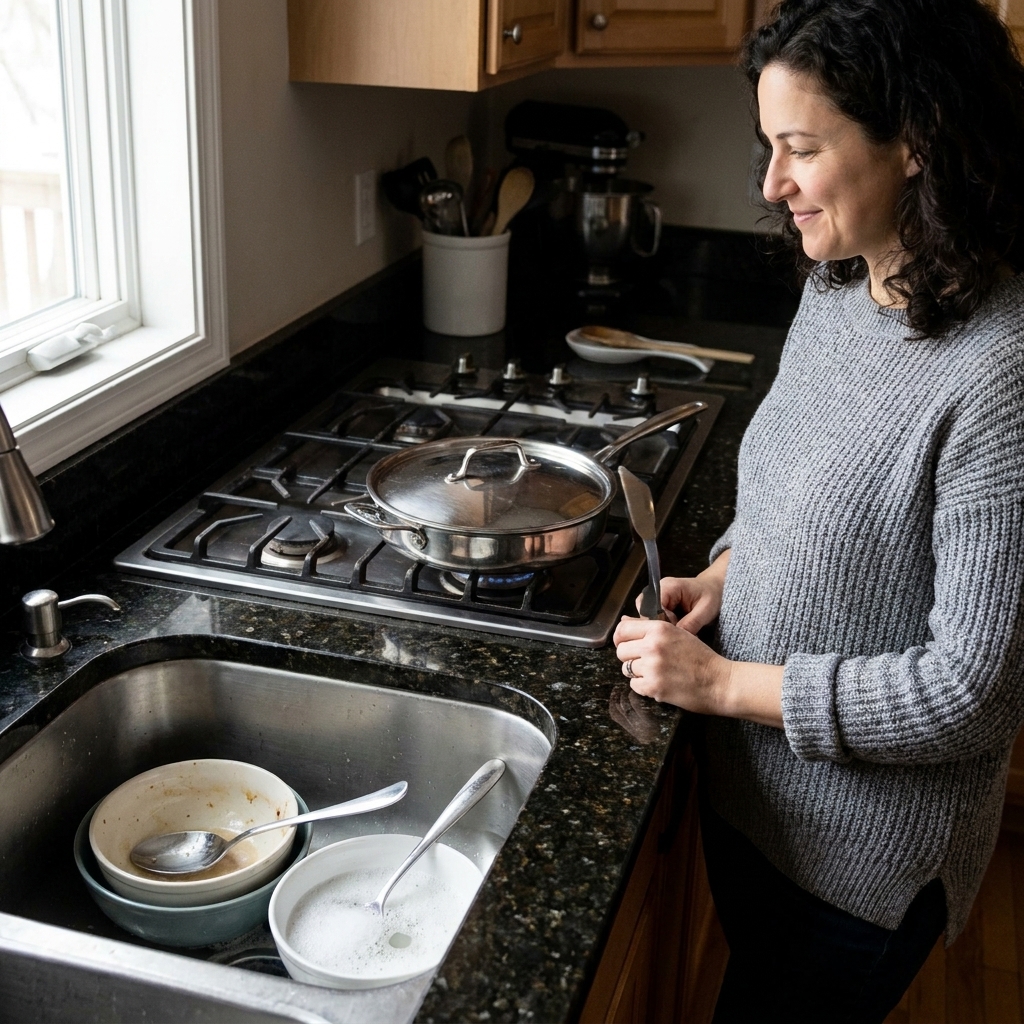
- Put dinner on the table, then return and soak the skillet with hot water (once it is cool enough). Even 5 minutes of soaking makes cleanup faster.
The 30-minute timeline (sheet pan)
Sheet pan meals are even better for parallel work because the oven does the heavy lifting. Your job is smart prep and smart staging.
Minute 0 to 5: Preheat and start the slow-roasters
- Preheat the oven. A common starting point is 425°F, then adjust for thickness and sugar-heavy sauces (drop to 400°F if things are browning too fast).
- Prep the longest-cooking items: potatoes, carrots, winter squash, bone-in chicken, thick broccoli florets.
- Start them first if they need a head start.
Clean while you prep: Trash bowl for scraps, then wipe the counter before the pan even goes in. This is the calmest your kitchen will be all night, take advantage.
Minute 5 to 20: Roast time equals cleanup time
Once the pan is in the oven, you get a real stretch of hands-off time. Use it like a pro:
- Wash the knife and cutting board.
- Wash the mixing bowl (or the one you tossed veggies in).
- Start a quick sauce or dressing in one small bowl: yogurt sauce, honey mustard, lemon tahini, salsa verde.
- Set the table and portion any toppings.
Minute 20 to 30: Add quick-cook items and finish
Most sheet pan dinners get better when you add delicate ingredients later.
- Add fast-cook veggies (asparagus, snap peas, zucchini).
- Add a glaze or sauce near the end so it caramelizes instead of burning.
- Finish with herbs, citrus, or crumbled cheese after roasting.
Clean while it finishes: This is when I do the final counter wipe and reset the sink. When the food comes out, your kitchen should be 90 percent done.
How to flex the workflow
Swap proteins without breaking the clock
- Chicken thighs buy you time. They are forgiving if they simmer a few extra minutes.
- Chicken breasts or pork chops need closer attention. Sear, then finish gently (lower heat or shorter oven time) so they do not dry out.
- Shrimp or fish go in late. Use the simmer or roast window to do almost all cleanup, then cook seafood in the final minutes.
Vegetarian and tofu dinners
- Beans and lentils are weeknight magic because they are already cooked (canned) or quick to heat through. Use them as your “protein” and lean hard on finishers like lemon, herbs, yogurt, or cheese.
- Tofu behaves like protein: dry it well, sear it, then let it be. It will release when it is ready, just like chicken.
My clean-as-you-go cheat codes
Keep one towel and one sponge in play
One towel for hands. One sponge for counters. When you are constantly switching, you stop wiping. When you stop wiping, the mess multiplies. Ask me how I know.
Wash in the easiest order
I wash like this:
- Measuring spoons and small stuff
- Knife and cutting board
- Mixing bowl
- Anything greasy last
Quick wins keep you moving, and you do not end up scrubbing oil-slicked bowls before you have dealt with the basics.
Wipe on cues
The key is attaching wiping to a cue:
- Food goes into the pan, you wipe the counter.
- Pan gets covered, you wash the board.
- Oven timer goes off, you clear the sink.
Use the one-board rule
When possible, prep in this order on one cutting board:
- Vegetables first
- Aromatics next
- Raw meat last
Then wash once, thoroughly. Fewer items out means fewer items to wash.
A real example (workflow)
Here is what this looks like in real life timing. This is not a full recipe, just the rhythm.
- Minute 0: Skillet heats. Sink gets hot soapy water. Trash bowl goes out.
- Minute 1 to 4: Chop onion and garlic. Chicken gets patted dry and seasoned.
- Minute 5 to 8: Sear chicken. While it sears, rinse and stack prep items, wipe the counter edges.
- Minute 9 to 12: Add onion and garlic. Stir. While it softens, wash knife and board used for chicken (hot soapy water, then sanitize).
- Minute 13: Add broth and a splash of cream. Cover and simmer.
- Minute 13 to 20: Full cleanup window: wash bowl, wipe counters, put away spices, prep spinach and parmesan.
- Minute 21 to 26: Uncover, reduce sauce, stir in spinach and cheese.
- Minute 27 to 30: Taste, finish with lemon. Plate. Skillet gets a hot water soak while you eat.
Common problems and fixes
“I never have time to clean while cooking.”
You do, but it is hiding in tiny gaps. Aim for three 60-second resets instead of one big cleanup:
- Reset 1: right after the first sear
- Reset 2: during the simmer or roast
- Reset 3: while the food rests
“My food sticks, so I cannot walk away.”
Two tweaks help:
- Preheat longer so the pan is truly hot before protein goes in.
- Do not move it too early. Once it releases, it is ready to flip.
“I forget herbs and toppings.”
Put them on the counter next to your spoon or tongs. If your finishing ingredients are not in your line of sight, they might as well be in another zip code.
“Cleanup is hardest after dinner.”
Same. That is why the goal is ending cooking with a mostly reset kitchen. After you eat, you should only have:
- The cooking pan
- Your plates and forks
- Maybe one serving spoon
Quick checklist
- Pick the right one pan
- Trash bowl on the counter
- Sink water running hot and soapy
- Prep aromatics and long-cook veg first
- Start the cook
- Clean in the simmer or roast window
- Prep quick add-ins while it cooks
- Finish with acid, herbs, and a final wipe
- Soak the pan as soon as it is safe
If you try this once or twice, it becomes muscle memory. The best part is not just dinner in 30 minutes. It is sitting down to eat without mentally calculating how long you will be stuck at the sink afterward.