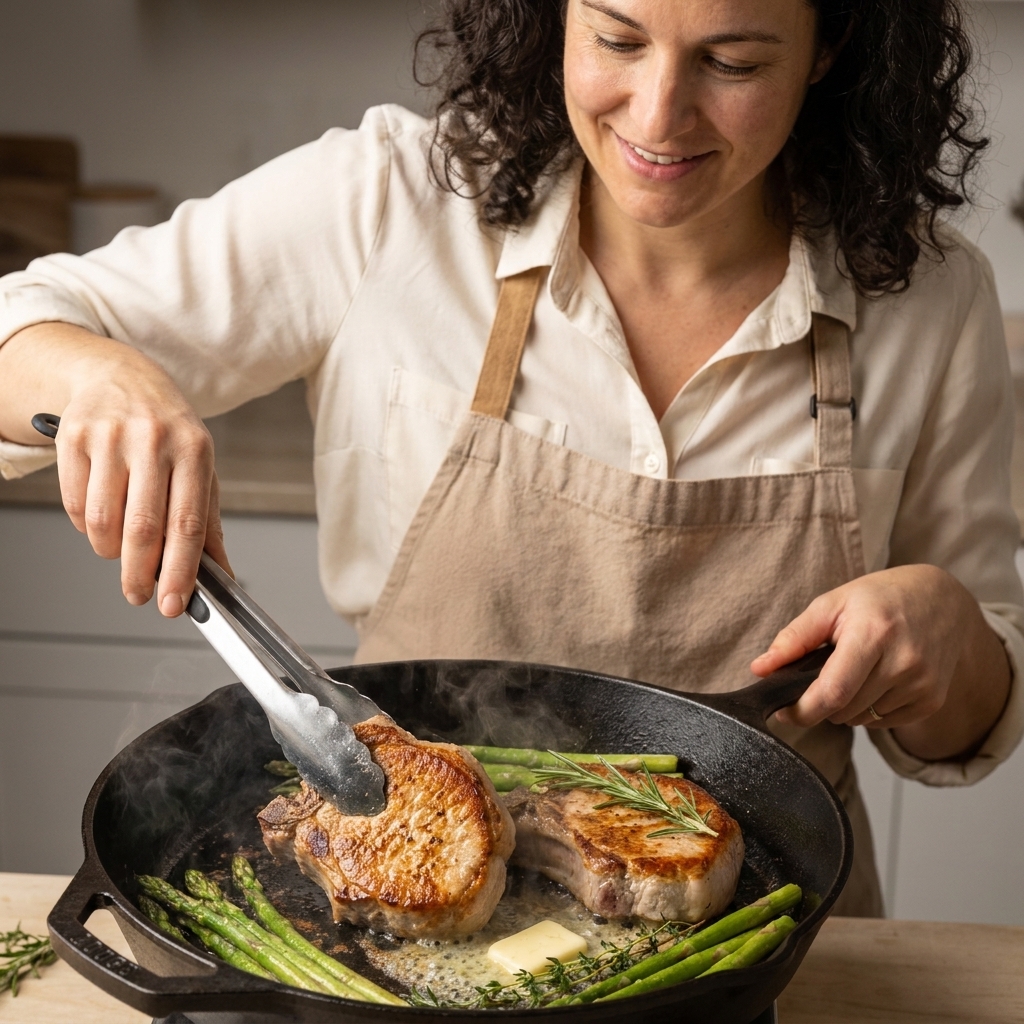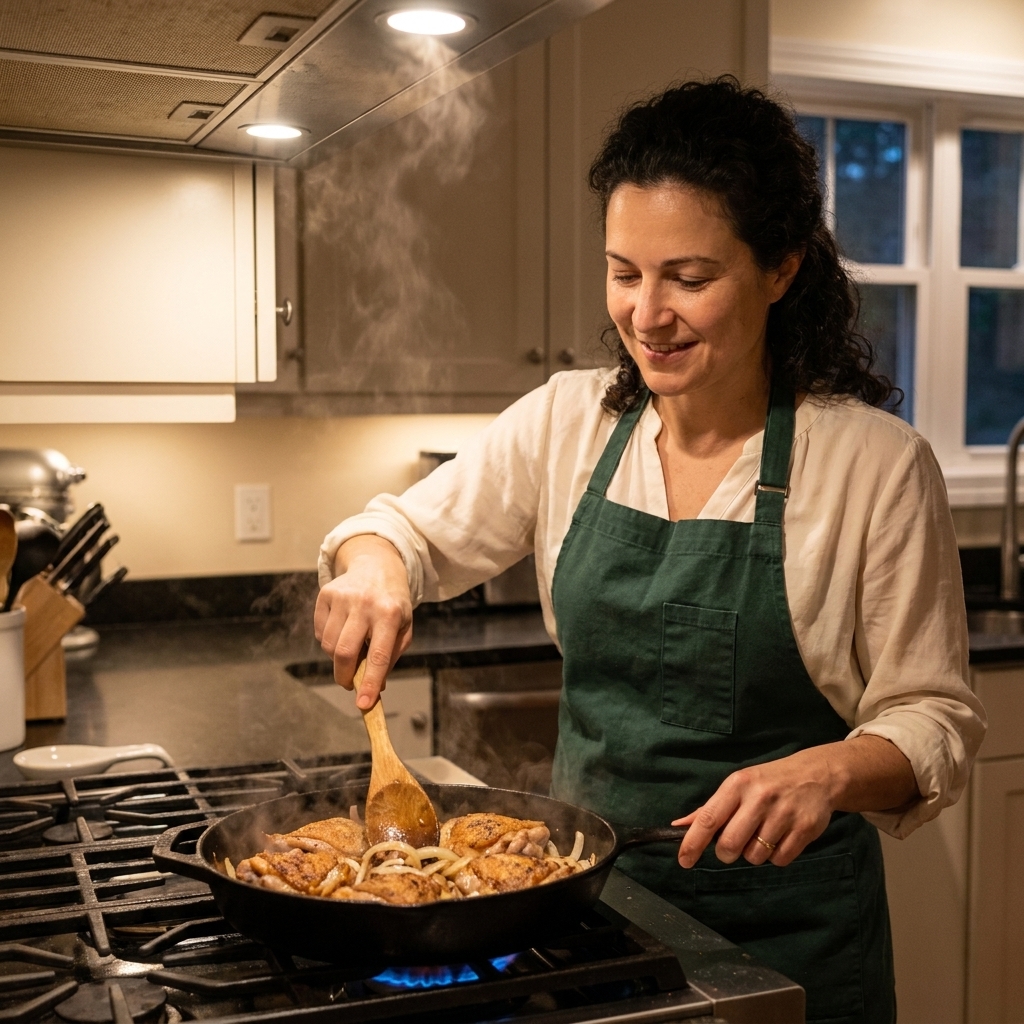
If you have ever looked at your skillet after searing chicken or browning sausage and thought, “Well, that looks… aggressively stuck,” I have great news. Those browned bits are not a problem. They are the beginning of a ridiculously flavorful pan sauce, and the technique that gets them off the pan is called deglazing.
Deglazing is one of my favorite weeknight shortcuts because it gives you restaurant-level flavor using the same skillet you already dirtied. No extra saucepan, no extra whisk, no extra sink sadness.
What deglazing is (and why it matters)
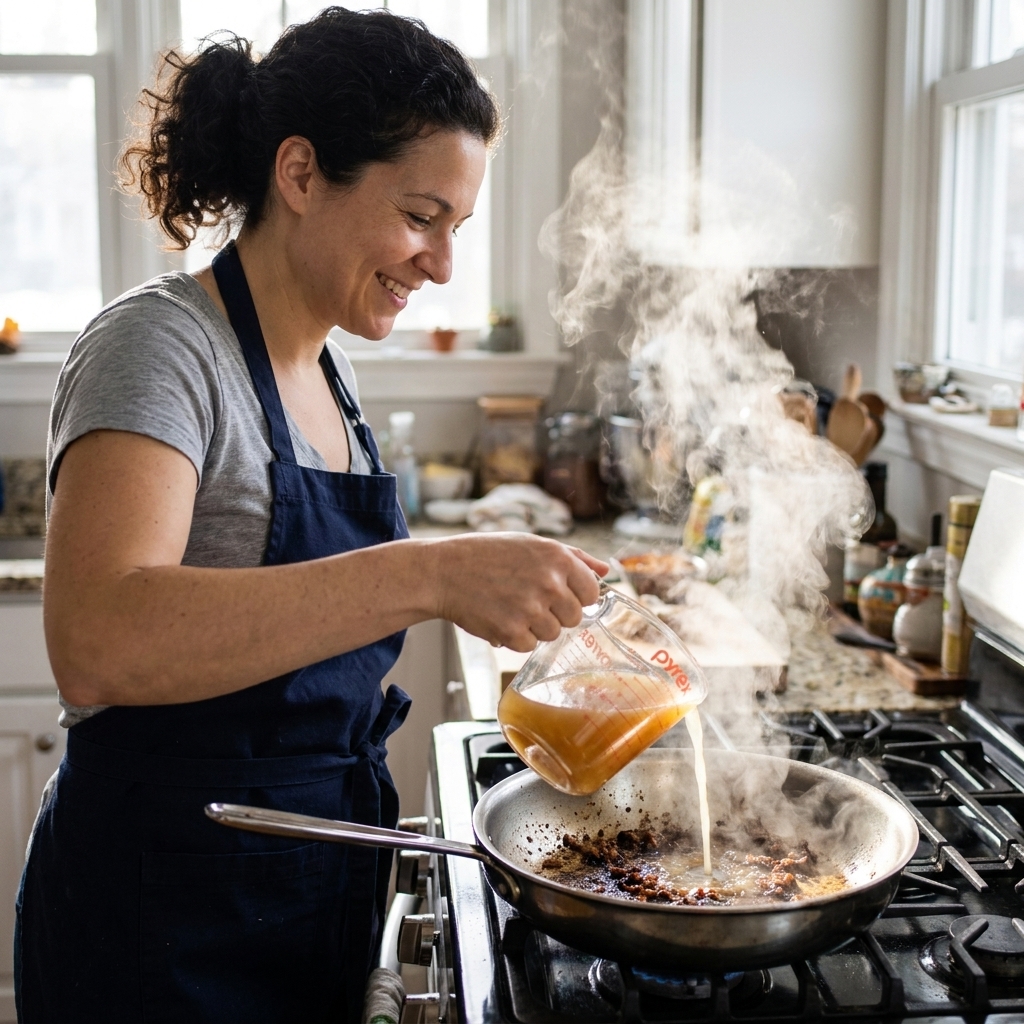
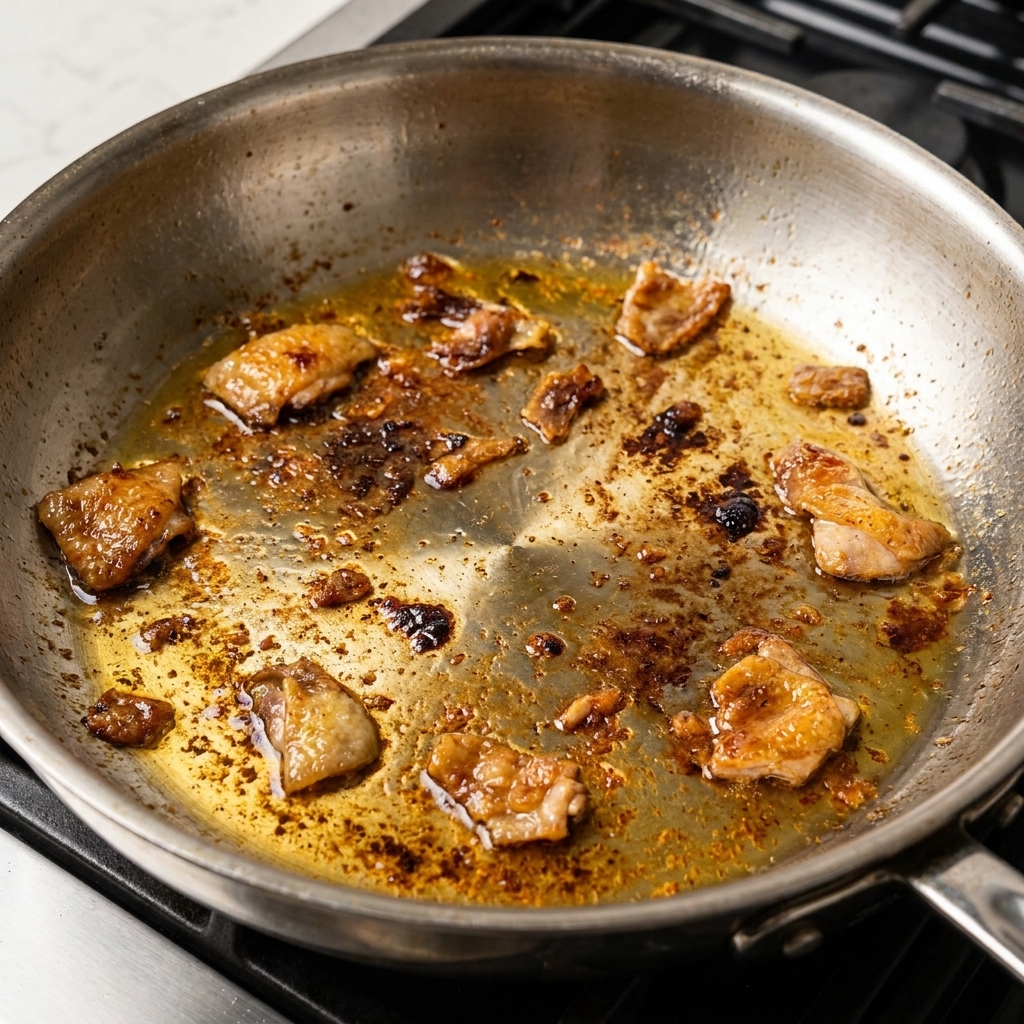
Deglazing means adding liquid to a hot pan after browning food, then scraping to lift the flavorful browned bits (called fond) into that liquid. In under a minute, you go from “stuck-on mess” to “the base of an incredible sauce.”
Fond is concentrated flavor from Maillard-browned bits: browned proteins, seasoning, and any sugars that browned along the way (when they are present). When you dissolve it into liquid, you get depth that tastes like you cooked all day, even if dinner took 25 minutes.
Best pans for deglazing
You can deglaze in almost any pan, but some make it easier.
- Stainless steel: The MVP for fond. It browns beautifully and releases fond easily with liquid.
- Cast iron: Great browning, great flavor. A quick deglaze is usually fine. Just avoid long simmering with very acidic liquids unless your seasoning is solid.
- Enamel-coated Dutch oven: Excellent for one-pot meals and braises. Deglazing is basically built into the workflow.
- Nonstick: You can deglaze, but you usually get less fond, so your sauce will be lighter in flavor. Also, nonstick coatings are not fans of screaming-hot heat, so keep it moderate.
Quick note: If your pan is truly burned (black, bitter, smoky), do not try to “save” it with deglazing. Burnt is not the same as browned, and it will taste like regret.
When to deglaze
Deglaze right after you remove your protein or vegetables from the pan, while:
- the pan is still hot,
- the fond is browned (not burnt),
- there is enough fat left behind to carry flavor.
Most of the time, you will pull your chicken, pork chops, steak, meatballs, or roasted vegetables to a plate to rest, then build your sauce in the same skillet. If you are doing a one-pan skillet dinner, you can nestle the protein back in once the sauce is finished.
How to deglaze
1) Remove the food, keep the flavor
Transfer your cooked protein to a plate. Do not wipe the pan. Those browned bits are the whole point.
2) Check the fat level
You want about 1 to 2 tablespoons of fat in the skillet. If your pan looks dry, add a little butter or olive oil. If it looks greasy, carefully spoon off excess.
3) Set the heat
You want a lively sizzle, not a scorched reduction in 10 seconds. Medium-high is a great default. If the fond is very dark or the pan is smoking, drop to medium before you add liquid.
Safety note: If the pan is actively smoking, turn off the burner for a moment and let it calm down before adding alcohol. It keeps things less dramatic.
4) Add aromatics (optional but magical)
This is the moment for minced shallot, garlic, sliced scallion whites, or a pinch of chili flakes. Cook 15 to 30 seconds until fragrant.
5) Add your liquid and scrape
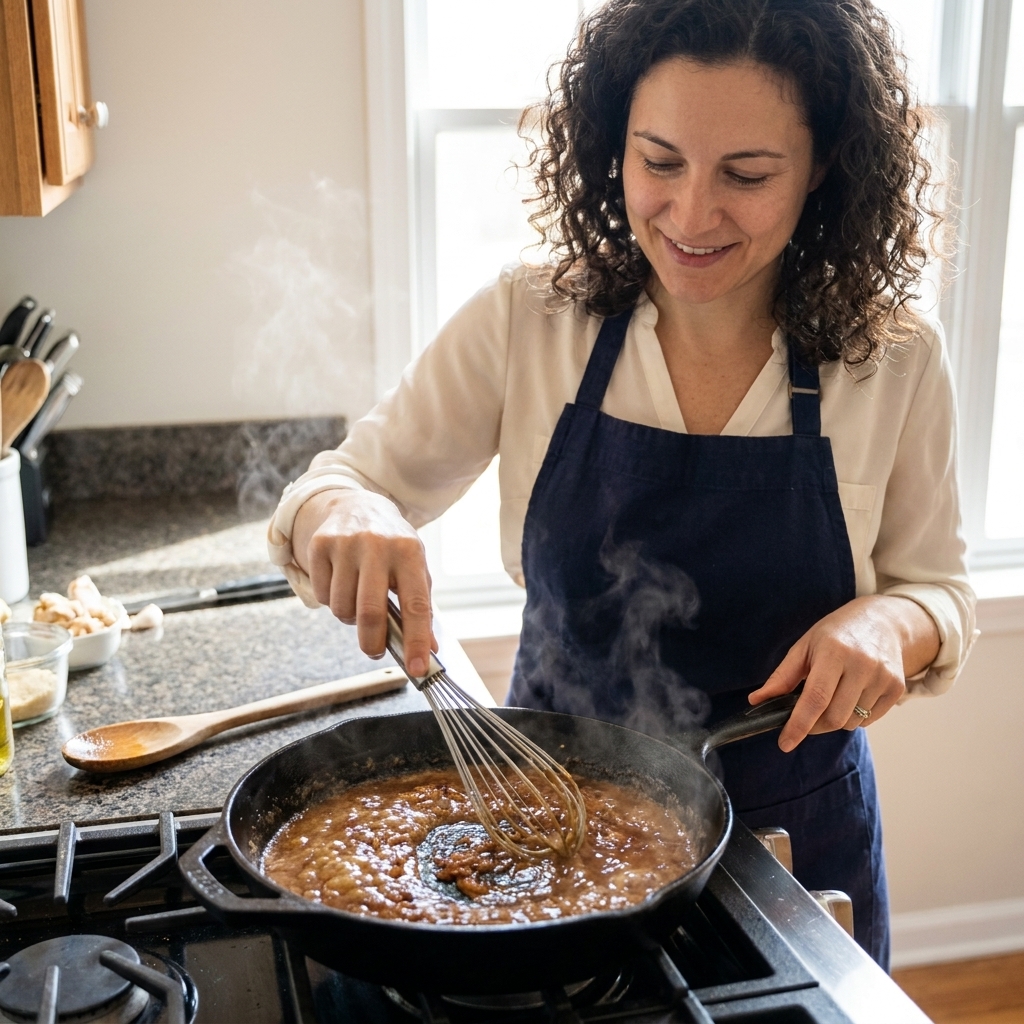
Pour in 1/4 to 1/2 cup liquid. It should bubble immediately. Use a wooden spoon or spatula to scrape the bottom of the pan, lifting up the fond as it dissolves into the liquid.
Another safety note: Cold liquid hitting a hot pan can splatter and steam like crazy. Keep your face and hands back, and pour slowly. Wine and spirits can also flare if the pan is extremely hot, so do not lean over the skillet.
6) Reduce slightly
Simmer for 1 to 3 minutes to concentrate flavor. As a rough benchmark, many pan sauces taste best after they reduce by about one-third to one-half.
If you are using wine, simmer until the sharp alcohol smell mellows and it smells like something you want to eat.
7) Finish into a sauce
Now choose your ending:
- Glossy pan sauce: Whisk in 1 tablespoon cold butter at the end (off heat) for shine and richness.
- Creamy sauce: Add a splash of cream, half-and-half, coconut milk, or a spoonful of sour cream or creme fraiche (keep heat gentle).
- Thicker sauce: Simmer longer, or whisk in a cornstarch slurry (start with 1 teaspoon cornstarch + 1 tablespoon cold water for about 1/2 cup liquid, and use up to 2 teaspoons cornstarch if you have closer to 1 cup liquid).
- Bright sauce: Finish with lemon juice or vinegar, plus herbs.
Taste and adjust salt. Fond can be salty if you seasoned aggressively, so taste before you add more. If it is already salty, add a splash of unsalted broth or water and reduce less.
Best liquids for deglazing
The liquid you choose sets the tone of your sauce. Here are my go-to options:
- Chicken, beef, or veggie broth: Weeknight-friendly, reliable, and kid-approved. Use low-sodium if possible so you can control seasoning.
- Wine (white or red): Adds complexity and acidity. White wine loves chicken, pork, and seafood. Red wine loves beef, mushrooms, and hearty dishes.
- Beer or cider: Great with sausages, pork, and fall sheet pan dinners. Choose something you would actually drink.
- Lemon juice or vinegar: Use sparingly, often in combination with broth. They brighten rich meats and cut through butter or cream.
- Water: Works in a pinch. You will want extra seasoning and maybe a butter finish to round it out.
- Stock plus a spoon of jam or mustard: Not a liquid alone, but one of my favorite “how is this so good” tricks for fast sauces.
Easy pan sauce formula
If you like cooking without measuring every single thing, this is the formula that will carry you through most skillet dinners:
- 1 to 2 tablespoons fat in the pan
- 1 aromatic (shallot or garlic), optional
- 1/2 cup deglazing liquid (broth or wine)
- 1 teaspoon flavor boost (Dijon, soy sauce, capers, pesto, miso, tomato paste)
- 1 tablespoon cold butter to finish (or a splash of cream)
- Herbs at the end (parsley, thyme, chives, dill)
Simmer, scrape, reduce, finish, spoon over dinner. That is it.
Deglazing a sheet pan
Yes. It is slightly different, but the idea is the same: lift browned bits and drippings and turn them into sauce.
Option A: Stovetop (my favorite)
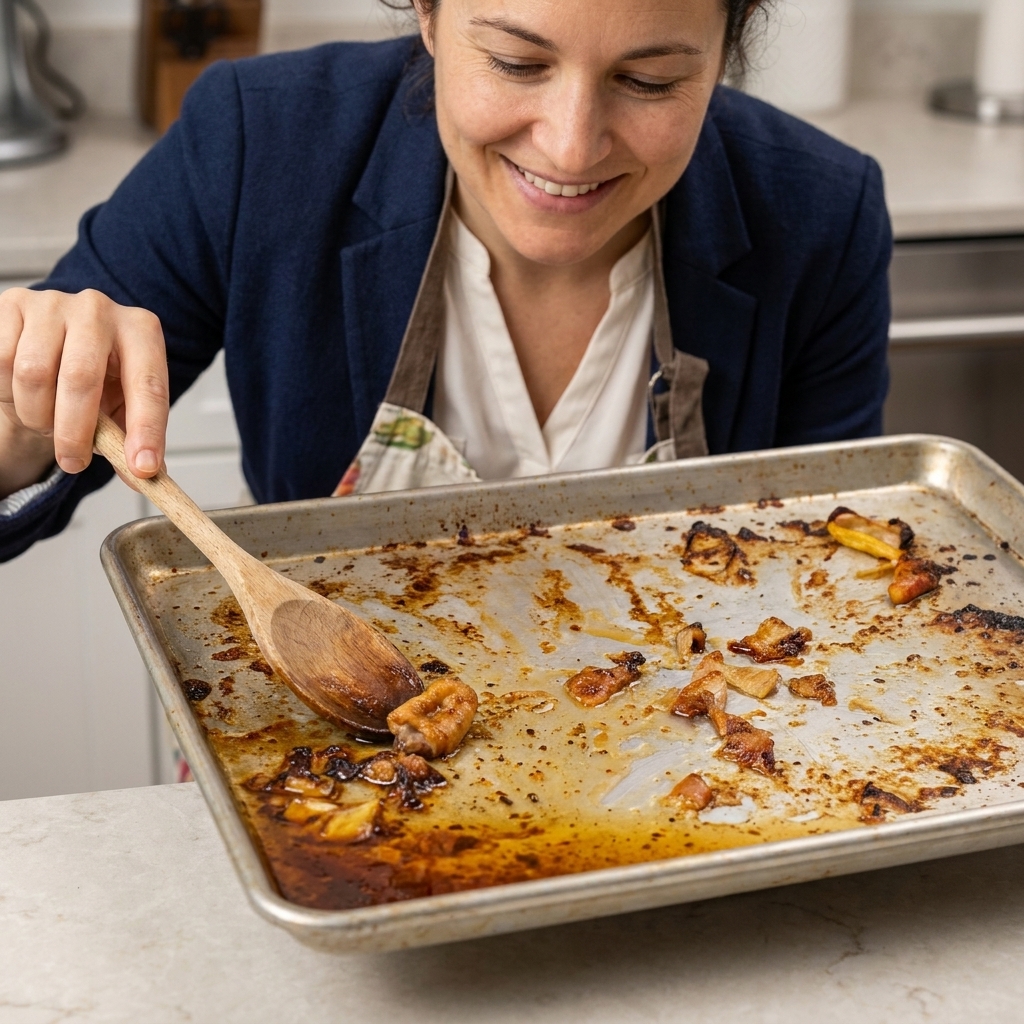
After roasting, transfer the sheet pan drippings and stuck bits into a small skillet or saucepan with a splash of broth or wine. Scrape the sheet pan with a wooden spoon to loosen what you can, then simmer on the stove and finish with butter or a slurry.
Option B: On the sheet pan
Carefully add a small splash of hot broth to the hot sheet pan, scrape, and pour everything into a serving bowl. This works best with sturdy, rimmed sheet pans. Be cautious of steam and splatter.
Tip: If your sheet pan is lined with parchment, you will not get fond on the pan. You can still make a sauce from drippings, but you lose that browned-bit magic. For saucy sheet pan nights, I often roast directly on the pan or use foil only where absolutely needed.
Common mistakes
Your sauce tastes bitter
That is usually burnt fond. If the pan smells acrid or the bits are black, start over with a clean pan and use broth plus a quick butter finish for a fast save.
Nothing lifts off the pan
The pan may not be hot enough, or you did not add enough liquid. Turn heat to medium-high and add another splash. Scrape with a wooden spoon and give it 20 to 30 seconds.
Your sauce is greasy
Too much fat. Spoon some off before deglazing, or chill briefly and skim. On weeknights, I usually just blot with a folded paper towel held with tongs.
Your sauce is too thin
Reduce longer, or add a cornstarch slurry. Another trick: whisk in a teaspoon of Dijon. It helps emulsify and gives the sauce body.
Your sauce is too salty
Use unsalted broth next time. For now, add a splash of water or unsalted broth, a squeeze of lemon, or serve the sauce lightly and let the sides be less salty.
FAQ
Do I have to use alcohol to deglaze?
Nope. Broth works beautifully. If you want some of the brightness wine gives, add a teaspoon of vinegar or lemon juice at the end.
How much liquid should I add?
For most skillet dinners, start with 1/4 cup for a tighter glaze-like sauce or 1/2 cup for a more spoonable sauce. You can always reduce.
Should I deglaze on or off the heat?
Add the liquid on the heat so it bubbles and dissolves the fond. If you are finishing with butter, take the pan off heat before whisking it in to keep the sauce glossy.
Can I deglaze cast iron with wine or vinegar?
You can, especially for a quick pan sauce. Just avoid long simmering with very acidic liquids if your cast iron seasoning is delicate. If you are worried, use broth and finish with a small squeeze of lemon off heat.
Starter pan sauces
These are simple combos you can build right after searing a protein. Each starts with scraping up the fond.
- Lemon herb: Chicken broth + lemon zest, reduce, finish with butter + parsley.
- Dijon cream: White wine or broth + Dijon, reduce, add splash of cream, finish with black pepper.
- Garlic soy butter: Broth + soy sauce, reduce, finish with butter and a little honey.
- Mushroom red wine: Sauté mushrooms in the same pan, deglaze with red wine + beef broth, reduce, finish with thyme.
If you are building a one-skillet dinner, spoon the finished sauce over the protein and let it mingle with your veggies in the pan for a minute. That is the kind of low-effort flavor layering that makes people think you tried harder than you did.